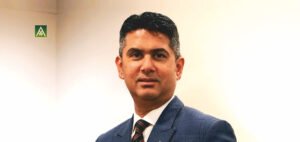
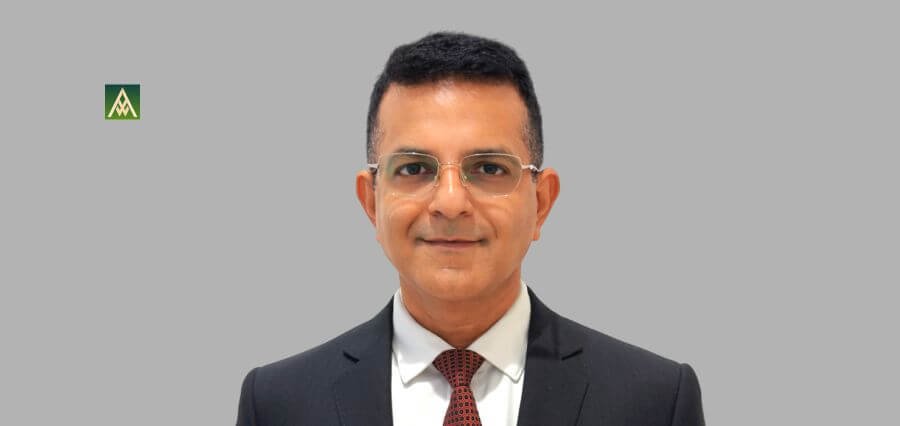
Riyadh, 2021. A defining moment begins. A decades-old government flour mill changes hands. The culture leans on public-sector comfort and walking through the gate, clipboard in mind and transformation on the agenda, is Rohit Chugh.
In 2021, the Kingdom’s privatisation programme transferred Arabian Mills one of the Kingdom’s largest flour milling operations to private ownership, and he stepped in as Chief Executive Officer from day one. What followed was not simply a management handover; it was a complete reimagining of what a legacy industrial company could become in the era of Vision 2030.
Today, Arabian Mills operates three plants in Riyadh, Hail, and Jazan and holds one of the highest flour milling capacities in the Kingdom, processing 4,920 metric tons per day. The company completed a landmark IPO on the Saudi Stock Exchange (Tadawul) in 2024, attracting extraordinary investor interest. Net sales revenues have climbed more than 50 percent since privatisation, and profits have more than doubled all without adding a single new asset in the base years of transformation.
He says, “We have significantly grown profit since 2021 and grown revenues by over 50 percent with the same assets we inherited.”
Building a Boardroom from Scratch
Rohit does not romanticise the scale of the challenge. Taking a company from the public sector into private ownership and then preparing it for a stock market listing demands a level of institutional discipline that simply does not exist in government-run organisations by default.
Governance is the foundation. “When moving from a public sector setup to a private company that will eventually be listed, it becomes necessary to build the entire governance architecture. This includes an organised board of directors, an executive management overseeing operations, an audit committee scrutinising internal processes, and a nominations and remuneration committee to ensure the right people are in the right roles with the right incentives.” he says.
Alongside governance, Rohit moved quickly to establish IFRS-compliant financial reporting non-negotiable for a company eyeing a public listing. Operational stability and financial transparency became twin pillars of Arabian Mills’ early transformation phase. He also recognised that the company’s move from the public sector required a fundamental shift in commercial thinking. Arabian Mills was a food commodity company; the private sector demanded it become a brand.
The IPO That Made Investors Take Notice
The 2024 IPO on Tadawul did not just mark a corporate milestone it validated everything Rohit and his team had built in three intense years. The listing drew significant investor attention and extraordinary subscription coverage, a signal that the market viewed Arabian Mills not as a rehabilitated relic, but as a credible, forward-looking growth company.
Behind that confidence lay a set of fundamentals he had spent years putting in place: a restructured balance sheet, a debt load slashed by more than 50 percent, and capacity utilization rates that industry peers watch with envy. “We took over operations running at around 80 percent capacity. Today, we operate close to 90 percent for the same assets,” he says.
Those numbers matter enormously in a milling business where fixed costs are high and the margin on every additional ton of flour processed flows almost directly to the bottom line. He describes the methodology behind this transformation as a combination of rigorous operational diagnostics and cultural change. “We run data-driven audits looking at milling losses, yield rates, energy consumption, operational downtime. We identify where money is being lost, and we eliminate it systematically,” highlights Rohit.
The operations were taken over at around 80 percent capacity, and today they run close to 90 percent for the same assets, reflecting industry-leading utilization rates.
Feeding the Kingdom and Balancing the Books
Running a food security company in a Gulf kingdom places a CEO in an unusual position. The decisions he makes each day carry implications that extend well beyond a profit and loss statement. Flour milling sits at the heart of Saudi Arabia’s food security agenda. The General Food Security Authority (GFSA) known locally as Sabil coordinates national wheat supply, and Arabian Mills plays a central daily role in converting that wheat into the flour that feeds bakeries, industrial food producers, and ultimately, households across the Kingdom.
How does he balance the weight of national responsibility with the demands of commercial performance? He doesn’t hesitate. “Both factors are very important in my decision making. We ensure they are well balanced. We play a defining role in food security we produce the amount of flour the Kingdom requires every single day. But commercial performance is a strategic priority, because a healthy company is the only kind that can sustain this role.”
The balancing act plays out concretely in Arabian Mills’ feed business, where commodities like soya bean and corn unlike subsidised wheat move with global markets. Supply chain disruptions, geopolitical tensions, and volatile energy costs all press on margins. Rohit responds through active price management aligned with cost realities, relentless cost optimisation, and building multi-layered supply chain contingencies. “You always need Plan A, Plan B, and Plan C, especially now, when global supply chains can be disrupted overnight,” he asserts.
From Commodity to Brand: The Innovation Pivot
Under his leadership, Arabian Mills has moved decisively from being a pure commodity producer to building branded consumer products. The company now markets two distinct consumer-facing ranges: Mastermills, its premium flour and value-added product line, and Finah, its popular-segment flour brand. Together, they represent the company’s strategic bet on the higher-margin downstream market.
The product portfolio that has emerged since privatisation is striking in its breadth. Arabian Mills now produces premium and popular pasta including durum wheat-based pasta under the Mastermills label. It markets coarse and fine semolina. It has launched Chaki Freshata, a whole-wheat flour product aimed at health-conscious consumers. It sells cake mixes benchmarked against internationally established brands and it has launched a dedicated gluten-free range, responding to the growing prevalence of celiac disease in Saudi Arabia a decision he describes as the act of a ‘responsible company’.
In the animal feed segment, the transformation is equally significant. Arabian Mills has operated in feed prior to privatisation; however, over the past two years, the company has significantly expanded and enhanced this business. Saudi Arabia’s national goal of 100 percent poultry self-sufficiency by 2030 makes this more than a commercial opportunity; it is an alignment with Vision 2030’s agricultural ambitions. The company has diversified its feed portfolio to serve multiple animal categories, and its planned 400 metric tons per day capacity expansion in feed milling directly supports this growth vector.
They are not resting on their laurels and are constantly innovating, launching downstream products adapted to consumer demand in a global setup.
SAR 461 Million: Investing Ahead of the Curve
Arabian Mills announced on the Saudi Stock Exchange a SAR 461 million capital investment programme one of the largest capacity expansion commitments in the Kingdom’s milling sector. The programme targets an additional 950 metric tons per day of flour milling capacity across its Riyadh and Hail facilities, alongside the 400 metric ton per day feed milling expansion.
Rohit frames this investment with characteristic directness: “Arabian Mills is already operating at close to peak capacity, and the only way to sustain growth is to expand. We are investing ahead of the curve to ensure the Kingdom’s flour supply remains secure and uninterrupted.” The logic is straightforward a company operating at peak utilization cannot grow revenue without growing capacity. But the timing and scale of this commitment, announced as a publicly listed company, also signals to investors that Arabian Mills sees sustained structural demand in its markets.
The expansion also enables Arabian Mills to pursue another strategic pillar he identifies as central to the next growth phase: exports. Following government approval to export, Arabian Mills began shipping to markets in the Middle East and Africa in the previous year. With additional capacity coming online, those export ambitions grow considerably more achievable.
Fifteen Nationalities, One Culture
Rohit’s career has taken him across Africa and the Gulf working through acquisitions, turnarounds, and multi-cultural workforce environments before he arrived in Saudi Arabia. Arabian Mills is home to a diverse workforce spanning multiple nationalities. Managing that diversity, in an operationally demanding industrial environment, requires a leadership philosophy he has refined over decades.
The foundation, he argues, is a vision clear enough to transcend language barriers. “Every person in the organisation must understand how the company’s goals connect to their day-to-day work. That clarity keeps people motivated, regardless of their background.” Arabian Mills runs cross-cultural training programmes designed to build shared knowledge and mutual understanding. The company’s performance culture is deliberately meritocratic KPIs are explicit, evaluations are transparent, and incentives are directly linked to results.
Chugh speaks warmly about what Arabian Mills has built internally. “People who have worked here and people looking in from outside consistently tell us we’ve built a strong culture,” highlights Rohit. People feel respected, empowered, and visible. Their work matters. That is what unlocks the best performance from every individual.
He reaches for an image to describe it: “It’s like a beautiful necklace. We thread fifteen different beads together fifteen nationalities and what comes out is something unified and valuable.”
Sustainability, Solar, and the Long View
Arabian Mills has begun formalising its ESG commitments a growing priority as the company’s public listing brings greater scrutiny from institutional investors. Rohit identifies carbon footprint reduction as a key long-term objective, with the company already making internal mill upgrades to improve energy efficiency.
The shift toward renewable energy particularly solar sits high on the forward agenda. “We cannot afford to be dependent on diesel or oil-based energy sources when the global energy picture is this volatile,” he says. “Clean, renewable energy reduces our risk exposure and our costs simultaneously.” In a Kingdom aggressively pursuing its own renewable energy targets, Arabian Mills’ sustainability journey aligns neatly with national direction.
For investors, his promise is equally clear: sustainable shareholder value, consistent dividends, declining long-term debt, and disciplined capital allocation even as the company invests aggressively in growth.