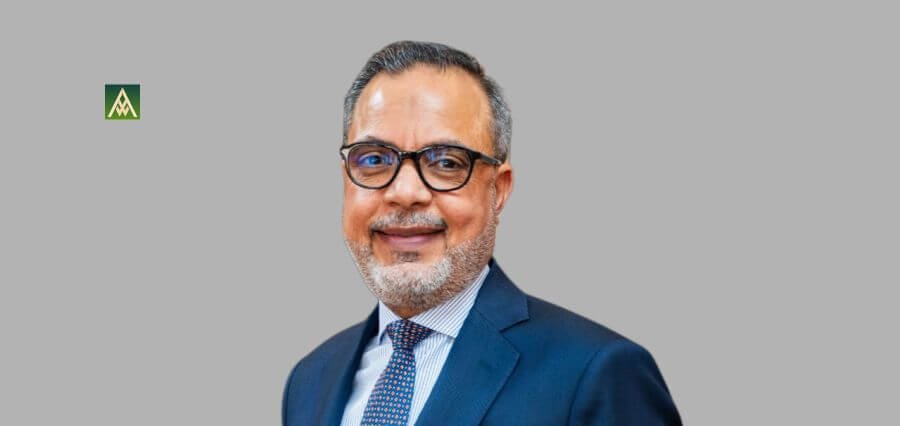
Kuwait’s facilities management sector does not make headlines the way oil fields or financial markets do. Yet it is the quiet engine behind some of the country’s most critical operations: the systems, services, and infrastructure that keep government buildings functioning, private sector projects running, and thousands of workers employed across the region. Within that sector, United Facilities Management Co. has built a reputation that speaks for itself. And at the centre of that reputation stands Ibrahim Abdul Latheef, the Chief Executive Officer who has spent the better part of a decade transforming the company from the inside out.
His is not a story of overnight success or sudden elevation. It is a story of deliberate progression, hard-won operational experience, and a leadership philosophy forged through complexity rather than comfort. Over more than a decade at UFM, Ibrahim Abdul Latheef has moved from deep operational immersion to the strategic heights of the CEO role, carrying with him an understanding of the industry that only comes from having worked through its most demanding realities firsthand.
A Decade in the Making
Abdul Latheef’s professional journey at United Facilities Management has been defined by a continuous evolution from operational depth to strategic leadership. In his early years, he was deeply embedded in operations: managing large-scale projects, leading diverse teams, and ensuring consistent service delivery across complex environments. These were not years spent observing from a distance. He was present in the work, accountable for outcomes, and directly engaged with the realities that drive the facilities management industry on a daily basis.
That hands-on foundation gave him something that no executive education programme can fully replicate: an instinctive understanding of what it actually takes to run operations at scale. He states, “What has shaped my leadership philosophy most are not only the milestones we have achieved, but the complexity of the challenges we have navigated along the way.”
One of the most defining moments of his career came when he led a major operational transformation initiative that required restructuring service delivery models across multiple projects simultaneously. The challenge was not simply technical. It demanded strategic alignment, workforce management, client expectation handling, and cost control, all within tight timelines. He asserts, “Effective leadership is not about control. It is about alignment, clarity, and trust.” That realization, earned through the pressure of that transformation, became a cornerstone of everything he has built since.
From COO to CEO: A Shift in Mindset
The transition from Chief Operations Officer to Chief Executive Officer marked a significant turning point in Abdul Latheef’s professional life. It was not simply a change in title or scope of responsibility. It was a fundamental shift in how he approached his role, his decisions, and his understanding of what leadership at the highest level requires.
He mentions, “The COO role is centered around execution, efficiency, and performance optimization. The CEO role demands a more holistic and forward-looking perspective.” Decision-making evolved from being primarily operational and data-driven to becoming more strategic, balancing immediate performance with long-term value creation. Accountability expanded beyond operational KPIs to encompass corporate governance, brand positioning, stakeholder engagement, and sustainable growth.
Perhaps the most consequential shift was recognizing that leadership at the CEO level is not about driving outcomes alone. It is about empowering others to lead. Building a strong leadership culture, fostering collaboration, and enabling decision-making across the organization became central priorities. Under his leadership, UFM has developed a management culture that emphasizes clear roles, defined objectives, and accountability at every level of the organization. He states, “Leadership is not confined to titles. It is cultivated across the organization.”
Building UFM Into a Regional Force
Today, United Facilities Management Co. stands as one of Kuwait’s leading facilities management companies, with a workforce exceeding 8,000 employees and managing over 320 projects across both government and private sectors. These are not numbers that appeared overnight. They represent years of consistent delivery, client trust, and organizational discipline built under Abdul Latheef’s watch.
The company’s scale reflects the breadth of its operations, but its depth is what truly sets it apart. UFM operates across a wide range of service verticals, maintaining strict compliance with local regulations while simultaneously aligning its operations with global best practices in quality management, health and safety, and sustainability. He mentions, “Kuwait’s business environment presents a unique blend of regulatory rigor and growth opportunity. We navigate this landscape by maintaining strict compliance with local regulations while aligning our operations with global best practices.” That dual approach has allowed UFM to deliver consistent, high-quality services while retaining strong local relevance in a market that demands both.
Technology as a Driver of Transformation
One of the most significant dimensions of Abdul Latheef’s leadership at UFM has been his commitment to digital transformation. Facilities management has traditionally been an execution-driven sector, relying on manual processes, reactive maintenance, and labour-intensive service models. Ibrahim Abdul Latheef has been determined to move UFM beyond that model.
Under his leadership, the company has implemented integrated facility management systems that provide real-time visibility into operations, enabling better planning and more informed decision-making. Data analytics now sits at the centre of UFM’s operational approach, allowing the company to monitor performance, identify trends, and drive continuous improvement across its portfolio of projects. Mobile solutions for field teams have enhanced responsiveness, communication, and service efficiency in ways that were not possible under the previous operational model.
He asserts, “Automation has streamlined routine processes, freeing up resources to focus on higher-value activities. Technology has not only improved efficiency but also elevated the overall client experience.” Among the most impactful innovations has been the introduction of predictive maintenance frameworks, which allow UFM to anticipate issues before they occur, reducing downtime and strengthening client confidence. This shift from reactive to proactive operations is a direct reflection of Abdul Latheef’s broader leadership philosophy: do not wait for problems to arrive. Build systems that prevent them.
Cost, Quality, and the Art of Doing Both
One of the persistent tensions in facilities management is the perceived conflict between cost optimization and service quality. Many organizations resolve this tension by sacrificing one for the other. Ibrahim Abdul Latheef has consistently refused that trade-off at UFM.
He states, “Instead of reducing resources, we focus on improving efficiency, streamlining processes, leveraging technology, and enhancing workforce productivity.” The company applies value engineering principles to identify smarter, more efficient ways to deliver services without compromising the standards clients expect. Transparency plays a central role in this approach. UFM engages clients directly in cost optimization discussions, ensuring that every decision aligns with service expectations and long-term value rather than short-term financial targets.
This philosophy has strengthened client relationships and reinforced UFM’s reputation as a company that manages its obligations rather than managing around them.
Sustainability: From Compliance to Conviction
Sustainability has evolved from a regulatory checkbox to a genuine strategic priority at UFM, and that shift reflects the personal convictions Ibrahim Abdul Latheef brings to his role. The company has integrated energy optimization, resource efficiency, waste reduction, and environmentally responsible practices across its projects. Sustainability considerations are now embedded within UFM’s service offerings, ensuring that clients receive long-term value rather than short-term solutions.
He mentions, “Sustainability is not just about environmental impact. It is about building a resilient and responsible organization for the future.” This framing matters because it positions sustainability not as a cost or a constraint, but as a source of competitive advantage and organizational strength. In a region where environmental responsibility is increasingly tied to regulatory requirements and client expectations, UFM’s early investment in sustainable practices places it ahead of the curve.
Investing in People: The Workforce Behind the Numbers
Behind UFM’s 8,000-strong workforce lies a deliberate and sustained investment in human capital. Ibrahim Abdul Latheef understands that no digital platform, no predictive maintenance system, and no efficiency initiative can deliver results without the people who operate them. Workforce development has therefore been a consistent priority throughout his tenure.
The company has invested significantly in upskilling teams, enhancing engagement, and fostering a culture of accountability and continuous improvement. Team members are provided with the authority and tools needed to make decisions at their level, which improves responsiveness and fosters a sense of ownership that translates directly into better service delivery. Open communication, continuous feedback, and recognition of performance are integral to how UFM operates day to day.
For emerging leaders in the industry, Ibrahim Abdul Latheef offers advice that carries the weight of experience. He asserts, “Look beyond execution and develop a strategic mindset. Understanding the broader business landscape, investing in continuous learning, and building strong relationships are essential. Leadership is not defined by authority, but by vision, influence, and impact.”
Vision 2026 and the Road Ahead
As 2026 unfolds, Abdul Latheef’s vision for United Facilities Management is clear and ambitious. He states, “By 2026, we aspire for United Facilities Management to be at the forefront of digital transformation and sustainability within the facilities management sector, while expanding our footprint and strengthening our regional presence.” That aspiration is grounded in a track record that makes it credible rather than aspirational.
On a personal level, he defines success not through conventional metrics but through organizational resilience. He mentions, “Success is building a strong and sustainable organization, one that is capable of continuous growth and long-term resilience, both at the institutional level and across its workforce, ensuring ongoing excellence and organizational continuity.”
For UFM, the foundations are already in place: a workforce of over 8,000, more than 320 active projects, a technology-driven operational model, and a leadership culture that empowers people at every level of the organization. What Ibrahim Abdul Latheef is building now is the next chapter of that story, one that extends UFM’s reach, deepens its capabilities, and positions it as a defining voice in the future of facilities management across the Arabian region.
A Leader Built for the Long Game
In an industry that rewards patience, precision, and consistency above all else, Ibrahim Abdul Latheef has spent more than a decade demonstrating all three. He did not arrive at the CEO role by bypassing the hard work. He arrived by doing it, understanding it from the inside, and developing the perspective that only operational depth can provide.
The result is a leader who combines strategic vision with ground-level credibility, a combination that is rarer than it sounds and more valuable than almost any other quality a CEO can bring to a complex, service-driven organization. As UFM continues to grow, innovate, and expand its regional footprint, the leadership that has brought it to this point remains its most important asset.