During late 80’s of the UAE, healthcare was not a given. Hospitals were limited, specialists were scarce, and for many families, accessing advanced medical diagnostics meant long waiting times, expensive travel, or simply going without. It was a reality that shaped an entire generation growing up in a country that was building itself from the ground up. Most people who lived through that era carry it as a memory.
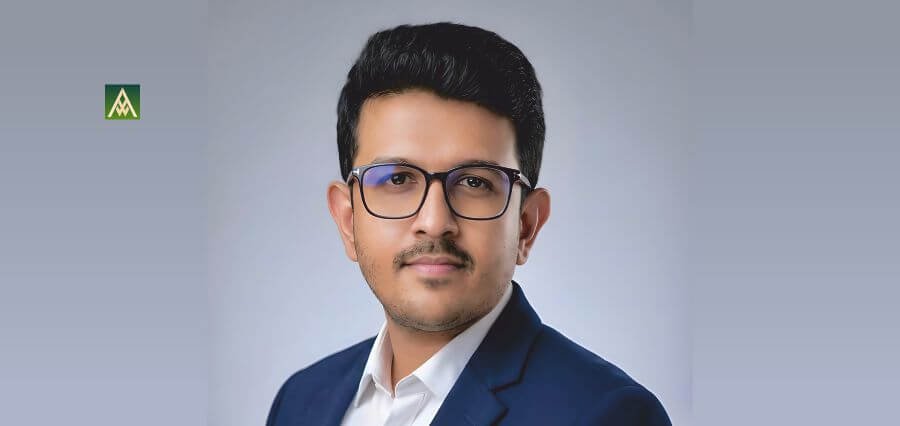
Kailash Sreekandan grew up watching families struggle against a system that had not yet caught up with their needs, and somewhere in that experience, a conviction took root: that advanced healthcare technology should never be a privilege determined by geography or income. Decades later, as Executive Director at Samsung Healthcare managing operations across more than 50 countries in the Middle East and Africa, he is still working on that same problem, just from a much larger stage.
From the Early UAE to the Engineering Laboratory
Kailash Sreekandan was born in Ras Al Khaimah and raised across the Northern Emirates and Abu Dhabi during the UAE’s formative era, a time when the country was building its future from the ground up, driven by ambition, unity, and an unshakable belief in progress.
Yet alongside the rapid infrastructure development, the limitations in healthcare were painfully visible. In those early decades, there were few specialised clinics across the country, and imaging and diagnostic services were particularly scarce in the Northern Emirates, including Ras Al Khaimah. Families in these regions often had to travel to Dubai or Abu Dhabi and sometimes abroad, simply to access the kind of diagnostic imaging that urban centres took for granted. The gap was not merely inconvenient; it was life-altering. Hospitals were limited, specialist physicians were scarce, and accessing advanced medical diagnostics often meant long waiting times, costly travel, or simply going without. For many families, healthcare was not just a service. It was a struggle.
He pursued his Bachelor’s degree in Biomedical Engineering at Calicut University in India, building a foundation in medical instrumentation, anatomy-based engineering, and imaging principles. His ambition then carried him to the United Kingdom, where he earned a prestigious scholarship to study for his Master’s at the University of Dundee, an institution renowned for medical innovation and scientific research. From there, he stepped into a role as a Research Engineer in the UK, specialising in one of the most technically demanding areas of diagnostic imaging: Ultrasound Transducer Physics and Development. It was here that Kailash Sreekandan acquired something rare among senior commercial leaders, a true inside-the-machine understanding of imaging science, from wave propagation and frequency response to probe design and signal optimisation.
Building Commercial Authority Across Global Giants
Kailash Sreekandan began his corporate journey in 2008 as a Business Associate at Siemens Healthineers in India. The Indian market taught him one of the most important lessons of his career: in emerging economies, success is never just about product superiority. It is about trust, training, service capability, and long-term partnership building. In 2010, he moved to Philips Healthcare as a Business Partner with Atlas Medical, where he refined his ability to manage distributor-driven ecosystems, align incentives across business partners, and build sustainable channel strategy.
Rejoining Siemens Healthineers, he entered a phase of high-impact growth, advancing through the roles of Gulf Business Manager and Sales Director for the Gulf and Africa, Ultrasound Business. These were not conventional leadership assignments. They required navigating one of the world’s most diverse commercial landscapes, spanning high-investment Gulf markets like the UAE, Qatar, Kuwait, and Saudi Arabia, alongside fast-developing African healthcare systems where infrastructure varies dramatically from one country to another. His responsibilities extended into key strategic regions such as Egypt and Iraq, where healthcare investment operates under a unique mix of public sector needs, rebuilding initiatives, and strong demand for scalable imaging solutions.
Kailash Sreekandan reflects, “My journey has been shaped by ups and downs, which is a realistic reflection of managing regions where instability, economic shifts, and policy transitions can rapidly reshape the business environment.” That resilience, combined with his engineering credibility, positioned him for the defining role of his career: Executive Director at Samsung Healthcare, managing one of the most strategically critical regions in the world.
The Samsung Vision: Technology Built from the Inside Out
At Samsung Healthcare, Kailash Sreekandan found an organisation whose competitive philosophy aligned directly with his own belief: that technology should not only advance, but simplify access to healthcare. Samsung’s advantage is structural rather than incremental. Unlike many medical technology manufacturers that depend on outsourced component ecosystems, Samsung owns the complete technological stack, from semiconductors and imaging processors to AI development, software integration, display technology, and hardware engineering. This means it is not simply manufacturing machines. It is building an ecosystem where every element is designed for synergy.
Kailash Sreekandan describes this as a future-proof strategy, because in the coming decade, diagnostic imaging will not be defined by image quality alone. It will be defined by AI-assisted workflow efficiency, smart reporting, integrated hospital connectivity, clinical decision support, cybersecurity, and scalable remote diagnostic models. Under his leadership vision, Samsung’s Digital Radiography and Ultrasound systems are positioned not as standalone diagnostic devices but as the first responders of modern healthcare, deployed across emergency medicine, maternal health, oncology, liver disease screening, breast cancer detection, and musculoskeletal diagnostics.
Kailash Sreekandan affirms, “Healthcare is not a privilege. It is a fundamental human need, as essential as food and shelter.” His advocacy for early diagnosis is unwavering. He believes the greatest healthcare breakthroughs will not come from treatment alone, but from prevention through screening. Samsung’s proprietary AI integration platforms enable clinicians to perform high-precision screening and decision-making support for liver assessment, breast lesion identification, musculoskeletal and sports injury imaging, bowel and abdominal evaluation, and advanced obstetrics screening.
Leading Across 50 Countries: Strategy at Continental Scale
Managing Samsung Healthcare’s operations across more than 50 countries in the Middle East and Africa demands more than commercial leadership. It demands the ability to operate across multiple realities simultaneously: tender-based public procurement systems, private hospital expansion models, government-funded national healthcare reforms, conflict-sensitive areas requiring continuity planning, and high-growth emerging healthcare ecosystems. Kailash Sreekandan navigates all of these with a clarity of purpose that comes from understanding the human stakes behind every contract.
In Saudi Arabia, he sees Samsung Healthcare as a critical contributor to the Vision 2030 healthcare transformation, one of the largest reform initiatives globally, particularly in AI-enabled imaging workflow, mobile diagnostics, screening expansion, and scalable solutions for rural outreach. In the UAE, which he calls home, he views the country as a global model of what happens when leadership treats healthcare as a national asset, and he works to ensure Samsung’s diagnostic imaging ecosystem becomes part of the UAE’s next chapter of smart hospital development. In Qatar and Kuwait, where markets demand high clinical confidence and premium service, his strategy centres on smart hospital integration, radiology workflow optimisation, and advanced women’s health imaging.
In Egypt, one of the most important healthcare landscapes in the Middle East and North Africa due to its population size, the demand for imaging is massive and requires solutions that are technologically advanced and operationally sustainable. In Iraq, he sees strategic healthcare partnerships as capable of transformational impact through scalable ultrasound and digital radiography solutions that reach beyond major cities. Kailash Sreekandan says, “The team is everything.” This belief underpins his approach to every market he enters, because without the right people aligned behind a shared mission, even the most advanced technology fails to reach its potential.
Africa: Closing the Access Gap One Diagnosis at a Time
Across Africa, Kailash Sreekandan approaches the healthcare landscape with both urgency and optimism. He believes Africa’s greatest healthcare gap is not talent. It is access. One of his strongest focus areas is maternal and foetal healthcare, where ultrasound is not a luxury but a life-saving necessity. In many African regions, the absence of early scanning contributes to high maternal mortality rates and late-stage complications that could have been prevented with timely diagnostics. To him, maternal ultrasound represents one of the simplest technologies with the highest possible impact.
His strategic approach to expanding imaging availability across Africa centres on partner-driven deployment models, clinical training programmes, scalable portable ultrasound adoption, and affordable imaging expansion frameworks. A defining moment in his recent work came through discussions with Charles Akwasi Appiah, Founder of African Medical City in Ghana. That dialogue reinforced his conviction that the future of African healthcare lies in building modern healthcare cities designed to serve not just one nation, but entire regions. Kailash Sreekandan sees Samsung Healthcare as a critical enabler of such projects, providing imaging infrastructure that supports emergency diagnostics, preventive screening, oncology pathways, women’s health programmes, and chronic disease management.
Leading Without Authority: A Philosophy Built for a Complex World
Managing more than 50 countries means managing more than 50 cultures, business styles, negotiation approaches, healthcare regulations, and decision-making systems. Kailash’s leadership philosophy is anchored in what he calls Leading Without Authority, the ability to align stakeholders across multiple layers, from R&D teams at global headquarters and regional marketing units to service and operations teams, business partners, hospital executives, radiology leaders, and government health authorities, without relying on hierarchy to get things done.
His leadership style combines engineering credibility with emotional intelligence. He is known for pushing for performance while simultaneously building trust, a balance that is essential in regions where long-term partnership matters more than short-term wins. He emphasises that leadership is not about control. It is about creating ownership. When people feel genuine ownership over their work and their outcomes, results become sustainable rather than transactional. Kailash Sreekandan explains, “Innovate with precision, scale with empathy, and always lead by serving.” This mantra guides every decision he makes, from how he structures his team to how he approaches a government tender or a rural healthcare deployment.
Redefining Success: Technological Excellence, Human Focus
In an era where many measure success through revenue and market share, Kailash Sreekandan offers a more meaningful definition. His success mantra is Technological Excellence, Human Focus. To him, innovation without humanity is incomplete. He believes the future belongs to companies and leaders who can combine cutting-edge engineering with empathy-driven purpose. He views success not as units sold, but as lives improved. The true metric, he says, is the number of early diagnoses enabled through technology, the early catches that change a family’s future.
Because every early diagnosis is not just a medical result. It is time saved. It is fear reduced. It is a life extended. Kailash Sreekandan says, “Technology is not the destination. It is the bridge.” And in 2026, he is focused on ensuring that bridge reaches everyone, whether in the most advanced hospitals of the Gulf or the most underserved communities across Africa.