
Prime Highlights
- Departing freighter volumes from Abu Dhabi surged 251% — the sharpest growth metric in the airport’s recent cargo performance data.
- Abu Dhabi Airports CEO said freighter cargo volumes have more than doubled despite global volatility, pointing to the airport’s strong operational readiness.
Key Facts
- Abu Dhabi Airports manages Zayed International Airport and Al Ain International Airport, with the latter rapidly growing into a regional logistics hub.
- Freighter cargo now makes up 38% of total throughput at Zayed International Airport, up 21% from baseline levels earlier this year.
Background
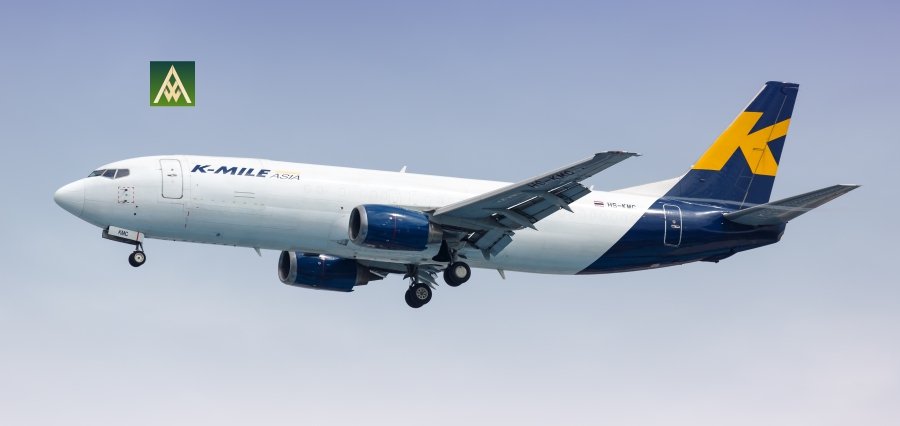
Abu Dhabi Airports has welcomed Thailand-based all-cargo carrier K-Mile Air to Zayed International Airport, marking the launch of the first direct air cargo links between Abu Dhabi and northern Thailand.
K-Mile Air began freighter operations in the first week of May, running five weekly services using a Boeing 767 freighter to Chiang Mai International Airport and Mae Fah Luang Chiang Rai International Airport. The new route expands Zayed International Airport’s freighter network to 36 global destinations.
The airline’s arrival comes at a time of exceptional cargo growth at the airport. Freight traffic has climbed from 1,878 tonnes per day at the start of the year to 2,216 tonnes per day — an overall increase of 18%. Freighter cargo has seen even sharper growth, rising 119% from a baseline of 389 tonnes per day to 851 tonnes per day currently, and now accounts for 38% of total cargo throughput.
Volumes arriving at the airport averaged 612 tonnes per day, growing roughly 91% over the period. Departing volumes recorded 239 tonnes per day, surging 251%. Wide-body freighter operations have also grown by around 55%, reaching 17 movements daily as the airport scales up to handle larger long-haul shipments.
Abu Dhabi Airports CEO Ahmed Juma Al Shamisi said freighter cargo volumes have more than doubled despite a shifting global landscape, reflecting the airport’s operational readiness and ability to scale quickly. He added that Al Ain International Airport is also developing rapidly into an important regional logistics hub.
Abu Dhabi Airports continues to expand its global footprint as demand for air freight from the emirate grows steadily.