The consumer technology industry does not reward patience. It rewards speed, disruption, and the ability to move faster than the market expects. Brands that cannot keep pace with shifting consumer expectations find themselves outpaced almost overnight, while those that combine global scale with genuine local understanding tend to build something far more durable than market share. They build trust. And in a region as diverse, aspirational, and discerning as the Middle East, trust is the only currency that truly compounds.
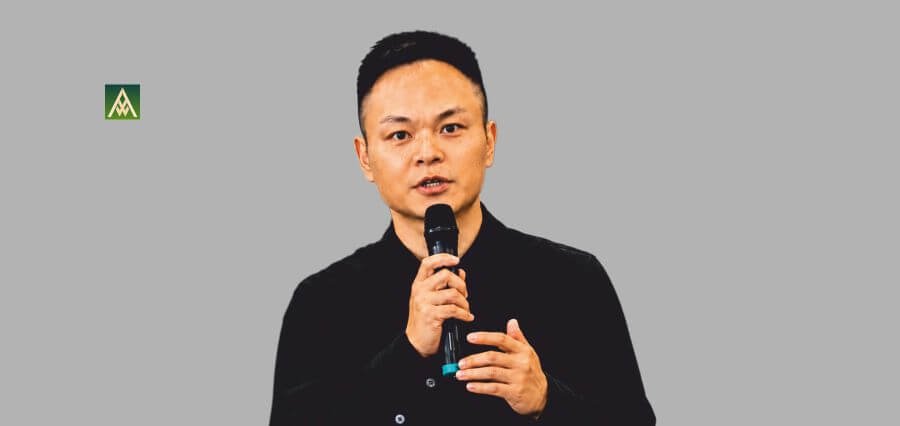
Jason Ou understands this better than most. As the President of Hisense Middle East, Africa and India, he oversees one of the most ambitious regional mandates in the global technology industry, managing five offices across the MENA region and steering a brand founded in 1969 through one of the most consequential chapters in its history. Under his leadership, Hisense has moved beyond being a recognized name and established itself as a genuinely trusted household brand across markets that span continents, languages, climates, and consumer cultures. That transformation did not happen by accident. It happened because Ou built a leadership philosophy rooted in listening, adapting, and playing the long game in a world that constantly tempts leaders to chase short-term wins.
A Career Shaped by Bridges, Not Boundaries
Jason’s career did not follow a straight line toward the executive suite. It followed something more interesting: a sustained commitment to understanding how technology can genuinely improve lives across markets that look nothing alike. The milestones he identifies as defining are not titles or revenue targets. They are moments of cultural translation, instances where global innovation met regional reality and required someone in the middle who could make both sides speak the same language.
Leading Hisense’s expansion across the Middle East, Africa, and India proved to be the most formative arena of all. Each market brought its own consumer psychology, its own infrastructure realities, and its own expectations of what a technology brand should deliver. Navigating that complexity required something that no business school curriculum fully prepares a leader for: the humility to listen before acting, and the discipline to resist the temptation of imposing a single global playbook where a locally adapted one was needed.
The investments Hisense made in regional manufacturing, including operations in Algeria and Egypt, and the establishment of localized research and development capabilities in Dubai, reflect a strategic conviction that Jason Ou holds deeply. “Meaningful growth requires sustained investment and long-term vision rather than short-term gains.” In practice, that conviction has shaped every significant decision he has made since taking on the regional leadership role.
From Market Share to Emotional Connection
Ask Jason Ou what first drew him to leadership, and he answers in a way that is refreshingly free of corporate cliche. He wanted to create an impact on the scale. He wanted to see innovation translate into tangible improvements in everyday life across different cultures and communities. That desire has not dimmed over the years, but the way he thinks about what impact actually means has changed considerably.
Early in his career, success wore the familiar face of technical achievement and market share gains. Numbers on a spreadsheet, ranking tables, product benchmarks. Those metrics still matter, but they no longer tell the whole story to him. “True leadership is about building emotional connections with consumers and ensuring that technology serves people rather than the other way around.” The pivot from performance metrics to emotional resonance marks a leader who has grown beyond the first chapter of his career and into something more sophisticated.
Today, Jason Ou frames Hisense’s regional ambition in terms that go well beyond product sales. The goal, as he articulates it, is to shape how people live in an increasingly digital world. A television is no longer just a screen. A refrigerator is no longer just an appliance. They are entry points into a connected living ecosystem where appliances, entertainment systems, and home automation work in concert, anticipate needs, and adapt to the rhythms of daily life. That is the vision Hisense pursues under his leadership, and it demands a different kind of thinking than selling units.
Growing in a Region That Defies Simple Analysis
The Middle East has a habit of confounding outside observers who try to reduce it to a single narrative. Jason Ou has spent enough time on the ground across the region to know that it resists simplification at every turn. His approach to strategic growth reflects that understanding directly.
“The Middle East is not merely a consumption market but an increasingly vital part of the broader industrial and supply-chain ecosystem.” That reframing matters enormously. It shifts the strategic question from how we sell more products here to how we build something here that creates lasting value. Hisense’s investments in regional manufacturing and local R&D are direct expressions of that shift in thinking.
Localization sits at the center of everything Hisense does in the region under Jason’s direction. Products are adapted to regional environmental conditions, whether that means engineering appliances that perform reliably in extreme heat or ensuring that software and interface design reflect local cultural preferences and daily routines. The guiding principle behind every product decision is one Jason Ou returns to consistently: every innovation must translate into a better user experience. It is a simple standard that proves surprisingly difficult to maintain under the pressure of a fast-moving, highly competitive market. Hisense maintains it because Jason insists on it.
Leading Across Cultures Without Losing the Thread
Managing teams across multiple countries and consumer cultures is one of the genuine tests of a regional leader. The temptation is always to impose uniformity, to build one culture, one operating model, one set of expectations, and apply it everywhere. Jason Ou has a different view. Effective multicultural leadership, in his experience, rests on a foundation of clear organizational vision and values that provide consistency and direction, combined with a genuine investment in the people who understand local realities from the inside.
Building the right teams on the ground and cultivating strong partnerships has proven essential. Understanding regional nuances requires people who are deeply connected to local communities and consumer expectations, people who do not need to be told what matters in their market because they already know it and live it. Jason Ou treats these local insights not as supplementary information but as core intelligence that shapes strategy from the product level upward.
The long-term perspective he applies to market development extends to team building as well. Jason Ou does not approach the Middle East as a posting to be managed and moved on from. He approaches it as a strategic growth market, deserving sustained investment in relationships, capabilities, and trust built over time. That orientation filters through the organization and defines how Hisense engages with retail partners, service networks, and consumers across the region.
Discipline in the Face of Disruption
No leadership story is complete without its defining challenge, and Jason Ou is candid about the one that has tested him most consistently. Operating in fast-changing markets where consumer expectations and technology evolve at remarkable speed creates a particular kind of pressure: the pressure to chase every new trend. In consumer electronics, the cycle of novelty moves fast, and the temptation to pivot strategy at every inflection point can be genuinely difficult to resist.
Hisense overcame that challenge by maintaining discipline around a core principle and returning to it whenever the noise grew loud. Every innovation must translate into genuine consumer value. Reliability, performance, seamless integration into daily life: these are the standards that Jason Ou holds up against every potential product or strategic decision. When something clears that bar, Hisense moves. When it does not, Hisense waits.
He also invested significantly in areas where many technology brands undervalue regional service networks, local teams, and spare parts availability. “Trust is built through responsive after-sales support as much as through advanced features.” That insight reflects a maturity about consumer relationships that distinguishes brands with genuine longevity from those that win a market cycle and then lose the next one. Consumers remember how a brand behaved when something went wrong. Hisense, under Jason Ou, has made that moment of vulnerability a competitive advantage.
Digital Transformation as a Human Endeavor
Hisense’s product portfolio reflects the direction Jason Ou has set for smart televisions, connected refrigerators, and intelligent laundry solutions that use artificial intelligence to optimize performance, energy efficiency, and user convenience. But Jason is careful to frame digital transformation in terms that go beyond the product specification sheet.
Digital transformation also shapes how Hisense gathers and interprets market data, responds to consumer trends, and accelerates product launches. The regional R&D capabilities in Dubai give the company a local intelligence engine that keeps global technological advances grounded in the realities of Middle Eastern consumers. From a leadership perspective, Jason Ou views understanding AI-driven innovation and leading data-informed decisions not as optional competencies but as fundamental requirements for anyone serious about the role.
“Technology’s ultimate role is creating emotional connections rather than mere technical advancement. When technology becomes intuitive and enriching, it moves beyond functionality and becomes part of everyday life.” That is the standard Jason Ou holds for digital transformation at Hisense: not smarter products, but more human ones.
Reading the Region’s Future with Clarity
Few people in Jason’s position have a better vantage point on the forces shaping the Middle East’s business future. He identifies several interconnected trends that he believes will define regional leadership in 2026 and beyond, and he speaks about them with the confidence of someone who has watched them develop up close rather than read about them from a distance.
The continued integration of AI into consumer products and business operations sits at the top of his list. Home entertainment and connected living will become smarter, more personalized, and more seamlessly woven into daily routines. Leaders who can guide that evolution responsibly, who understand how to translate AI capability into practical, meaningful consumer value, will define the next chapter of regional business leadership.
He also points to the Middle East’s growing role as a center for localization, strategic manufacturing, regional distribution, and application-led innovation. The region is positioning itself as a bridge between global innovation and emerging market demand, and leaders who recognize that shift early will capture opportunities that others will only notice in hindsight. Rising consumer expectations around service excellence and lifecycle support represent a third defining trend, one that rewards brands like Hisense that have invested early in regional service infrastructure. Finally, Jason Ou sees robotic and automated technologies entering homes and businesses as connected; intelligent environments become the norm rather than the exception.
Advice From Someone Who Has Earned the Right to Give It
When Jason Ou turns to address the next generation of leaders aspiring to make their mark in the Middle East, his advice carries the weight of direct experience rather than theoretical frameworks. He organizes his thinking around a set of principles that are connected and mutually reinforcing rather than a checklist to be ticked off.
He starts with the most fundamental: commit to understanding local markets deeply. Global approaches rarely translate automatically into the Middle East. Success here comes from adapting innovation to local lifestyles, climate, and consumer expectations in a consistent and structured way. Not as a one-time exercise, but as an ongoing discipline that a leader builds into the culture of their organization.
Think long-term, he adds, and mean it. Approach the Middle East as a strategic market, deserving sustained investment in technology, operations, and relationships rather than as a short-term revenue opportunity. Building trust takes time, and consumers want assurance that their investment carries support throughout the product lifecycle. Brands that demonstrate that commitment earn loyalty. Those that do not earn transactions at best.
Build the right teams, invest in the right partnerships, and remain genuinely adaptable. “No leader succeeds alone, and understanding regional nuances requires people deeply connected to local communities.” Jason Ou closes with a reminder that feels less like advice and more like hard-won wisdom: the leaders who will shape this region’s future are the ones who stay curious, stay humble, and never stop learning from the markets they serve.