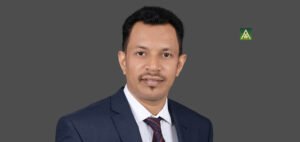

Cynthia Martina Pereira didn’t set out to work in HR. She stumbled into it, in the way most meaningful career decisions actually happen not through a plan, but through observation. Working in Treasury and Security Services at JP Morgan, she found herself noticing the HR professionals around her. Not in an analytical way, just noticing. The way they made new hires feel less lost on their first week. The way they sat with employees was going through something hard. The way they quietly redirected a career that might have otherwise stalled.
Nobody told her to pay attention to any of this. She just did.
And slowly, it clicked. HR wasn’t a department that processed paperwork and handled complaints, or at least, it didn’t have to be. At its best, it touched everything: who joined an organization, how they settled in, how they grew, how they were supported through the difficult stretches, and eventually, how they moved on. For someone who had spent most of her life gravitating toward people toward teaching, listening, figuring out what someone needed and helping them get there, it was less a career discovery than recognition.
That realization pushed her toward a PGDBM in Human Resources, and she started formally as an intern at Bombay Dyeing. Years later, she sits in the HR Director’s chair at Global Leisure & Entertainment in Dubai, an organization established in July 2021, steering people’s strategy for an industry that doesn’t slow down and doesn’t forgive unpreparedness. Thirteen years of cross-industry experience sit behind her, and a leadership philosophy she’s distilled into two principles she comes back to constantly.
“Never stop learning, and always put yourself in the employees’ shoes,” she says. “This employee-centric mindset has guided my decisions and helped me build trust, foster engagement, and create positive workplace experiences throughout my career.”
From Support Function to Strategic Driver
The transformation of HR from administrative back-office function to genuine strategic partners is one of the most consequential shifts in modern organizational life, and Cynthia Martina Pereira has lived through its full arc. Traditionally, HR was understood in terms of payroll, compliance, record-keeping, and routine employee processing. Those responsibilities remain essential, but today’s environment demands considerably more.
In her framework, modern HR is a strategic partner whose decisions directly shape organizational performance. Workforce planning, leadership development, succession planning, employee engagement, and cultural transformation are not peripheral to business outcomes; they are among the most significant levers available for influencing them. Organizations that treat people as their greatest asset understand that aligning talent strategy with business objectives is a core executive function, not a supporting one.
Two capabilities underpin HR’s ability to fulfil that role effectively. The first is transparency and communication. Employees perform at their best when they understand the organization’s vision, its expectations, and how their individual contributions connect to broader goals. Clear pathways around performance, career progression, and organizational change keep people aligned and accountable in ways that vague or infrequent communication never achieves.
The second is data and analytics. Dashboards and trackers convert raw information into actionable insight, enabling leaders to make informed decisions rather than relying on intuition alone. Whether monitoring hiring metrics, analyzing attrition, measuring training effectiveness, or assessing engagement, these tools identify gaps, anticipate challenges, and ensure accountability across the organization.
She states: “HR is not merely a support function but a strategic enabler that connects people and businesses. By fostering trust, leveraging data, and creating an environment where employees can succeed, HR has the ability to shape culture, improve performance, and drive sustainable business success.”
Aligning People Strategy with Business Objectives
Cynthia’s approach to aligning people’s strategy with organizational objectives begins with a clear understanding of business goals and the discipline of ensuring every HR initiative supports them directly. That alignment requires communication: employees need to understand expectations, priorities, and how their contributions drive success, and that clarity doesn’t happen by accident.
Well-designed HR policies form the foundation beneath this alignment. Consistency and fairness across talent acquisition, performance management, learning and development, succession planning, and employee relations create the conditions in which engagement and high performance can genuinely take root. Data-driven decision-making reinforces all of this; HR trackers monitoring headcount, gender diversity, attrition trends, time-to-fill, and workforce demographics enable leaders to identify gaps and provide leadership with insights that shape real strategic decisions.
Building a culture that supports growth requires deliberate investment in employee development, recognition of achievement, collaboration, and an inclusive environment where people feel genuinely valued. When employees are engaged and connected to organizational purposes, they are measurably more motivated, and that motivation becomes the foundation for sustainable growth.
Attracting and Retaining Talent in a Competitive Market
In today’s talent market, Cynthia’s approach to attracting, developing, and retaining high performers is deliberately employee-centric rather than transactional. Strong employer branding and a positive candidate experience matter at the attraction stage, but retention is the more consequential long-term challenge and requires different investment entirely.
Recognition, meaningful feedback, and genuine growth opportunities help employees feel valued. Competitive compensation remains important, but money alone does not retain top talent. Employees increasingly seek work-life balance, flexibility, career development, and a genuine sense of purpose in their daily work.
Culture plays an equally vital role. A positive, inclusive, and collaborative environment fosters trust and enhances employee experience in ways that compensation packages cannot replicate. As she reflects, organizations that genuinely support their people naturally cultivate the kind of engagement that others spend significant resources trying to manufacture.
She affirms: “Organizations that genuinely invest in their people by promoting flexibility, well-being, recognition, and growth create workplaces where employees choose to stay and thrive.”
The Digital Transformation That Changed Everything
Among the most transformative initiatives of Cynthia’s career was the end-to-end implementation of an HRMS platform in a previous organization, alongside the development of a comprehensive HR dashboard that significantly improved both operational efficiency and strategic decision-making.
Before the initiative, many HR processes were manual, time-intensive, and spreadsheet-dependent; a structure that limited both efficiency and strategic visibility. Cynthia Martina Pereira led the implementation in close collaboration with key stakeholders, mapping existing workflows, identifying improvement opportunities, configuring the platform appropriately, and ensuring a seamless transition through structured training and change management.
The system digitalized critical HR functions across the full employee lifecycle: records management, onboarding and offboarding, leave administration, and HR documentation. The accompanying HR dashboard provided real-time visibility into workforce metrics including headcount, gender diversity, attrition trends, and exit reasons, empowering leadership to move beyond intuition into genuinely data-driven decision-making across workforce planning, retention strategy, and resource allocation.
The impact was measurable. Automation reduced administrative workload, improved data accuracy, and freed the HR team to focus on strategic, value-added work. Employees experienced greater transparency and faster response times. Leadership gained access to insights that enabled proactive decisions and stronger alignment between people’s strategy and business objectives.
Building the Leadership Pipeline
Leadership development at Cynthia’s organization is integrated directly into the performance management system, which identifies high-potential employees based on performance alongside indicators of leadership potential; learning agility, adaptability, and problem-solving ability. Identification alone is insufficient. High-potential employees are developed through stretch assignments, cross-functional exposure, and targeted learning interventions, supported by feedback, coaching, and mentorship from senior leaders.
This approach is linked deliberately to succession planning, enabling the organization to build a leadership pipeline proactively rather than reactively. Identifying key talent early reduces dependency risk in critical roles and strengthens business continuity, benefits that become especially valuable during periods of disruption or rapid growth.
She reflects: “By identifying our key talent early, we are able to strengthen business continuity and reduce dependency risks in critical roles.”
Well-Being, Inclusion, and the Everyday Work of Culture
Integrating employee well-being, inclusion, and workplace experience into daily organizational life requires combining supportive policies, inclusive processes, and the deliberate use of digital tools. AI-supported platforms help monitor engagement, reduce administrative workload, and improve internal communication, while collaborative digital tools support accessible, inclusive ways of working across diverse teams.
Continuous learning ensures employees remain skilled and adaptable as new technologies emerge. But the most important driver, in Cynthia’s view, is leadership practice itself; open communication, consistent feedback, genuine recognition, and flexibility are what embed these priorities into the texture of everyday culture, rather than confining them to occasional policy announcements.
Leading Through Volatility
One of the most demanding tests of Cynthia’s leadership came during a period of significant market volatility, when global geopolitical conflicts triggered a sharp slowdown across the leisure and entertainment industry. Reduced demand, business uncertainty, and widespread layoffs across the sector created internal anxiety that required immediate and thoughtful response.
The organization adopted a structured, forward-looking workforce strategy, implementing a hiring freeze to stabilize operations and control costs while prioritizing business continuity and maximum employee retention wherever genuinely possible. Some difficult decisions were unavoidable, but the focus remained consistently on minimizing disruption and maintaining stability.
Simultaneously, regulatory changes affecting salary disbursement timelines required close coordination between HR, finance, and operations, a dimension of the crisis that demanded technical precision alongside emotional leadership.
The key lesson: proactive workforce planning and genuine cross-functional alignment are essential during periods of uncertainty. Employees value honesty, consistency, and empathy more than having every answer. Being visible, accessible, and communicative matters more than formal updates alone.
She affirms: “Effective HR leadership during crisis is not just about decision-making, but about balancing business needs with human impact, while maintaining transparency and trust across the organization.”
The Future of HR
Looking ahead, Cynthia Martina Pereira identifies AI and digital transformation, skills-based workforce planning, and a deepened focus on employee experience as the trends most likely to shape the future of HR. AI-driven insights will increasingly support faster and more informed decision-making, while organizations shift from traditional job roles toward skills-based models that build greater agility.
Employee well-being, inclusion, and flexible work will become core business priorities rather than standalone HR initiatives. HR’s role will continue to evolve into that of a genuine strategic business partner, one that balances emerging technology with a human-centric approach to build organizations that are resilient, adaptable, and future-ready.
The Legacy She Is Building
Cynthia’s legacy ambition is clear: to build organizations where people feel valued, supported, and empowered to perform at their best, while establishing HR as a true strategic partner. She aims to create people-centric systems that balance performance with empathy and culture with data, refusing to treat these as competing priorities.
To the next generation of HR professionals, her advice is direct: stay curious, build strong business acumen, use data with empathy, champion inclusion and well-being, and always act with courage and integrity.
She closes with a reminder: “As Warren Buffett said, the more you learn, the more you earn. Continuous learning will always be key to growth and success in HR.”
Cynthia Martina Pereira began her career watching HR change lives around her at JP Morgan. Thirteen years later, at Global Leisure & Entertainment in Dubai, she is the one doing the changing, building systems, cultures, and leadership pipelines that prove the function she fell in love with early in her career has become exactly what she always believed it could be: not a support function, but the strategic heart of how organizations succeed.