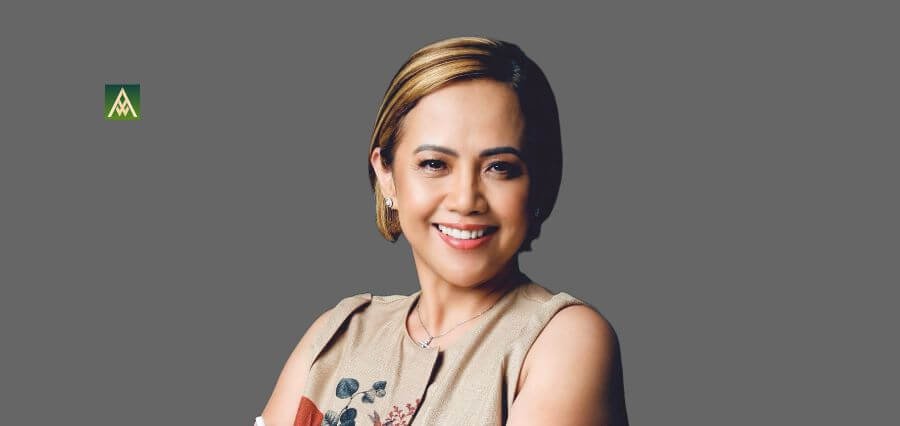
There are executives who lead people and then there are leaders who advocate for them. Claudette Marchadesch is definitely in the second category. As the Group Chief Human Resource Officer (CHCO) of Al Ghurair Group, one of the most established and diversified conglomerates in the UAE, she does not just manage HR functions. She designs the culture, structure and systems which define the way thousands of individuals operate, develop, and flourish in various business verticals and geographies.
Claudette Marchadesch has been working in some of the multicultural and intricate corporate worlds in the world over the last 28 years. She has found herself at the cross-point between business strategy and human potential and transformed what many organizations continue to view as a support activity into a real organizational value generator. She is putting all the acquired knowledge of that experience to work in Al Ghurair Group today, and the outcome is transforming the human capital scene of the conglomerate down to its core.
From Transactional to Transformational
Ask Claudette Marchadesch about what made her a strategist rather than a conventional HR executive, and her answer arrives without hesitation. It was not a single event, she explains, but a series of experiences that collectively dismantled the myth that HR’s value lies in policy enforcement and process compliance.
“One of the most influential factors has been working within environments that require a deep appreciation for cultural nuance and adaptability,” she reflects. “Navigating these complexities taught me the critical importance of moving beyond transactional HR functions to embrace a holistic, people-centric strategy.”
For her, the pivot happened in moments where the alignment of talent management with business outcomes produced tangible, visible results, not just in organizational metrics, but in how employees engaged, evolved, and chose to stay. Those moments permanently altered her perspective on what the HR function could and should deliver. She began to see herself not as an administrator of employment, but as a builder of organizational capability.
Collaborating closely with cross-functional teams and steering organizations through periods of significant change reinforced another conviction: that the future belongs to HR leaders who plan proactively, not reactively. She internalized the power of anticipating workforce needs before they become crises. Promoting cultures of continuous learning long before disruption forces the issue.
Governing A Conglomerate’s People Strategy
The challenge of leading human capital across a diversified conglomerate like Al Ghurair Group is not a small one. The Group operates across real estate, food, resources, construction, and financial services, among other sectors, each with its own talent dynamics, market pressures, and operational rhythms. Designing a people’s strategy that holds the entire enterprise together, while allowing individual business units the flexibility to compete and innovate, demands rare architectural thinking.
Claudette Marchadesch meets this challenge with a framework she describes as “centralized governance with decentralized agility.” At its core, the Group maintains unified standards around values, compliance, and overarching HR policy. These serve as the enterprise’s moral and operational backbone, ensuring that Al Ghurair’s people’s practices consistently reflect its vision and ethics regardless of which business unit an employee belongs to.
Within that framework, however, individual business units hold genuine latitude to adapt, innovate, and respond to their specific market demands. “Empowering business units with autonomy to innovate and respond quickly to their unique challenges fosters engagement and drives performance,” she explains.
She credits open communication channels and collaborative platforms as the connective tissue of this model. Regular touchpoints between Group HR leadership and business unit HR teams keep alignment sharp. Data-driven feedback loops allow Claudette Marchadesch and her team to continuously refine the approach, ensuring the strategy remains both principled and responsive. It is governance, but governance designed to enable rather than constrain.
Pay Architecture That Builds Trust, Not Just Incentive
Among Claudette’s deepest areas of expertise is compensation, specifically the art and science of designing pay structures that drive performance culture without fracturing the trust and equity that hold organizations together. Her background spans job evaluation frameworks, executive remuneration, and the governance of remuneration committees, giving her an unusually comprehensive view of how pay works as both a motivator and a signal.
Her philosophy begins with transparency. A well-designed pay architecture, she argues, starts with robust job evaluation frameworks that clearly define roles and benchmark them fairly. When employees understand how their contributions connect to their rewards, they engage differently, more purposefully, more proactively. But she is equally clear that this system demands ongoing vigilance. Regular reviews and calibration exercises exist precisely to catch and correct unintended disparities before they erode the trust the system was built to create.
Executive remuneration, she notes, carries its own set of imperatives. It must simultaneously reflect market competitiveness and internal equity, two forces that can pull in opposite directions if left unmanaged. With open communication about the rationale behind pay decisions, she has found, consistently does more to preserve organizational trust than any single compensation figure ever could.
“The key is balancing incentives for high performance with mechanisms that reinforce fairness and inclusivity,” she says. “This approach supports a culture where everyone feels valued and motivated, and where trust is continually strengthened.”
Reimagining Performance Management
Few areas of corporate life generate more cynicism than performance management. The annual appraisal, that ritual exercise in backward-looking documentation, has been lampooned and lamented for decades. Yet most organizations continue to rely on it, not because it works, but because they have not yet built something better.
Claudette Marchadesch has. Her approach to redesigning performance systems starts with a simple but powerful premise: every team member should understand exactly how their individual goals connect to the organization’s broader objectives. She dismantles the silo between personal development and organizational strategy, making the relationship explicit and living rather than abstract and annual.
She replaces the retrospective appraisal with ongoing feedback and coaching, regular conversations that surface growth opportunities in real time, not twelve months after the fact. She introduces collaborative goal setting and cross-functional projects, which give employees genuine ownership of outcomes that matter to the business. And she leverages data analytics to monitor progress continuously, enabling her team to celebrate achievements as they happen and address obstacles before they compound.
“These changes transform performance management into a dynamic process that fuels both individual and organizational growth,” she explains, “rather than a static yearly exercise.” The shift is not cosmetic. It is a fundamental redesign of the relationship between employees and their work.
Technology As Decision Intelligence
In an era when HR technology vendors promise to automate everything from onboarding to succession planning, Claudette Marchadesch brings a clear-eyed perspective to digital transformation. She has led the restructuring of complex HRIS and HRMS environments, including platforms like SAP and Oracle, and she knows that the difference between a transformative deployment and an expensive disappointment lies entirely in how an organization defines success.
Her standard is unambiguous: digital transformation must enhance decision intelligence, not merely digitize existing processes. This requires engaging stakeholders upfront to define clear business outcomes and using those outcomes to drive technology strategy. It means leveraging analytics, real-time data, and AI-driven insights to make HR smarter and faster, not just more automated.
“Instead of replicating manual steps in a digital format, we focus on leveraging analytics, real-time data, and AI-driven insights to empower smarter, faster decision-making across all HR functions,” she explains. Continuous feedback mechanisms ensure the systems evolve alongside the business, rather than calcifying into expensive legacy infrastructure. The north star, always, is actionable intelligence that positions HR as a strategic driver rather than an operational support.
Cultural Intelligence in a Diverse Workforce
Operating in the UAE means leading within one of the world’s most genuinely diverse workforces. Professionals from dozens of nationalities, backgrounds, and cultural traditions work side by side across the Al Ghurair Group. Designing people’s policies that honor this diversity while maintaining organizational coherence is one of Claudette’s defining leadership challenges.
Her approach acknowledges a tension that many organizations paper over: globally consistent policies and locally intelligent implementation are not opposites. They are complementary, provided the framework is designed thoughtfully. Global consistency delivers fairness, transparency, and alignment with organizational values. Local adaptation delivers relevance, respect, and genuine inclusion.
She achieves this balance through active employee engagement, listening to people from different backgrounds, incorporating their perspectives into policy design, and partnering with local subject matter experts who understand the cultural landscape intimately. Regular training sessions and open dialogue build cultural awareness across teams, and she ensures diversity transforms from a compliance obligation into a genuine organizational asset.
Leading Transformation Through Resistance
No conversation about organizational transformation is complete without acknowledging the human difficulty of change. Large, legacy organizations have accumulated habits, hierarchies, and unspoken rules over decades. Asking people to abandon familiar ways of working, even when those ways no longer serve the organization, reliably generates resistance, anxiety, and sometimes outright opposition.
Claudette Marchadesch has navigated this terrain. The most challenging transformation initiative she recalls involved not just structural change but cultural change, a far more demanding undertaking. Shifting mindsets requires a different playbook than redrawing an organizational chart.
To secure leadership buy-in, she focused on communicating the strategic case with clarity and evidence: data, success stories, and concrete opportunities for leaders to participate in shaping the new vision. For employees, she organized interactive workshops and feedback sessions, creating genuine space for concerns to surface and be addressed. Recognizing small wins along the way built the momentum that sustained the larger journey, and she ensured that both leadership and employees remained active participants throughout.
“By engaging both leadership and employees early and often, and by being transparent about the challenges and benefits, we were ultimately able to drive meaningful change together,” she reflects. “It was not easy, but the collaborative effort made all the difference.”
The Future of Cross-border Talent in the Middle East
As a seasoned practitioner in global mobility and reward structures, Claudette Marchadesch watches the evolving landscape of cross-border workforce models in the Middle East with both expertise and enthusiasm. The region, she believes, stands at an inflection point that will define its talent strategy for the next decade.
Technological advancement, shifting regulatory environments, and the growing appetite for flexible work arrangements are simultaneously expanding the talent pool available to regional organizations and raising the bar for how those organizations attract and retain international talent. Companies are actively revisiting their mobility policies and reward frameworks to stay competitive and compliant as these dynamics accelerate.
She expects to see greater investment in digital solutions that support seamless cross-border collaboration, alongside more personalized and adaptive compensation packages tailored to the complex needs of international workforces. She also anticipates stronger public-private partnerships designed to smooth the transitions that expatriates and locally hired talent navigate as they build careers across borders.
HR’s Mandate in Uncertain Times
When economic headwinds test organizations, the question of what HR should prioritize becomes urgent and contested. Cost guardian? Culture steward? Transformation driver? Claudette Marchadesch refuses to choose.
In her view, effective HR leadership during periods of economic uncertainty demands all three roles simultaneously. Cost guardianship ensures that resources flow to where they create the most value and that the organization maintains its financial stability. But cutting costs without protecting culture is a false economy. Morale erodes, talent exits, and recovery becomes far more expensive than the savings achieved.
Culture stewardship, therefore, is not a luxury for prosperous times. It is precisely when uncertainty threatens to erode the values and behaviors that define an organization that HR must work hardest to protect them. And transformation leadership, the capacity to help the business rethink its strategies, pivot to new opportunities, and emerge from turbulence stronger than it entered, is the role that separates truly strategic HR functions from those that merely manage compliance.
“HR is uniquely positioned to lead transformation initiatives, whether it’s rethinking talent strategies, fostering innovation, or helping the business pivot new opportunities,” she says. The organization that navigates economic uncertainty well, in her view, almost always has an HR leader playing all three roles at once.
A Legacy Built on Empowerment
When Claudette Marchadesch considers legacy, her answer is characteristically human. Not a metric. Not a restructured compensation grid. Not a new technology platform. What she wants to leave behind is a culture, specifically an environment where people feel genuinely empowered and valued.
She envisions a workplace where every team member feels inspired to contribute to their best, confident that their voices carry weight, and their ideas receive a fair hearing. She wants to see that cultural shift produces greater collaboration, stronger engagement, and a shared sense of purpose that drives both innovation and excellence across the Group’s diverse business portfolio.
It is a vision rooted in the conviction that organizational performance and human dignity are not competing priorities. They are, at their best, the same thing. People who feel valued perform differently. Organizations that cultivate that feeling build something that outlasts any individual leader’s tenure.
For the HR leaders who will follow in her footsteps, she offers a clear message about the capabilities that matter most today: strategic agility, data-driven decision-making, digital literacy, the capacity to champion diversity and inclusion, and above all, the emotional intelligence to lead people through change with empathy and integrity.