
Employee Wellbeing
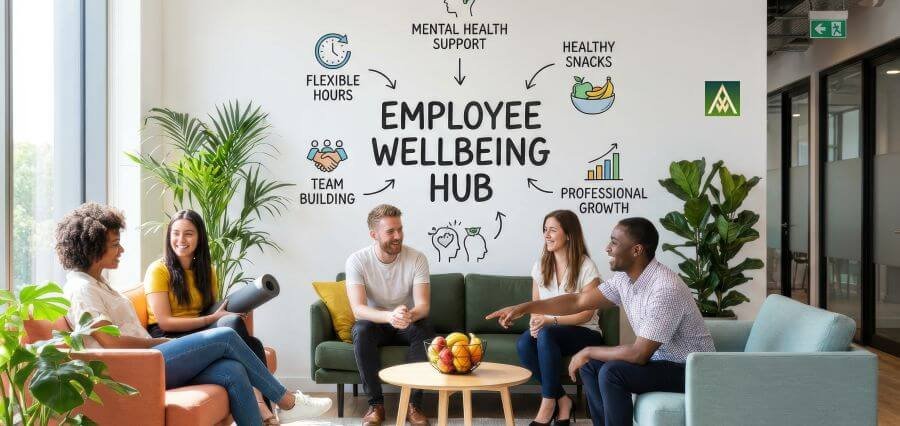
The success of any business has always been dependent on people, yet the modern organizations realize that in order to grow sustainably, it is necessary to do much more than be operationally efficient. The employees tend to show their best performance when they feel appreciated, respected, and supported throughout all the stages of their professional development. Employee Wellbeing is not considered an optional program anymore; it has become a strategic issue affecting engagement, productivity, innovation, and retention. Organizations that build healthier work environments build better relations with their employees and prepare for future challenges.
Also, this is evident in the growing importance given to the concept of HR Transformation. The role of human resources is no longer just administrative in nature but rather strategic, particularly with respect to cultural, talent management, and employee experience aspects. It then becomes evident that transformation begins with putting the employees first when reconsidering how things are done in the organization.
Leadership Sets the Standard
Good leadership creates an atmosphere where individuals thrive. Good leaders are those who share information openly, give constructive criticism, and give credit where it is due. If individuals trust their leaders and believe that they can speak up and their views are taken into consideration, they are bound to generate creative ideas.
Companies that adopt the philosophy of Employee Wellbeing educate their leaders in areas like coaching, emotional intelligence, and team management with empathy. Unlike focusing only on results, effective leaders understand the importance of striking a balance between results and care for their employees. Employees of such companies remain motivated even during uncertain times.
Culture Shapes Everyday Experiences
An appropriate working environment is not limited to the mission statement hung on the walls. Rather, it is demonstrated through the way people relate to one another, communication, and respecting each other. Employees who are assured that they are valued and part of the team develop a better connection to the organization.
HR transformation not only demands technical progress but also the presence of an aligned culture. Digital tools and new policies can increase the efficiency of operations, but they cannot compensate for trust, cooperation, and interpersonal relationships. An organization that values learning, sharing knowledge, and communicating will create conditions where innovation is inevitable. The employees will be free to voice their opinions and participate in the development of the company.
Employees today cherish flexibility in addition to professional development. The hybrid work model, wellness program, learning programs, and leaves show how employers appreciate their professional and personal lives. They help improve Employee Wellbeing because not only do they decrease stress levels but also, they motivate employees to balance work and life.
Organizations that have been successful also know that flexibility is paired with accountability. The setting of clear expectations, availability of resources, and communication ensure that workers are productive no matter where they work. If organizations offer the necessary support, then people will be more committed to their collective goals.
Measuring Progress with Purpose
Continuous assessment is essential for meaningful improvement. Companies are now more dependent than ever on assessments based on survey results, measures of engagement and retention, absenteeism, and performance measures. Such information helps the management detect problems before they arise and develop approaches that yield tangible results.
Data also adds value to HR Transformation in the sense that it enables the company to make decisions based on facts and not on assumptions. Feedback sessions will work well together with measurable parameters in providing information that is not available in data. When a company listens to its employees, it creates a culture of trust and improvement in all departments.
The Future Starts with People
With continued changes in the different sectors, it is important for organizations to maintain focus on developing environments that allow employees to thrive. The concept of Employee Wellbeing should always be at the heart of all people’s strategies since individuals who are fit and motivated always achieve more cooperation, innovation, and business success. Organizations that foster growth, recognition, and leadership always get the best out of their people.
Similarly, HR Transformation should still be working towards making the process simpler, building strong leadership skills, and having an inclusive experience for employees that will ensure the success of the organization. Technology, leadership, and culture together make the organization resilient to future challenges.
Organizations which include Employee Wellbeing within the operations on the same time as they are pursuing HR Transformation will have an environment full of trust, collaboration, and learning. They create strong connections with their employees and enhance the organization’s performance while creating value for their customers, stakeholders, and society. They understand that people are their most valuable assets, and they make sure to treat them right.