Most HR functions carry a quiet contradiction at their core: they exist to support employees, yet they are bound to enact decisions made by the organizations that employ them; decisions HR itself does not always agree with. Few people inside the profession are willing to say that out loud, let alone build a business around saying it. One HR leader built an entire second company around saying exactly that and around giving employees somewhere to turn when the workplace stops making sense, at a moment when the profession itself is being pulled in a new direction by artificial intelligence and a workforce with expectations very different from a decade ago.
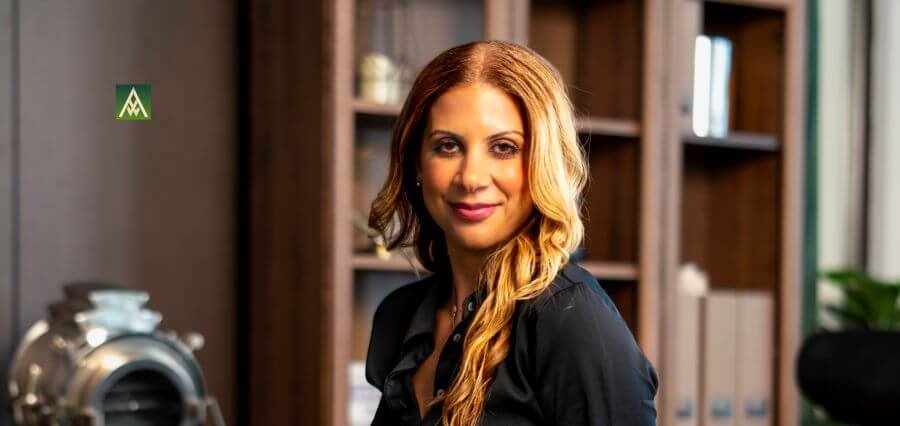
Karma Harb is the Founder and Group Head of Human Resources across Humanly and Watar Partners, a career that now spans more than two decades of HR work across recruitment, compensation, HR business partnering, and executive HR leadership across the Canada and the, a trajectory she describes as thorough but still, in her own words, unfinished. She reflects, “From a recruiter at the gentle age of 22, LinkedIn really wasn’t a thing back then, to specialist roles in Job Evaluation and Compensation, to more generalist roles as HRBP and HR Director, I feel like I have seen and done it all when it comes to HR, but even then, I still have not done it all!”
A Career That Has Seen (Almost) Everything
Across every title change the profession has gone through, from Human Resources to Human Capital to People and Culture, Harb says one thing has stayed constant: it is a function about people within organizations, how they grow and are retained, and how the best decisions get made on their behalf, regardless of what the function happens to be called in any given decade. That constancy is what eventually led friends, family, and acquaintances to start bringing her their own workplace confusion; an ill-equipped manager, a disciplinary action nobody explained properly, uncertainty about where a career should go next.
What began as informal conversations at dinner tables and over coffee gradually revealed a pattern too consistent to ignore: people across very different industries and roles were confronting the same lack of clarity about what was actually happening behind closed doors at work, and the same reluctance from their own HR departments to explain the reasoning behind decisions that affected their careers directly. She began to see her own accumulated experience, everything she had absorbed across job evaluation, compensation design, and executive HR leadership, as something that could genuinely help people outside the walls of any single company, not just within it. She explains, “My wealth of having dealt with so many situations within organizations, and understanding them deeply, is why I founded Humanly, which is an independent advisory service for professionals just trying to understand what the heck might be going on where they work.”
Leading Amid the Rise of AI Management
Asked how HR leadership is evolving, Harb does not reach for a tidy answer. She states, “This is a difficult question to answer with the advent of AI. I have seen that managers are now required to manage AI Agents well.” That shift raises immediate questions about training, workforce planning, and compensation budgets that most organizations have not yet worked through, since the traditional playbook for developing managers was never built with agentic tools in mind, and few management development programs currently address it at all. Her view of the HR leader who thrives next is specific: someone able to coalesce AI’s capabilities with the people function, not by eliminating roles simply because the technology allows it, but by carefully assessing what work genuinely needs to move to this new reality. That distinction, between adopting AI thoughtfully and using it as a blunt cost-cutting instrument, is one she returns to repeatedly when advising organizations on their own transitions.
It is also, she notes, a distinction that will only become harder to hold as the pressure to show quick efficiency gains grows, which is precisely why she believes the HR leaders who succeed will be the ones willing to slow down and ask what the organization actually needs before reaching for the technology, rather than adopting AI simply because competitors are doing so and the board expects visible progress.
Empathetic Accountability
The core value Harb returns to most is what she calls empathetic accountability, holding people to results while still making room for the circumstances behind their performance. She notes, “Since coming to the GCC I have seen either one or the other: a leader who is very empathetic and will allow the employee to free reign, or the other side where it is hard for employees to set any sort of boundaries and are often ruled by fear.” In practice, that means regular, honest conversations about performance paired with a genuine effort to understand what is happening in someone’s life or work environment, rather than treating a performance dip as purely a matter of effort or attitude without ever asking what might be behind it.
She has found that leaders who default entirely to one side or the other tend to produce the same result, teams that either drift without direction or comply out of anxiety rather than genuine commitment, and that both failure modes are surprisingly common across the region regardless of company size or sector. She affirms, “I have found that when leaders take the time to do both, employees respond with far more loyalty and effort than when only one side of that equation is present.”
Wellbeing as a Business Metric
Harb is direct about where most organizations still fall short: employee expectations have shifted, but employers remain reluctant to integrate them. She says, “Employers are still having a hard time understanding how employees work better when they have more balance.” That resistance, in her experience, is often less about the cost of change itself and more about a reluctance to question assumptions that have gone unexamined for a very long time. She is careful to note a generational divide underneath much of this tension, but insists that employers, regardless of that divide, have an obligation to genuinely weigh the cost of an unhappy or burned-out employee doing subpar work against a content one doing great work, a comparison she says most leadership teams have never actually run the numbers on.
The organizations that get this right, in her observation, treat wellbeing as a business metric rather than a perk, weighing attrition costs and retraining time against the price of flexibility. She adds, “The organizations that get it wrong tend to see wellbeing initiatives as optional extras, something to roll out only when times are good, and the first thing to be cut when they are not.” That inconsistency, she notes, does lasting damage to trust well beyond whatever short-term budget it saves, since employees remember which commitments disappeared the moment the business faced any real pressure.
The Simplest Problem That’s Also the Hardest
Across the organizations Harb advises, one challenge surfaces more consistently than any other, cutting across sectors, company sizes, and seniority levels in a way few other issues do. She explains, “One of the most common talent and leadership challenges that I have seen is leaders not being able to properly communicate expectations to their employees, and as a result the employees lack clarity in their everyday work.” That breakdown compounds over time, eroding performance conversations and leaving employees unable to communicate effectively with their own managers in return, a cycle that often does not surface until a formal review or a resignation forces the conversation that should have happened months earlier, by which point the relationship has usually already suffered damage that is difficult to fully repair. She adds, “It seems so simple, but it’s also so hard for some.”
Radical Candor and Consistency
On what distinguishes leaders who genuinely retain high-performing teams, Harb points first to candor. She says, “I truly believe that a leader that communicates candidlywith their staff truly earns respect from their teams.” Consistency matters just as much in her assessment; a leader who says one thing and does another, even once, can undo months of accumulated trust, regardless of how minor the inconsistency might seem to the leader themselves in the moment. She has watched otherwise capable leaders lose their teams’ confidence over a single broken commitment, regardless of how well-intentioned the original promise had been, a pattern she has seen repeat itself across industries she has advised, from finance to retail to technology.
She notes, “The leaders I have seen retaining high performing teams are the ones who are predictable in how they treat people, even when the news is not good, because their teams know exactly where they stand with them.”
Walking the AI Tightrope
Harb describes the current moment in workplace technology as a genuine balancing act, one she says most leadership teams are navigating without a reliable playbook to follow. She states, “Right now, we are all trying to walk this tightrope. What is too much AI and what is too little in the workplace.” She has seen companies measure employees on how frequently they use AI tools, a practice she finds troubling, since it optimizes for visible activity rather than the judgment that actually determines whether AI use produces anything of value, and risks pushing employees toward performative use of a tool rather than genuinely productive use of it. She affirms, “I believe that what should be measured is how well does that employee use AI to help solve business problems. Tracking how many emails an employee uses Claude for will not result in better business.”
Where Inclusion Policies Fall Short
For Harb, inclusion is measured less by policy documents than by whether employees feel safe expressing ideas that diverge from consensus, a distinction she has come to see as the real test of whether an organization’s stated values match its actual behavior. She explains, “Beyond policies, I believe that inclusivity means that an employee feels like they are comfortable expressing ideas that may not be what is typical.” In practice, that can be as specific as a leader actively asking the quietest person in the room for their opinion or making clear that disagreement in a meeting will not carry consequences later, small, repeated signals that accumulate into a culture rather than a single sweeping initiative that can be checked off a compliance list and forgotten. She notes, “I have seen organizations with excellent DEI policies on paper that still had a culture where only a handful of voices were ever really heard, and that gap between policy and practice is where most of the real work needs to happen.”
The Next Five Years of HR
Looking ahead, Harb is unambiguous about the force she expects to reshape the profession most. She says, “It’s clear to me that AI is going to change completely the way we work and how we think about hiring, training, retaining and planning for our human capital.” Her advice to organizations preparing for that shift is equally direct: take a hard look at the work actually being performed, identify what AI can eliminate or optimize, and determine what genuinely still requires a human and which competencies that will demand going forward, rather than waiting until the disruption has already forced the question and left organizations scrambling to catch up after the fact.
The Legacy: Lifting the Cloak
Asked what legacy she hopes to leave, Harb answers without hesitation: Humanly itself. Years spent watching missteps unfold, watching employees and managers fail to understand each other, and delivering performance improvement plans to people who might never have needed one had management communicated sooner, all fed directly into why she built it, and she has always tried, in those moments, to help the employee understand not just the decision but the reasoning behind it, a courtesy she noticed was rarely extended to people by the organizations she worked inside. She affirms, “Humanly is an independent, confidential advisory service meant to help professionals understand what might be happening behind the scenes, because there are often decisions that are made that HR disagrees with but still must be enacted on behalf of the company.” Her ambition is straightforward and, in her words, deeply personal. She says, “I want to lift that cloak for professionals so that they can confidently speak with their management team if there are issues that need to be addressed. I hope this to be my legacy.”
Across more than two decades spent inside HR’s every function, from recruitment to compensation to executive leadership, Karma Harb has arrived at a mission that runs directly counter to the profession’s usual instinct toward institutional discretion: give employees the clarity organizations so often withhold from them. Through Humanly and Watar Partners, that mission continues, one confidential conversation at a time, built on the same conviction that has carried her career from a 22-year-old recruiter to the founder of an advisory service built specifically for the moments when the workplace stops making sense, and for the professionals who deserve to understand, plainly and honestly, exactly what is happening around them.