
The global push toward cleaner energy has placed hydrogen at the center of innovation. As industries and governments seek alternatives to fossil fuels, hydrogen is emerging as a versatile and sustainable solution. Within this landscape, the debate around blue hydrogen vs green hydrogen has gained significant attention. Both forms offer pathways to reduce emissions, yet they differ in production methods, environmental impact, and long-term viability. Understanding these differences is crucial, especially as Hydrogen mobility continues to reshape transportation and energy systems worldwide.
Understanding Blue and Green Hydrogen Production Methods and Environmental Impact
To grasp the distinction between blue hydrogen vs green hydrogen, it is essential to examine how each is produced. Blue hydrogen is derived from natural gas through a process known as steam methane reforming. While this method generates carbon dioxide, the emissions are captured and stored using carbon capture and storage technologies. This makes blue hydrogen a lower-carbon option compared to traditional fossil fuels, but it is not entirely emission-free.
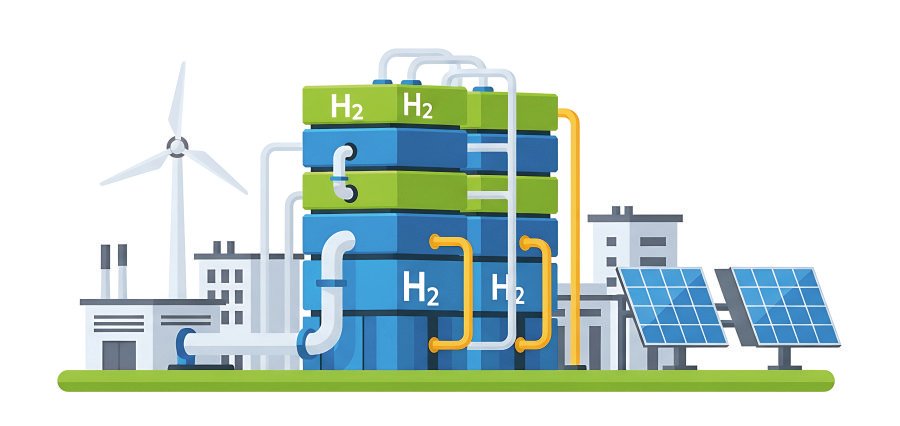
Green hydrogen, on the other hand, is produced using renewable energy sources such as wind or solar power. Through electrolysis, water is split into hydrogen and oxygen without releasing carbon emissions. This makes it the cleanest form of hydrogen currently available. However, the production of green hydrogen requires significant renewable energy infrastructure, which can be costly and resource-intensive.
The environmental implications of blue hydrogen vs green hydrogen are central to the ongoing debate. While blue hydrogen offers a transitional solution by utilizing existing natural gas resources, green hydrogen represents a long-term vision for a fully sustainable energy system.
Economic Feasibility and Infrastructure Challenges in Hydrogen Adoption
Cost and infrastructure play a decisive role in determining the adoption of hydrogen technologies. Blue hydrogen currently benefits from established natural gas infrastructure, making it more economically viable in the short term. The integration of carbon capture systems, however, adds complexity and cost, which can vary depending on the scale and efficiency of the technology.
Green hydrogen faces higher initial costs due to the need for renewable energy installations and advanced electrolysis systems. Despite this, falling costs of solar and wind energy are gradually improving its economic feasibility. Governments and private sectors are investing heavily in research and development to make green hydrogen more competitive.
When considering blue hydrogen vs green hydrogen, it becomes clear that both have roles to play in the transition phase. Blue hydrogen can act as a bridge, enabling industries to reduce emissions while green hydrogen infrastructure continues to develop.
Role of Hydrogen Mobility in Transforming Transportation Systems Worldwide
Hydrogen mobility is rapidly gaining traction as a clean alternative to conventional transportation fuels. From passenger vehicles to heavy-duty trucks, hydrogen-powered fuel cells offer a promising solution for reducing emissions while maintaining efficiency and range.
Fuel cell electric vehicles operate by converting hydrogen into electricity, emitting only water vapor as a byproduct. This makes them an attractive option for sectors where battery-electric solutions may face limitations, such as long-haul transport and industrial logistics.
The choice between blue hydrogen vs green hydrogen directly impacts the sustainability of Hydrogen mobility. While blue hydrogen can support early adoption by providing a readily available fuel source, green hydrogen ensures that the entire lifecycle of hydrogen-powered transportation remains environmentally friendly.
Countries around the world are investing in hydrogen refueling infrastructure, aiming to create a seamless network that supports widespread adoption. As technology advances, Hydrogen mobility is expected to become a cornerstone of future transportation systems.
Balancing Sustainability, Innovation, and Long-Term Energy Goals in Hydrogen Development
The future of hydrogen lies in balancing immediate needs with long-term sustainability goals. Blue hydrogen offers a practical starting point, enabling industries to transition away from high-emission fuels without requiring a complete overhaul of existing systems. At the same time, green hydrogen represents the ultimate goal of achieving a zero-emission energy ecosystem.
Innovation is driving progress in both areas. Advances in carbon capture technology are improving the efficiency of blue hydrogen production, while breakthroughs in electrolysis and renewable energy integration are making green hydrogen more accessible.
As the discussion around blue hydrogen vs green hydrogen continues, it is evident that a hybrid approach may be necessary. By leveraging the strengths of both, societies can accelerate the transition to cleaner energy while ensuring economic stability.
Hydrogen mobility stands at the intersection of this transformation, offering a tangible application of hydrogen’s potential. As investments grow and technologies mature, the role of hydrogen in shaping a sustainable future will only become more significant.