
Digital infrastructure has a particular quality that most other industries do not share when it is working well; nobody thinks about it. The data center humming quietly outside the city, the fiber network moving traffic between government ministries, the cloud layer underneath a bank’s customer-facing applications — these things only become visible in the moments they fail. The leaders who build and run them are, by design, invisible to everyone except the clients whose operations would stop without them. That invisibility is not a limitation. For the people who understand it, it is the whole point.
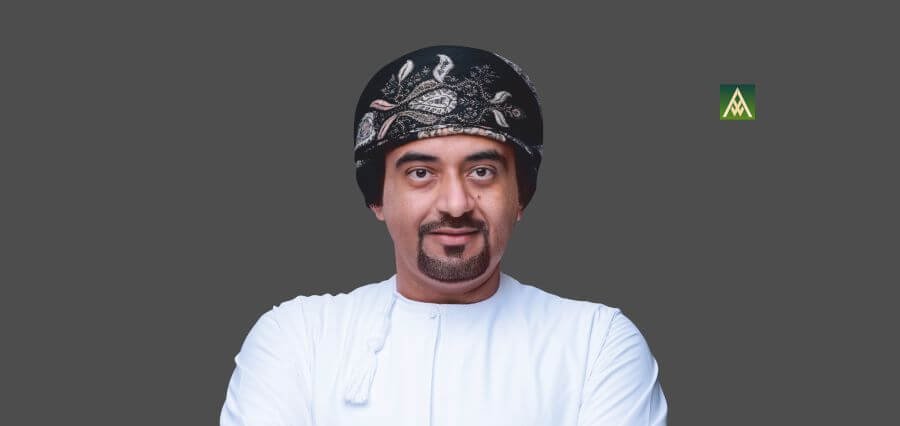
Abdulmonem AL Futaisi has spent nearly two decades understanding it. As CEO of Datamount, an Omani provider of data center, cloud, colocation, and cybersecurity services, he leads the company positioned at the foundation of Oman’s digital economy at precisely the moment that foundation is being put under the greatest pressure it has ever faced. AI workloads are reshaping what infrastructure needs to be. Cybersecurity threats are evolving faster than most organizations can track them. Government and enterprise customers are demanding local, sovereign infrastructure with a seriousness that did not exist five years ago. AL Futaisi has been preparing Datamount for exactly that convergence, and his philosophy for doing so comes down to a single principle: build for trust before you build for growth.
From Connectivity to the Full Stack
AL Futaisi’s path into infrastructure leadership was not built around a single defining moment. It was built around a series of roles in Oman’s telecommunications and technology sector where, as he puts it, he had to prove infrastructure works before anyone would trust it. The most formative of those was his time as Chief Operating Officer of Awasr, Oman’s first 100% fiber-optic network provider, where he helped take a young company from a standing start to being recognized as the fastest fixed broadband network in the country within a couple of years.
That experience left a specific mark on how he thinks about leadership. He says, “Speed and scale mean nothing without discipline underneath them. You can only move fast for as long as your infrastructure and your team can absorb that pace.” When he moved to lead Datamount as CEO in January 2023, Oman’s Vision 2040 agenda was accelerating demand for secure, sovereign digital infrastructure, and the transition reframed something fundamental in his thinking. The cost of getting it wrong was no longer just commercial. It was about the trust of an entire ecosystem of government and business customers whose operations depended on the infrastructure being there, working, every time.
Seamless Technology Evolution and What It Actually Demands
Datamount’s tagline is Seamless Technology Evolution, and AL Futaisi is candid about the leadership challenge embedded in that phrase. He says, “Evolution implies constant, deliberate change; seamless implies our customers should never feel the friction of that change.” His leadership style is hands-on but not controlling. He wants to be close enough to operational detail to ask the right questions, while giving teams the ownership to find the answers themselves. In a business where a single lapse in an operations room can have national-scale consequences, that balance is not a management preference. It is a structural requirement. A few principles stay constant: competence paired with accountability, heavy investment in Omani talent and local technical capability, and the kind of cross-functional coordination that only happens when people trust each other rather than relying on the organizational chart to force collaboration.
The Al Bandar Centre in Al Seeb, Datamount’s expanded facility built to scale to more than 700 racks without disrupting live operations, is a physical expression of that thinking. It was designed with a headroom rather than built to capacity and then scrambled to expand. Engineering, security, and customer-facing teams move in lockstep there because the design requires it, not because a policy document says they should.
When Demand Outran the Plan
The most demanding period AL Futaisi describes from his tenure at Datamount was not a technical failure or a competitive threat. It was a success problem: appetite for cloud, AI, and data residency in Oman accelerated faster than most of the market anticipated, and the company faced a genuine tension between expanding quickly enough to capture that demand and protecting the operational discipline on which its reputation was built.
He chose to expand in phases. New capacity came online in stages that could be fully tested and stabilized rather than opened simultaneously under pressure. It meant difficult conversations, including with customers who wanted capacity faster than he was willing to commit to delivering safely. He says, “Growth and reliability are not in tension if you are honest about sequencing. The mistake is trying to have both at full speed simultaneously.” Since that period, capacity decisions at Datamount have been made with operational readiness as the first filter rather than the last one. That sequencing discipline, earned through a period of uncomfortable decisions, is now structural.
Three Trends, One Positioning
AL Futaisi identifies three forces currently reshaping the data center and cloud infrastructure sector, and Datamount is positioning around all three simultaneously rather than treating them as separate bets.
The first is AI. Not as a service Datamount sells, but as a customer of infrastructure itself. AI workloads demand higher power density, more sophisticated cooling, and lower latency than traditional enterprise computing, which means infrastructure designed five years ago is not automatically fit for purpose today. Datamount’s facilities were engineered with the headroom to support higher-density, AI-ready workloads rather than needing retrofit later.
The second is cybersecurity. He says, “Customers no longer ask if we are secure. They ask us to prove it continuously.” Rather than treating security as an add-on service, Datamount has built it into the core infrastructure relationship, so clients receive protection as part of the package rather than a separate procurement conversation.
The third is the growing preference for sovereignty and local infrastructure. Governments and enterprises increasingly want data to stay onshore, under local jurisdiction. As an Omani, institutionally backed provider, Datamount is positioned as the trusted local alternative for organizations that want the benefits of cloud and AI infrastructure without giving up control of where their data physically resides. He says, “The opportunity is not to compete with global hyperscalers on scale. It is to be the infrastructure partner that understands local needs better than anyone flying in from outside the region.”
Innovation Without Experimenting on Customers
In infrastructure, the two things’ customers value most are apparently contradictory: they want cutting-edge capability and utter predictability. AL Futaisi resolves that tension by ring-fencing innovation from core operations rather than blending the two. Operations teams are measured on consistency and precision. Innovation happens more deliberately, in how new capacity is designed before it goes live, in how emerging services are integrated, and in how client conversations surface gaps between what customers need and what the market currently offers.
He says, “Our most useful ideas have come directly from customers describing a gap between what they need and what the market currently offers. Innovation is staying close enough to real problems that we are solving for where the industry is going, not just where it already is.”
What Ethics Looks Like in an Operations Room
AL Futaisi is direct about how he understands ethics in an infrastructure context. It is not an abstract value statement. He says, “When you hold customers’ data and infrastructure, integrity shows up in unglamorous ways: being transparent when something goes wrong and being honest about what you can and cannot deliver.” That same directness shapes how he defines success more broadly. He measures it not against quarterly numbers but against a more demanding standard: are the organizations and people who depend on Datamount genuinely better off because the company exists? Is Oman’s digital economy more resilient, more secure, and more capable of competing regionally and globally because of what the company does? Revenue and growth matter, but he frames them as outcomes of getting that bigger picture right, not the definition of it.
What He Would Tell Someone Starting Out
AL Futaisi’s advice to emerging leaders is grounded in the same operational discipline that defines his own career. He says, “Do the unglamorous work before you claim the glamorous title. The most valuable years were the ones with the least visibility.” He warns against mistaking speed for progress, and against the temptation to equate constant motion with leadership. A handful of well-sequenced decisions made with discipline, he says, beats a high volume of activity.
His third piece of advice is about reputation. He says, “Protect your reputation as an asset. It is built slowly over years of trust and can be undone by a single bad decision.” In infrastructure and technology, trust compounds. The leaders who last are the ones who never treat it as guaranteed.
The Foundation, Not the Headline
AL Futaisi’s long-term vision for Datamount is to be the infrastructure backbone that Oman’s digital economy is built on, not just a data center operator, but the trusted layer underneath AI adoption, cloud growth, and cybersecurity resilience for government and enterprise alike. That ambition connects directly to Vision 2040 and the country’s push toward a technology-driven, diversified economy. Continuing to expand capacity ahead of demand rather than behind it, deepening cybersecurity capabilities as threats grow more sophisticated, and ensuring AI-ready infrastructure is already built rather than a future promise are the near-term expressions of that vision.
As for legacy, he is clear about what he wants it to look like. He says, “I would rather be remembered for what the company became capable of than for anything I personally did while leading it.” The next generation of leaders in this industry will inherit infrastructure challenges that cannot be fully predicted today. AL Futaisi’s aim is to leave them a foundation solid enough to build on, and a standard of discipline clear enough to follow. In an industry that only becomes visible when something goes wrong, that is exactly the kind of legacy worth building.