
The hospitality industry does not forgive mediocrity. Guests form opinions within seconds of arrival, staff turnover is among the highest of any sector, and the culture of a venue, the invisible quality that determines whether a guest feels genuinely welcomed or merely processed, is being made and unmade in thousands of small interactions every single day. That culture cannot be mandated from a head office or installed like a software update. It has to be built deliberately, sustained through leadership, and protected when pressure makes shortcuts tempting. The people doing that work rarely appear on the guest’s radar. But nothing the guest experiences happen without them.
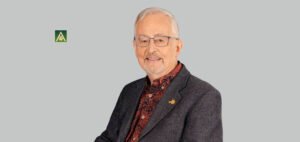
Olga Maliseva is one of those people. As Group HR Manager at CÉ LA VI, an international lifestyle and hospitality brand with a presence across key global cities, including Dubai since 2019 , she sits at the intersection of people and performance in an industry that demands both at a standard most sectors do not approach. Her career has taken her across different countries, cultures, and stages of business growth, and the accumulated experience has produced a leadership philosophy built around a single conviction: that the true measure of an HR leader is not the policies they create but the positive impact they have on both people and business performance.
Why HR, and Why It Still Matters
Maliseva’s decision to build her career in human resources was not accidental. It came from an early recognition, observed across multiple professional environments, that the organizations doing well were almost always the ones that took their people seriously. Financial results, operational efficiency, and strategic clarity matter enormously. But they are all downstream of the quality of the teams executing them. She says, “Every successful business is built on its people. It is engaged, motivated, and well-led teams that ultimately determine long-term success.”
What drew her specifically to HR was the opportunity to influence both sides of that equation simultaneously, the people’s dimension and the business dimension, in a role where the connection between the two was direct and measurable. Working across different cultures and stages of business growth deepened that understanding considerably. She learned early that there is no universal playbook for people management. What works in one cultural context falls flat in another. What motivates a team in a startup is different from what sustains engagement in a scaled, multi-site operation. The common thread, across all of those contexts, is the need for HR to act as a genuine strategic partner rather than an administrative function responding to decisions made elsewhere.
People Strategy Is Business Strategy
One of the most consistent things Maliseva says about her work is also one of the most straightforward: people’s strategy and business strategy should not be separate documents with separate owners. They should have the same conversation. She says, “I believe people strategy should never exist separately from business strategy. Every HR initiative should contribute to achieving the organization’s commercial goals.”
That integration changes what HR leadership actually looks like in practice. It means understanding the business well enough to know which people’s decisions have the biggest commercial consequences. It means being in the room where strategic choices are made, not just implementing the outcomes of those choices. And it means being able to speak the language of business performance alongside the language of employee experience, because the two are connected in ways that often get obscured by how organizations structure themselves.
The second part of her argument on this point is equally important: high performance and positive culture are not in tension. She has found, consistently, that when employees understand the purpose behind their work, feel supported by their leaders, and see a path for their own growth, they perform at a higher level. The organizations that treat culture as a distraction from performance, or performance as a reason to deprioritize culture, tend to end up with neither.
From Supporting the Business to Shaping It
The milestone Maliseva identified as most defining in her professional journey was not a specific project or award. It was a shift in how she understood her own role. The transition from supporting the business to helping shape its direction came through experience leading HR across multiple countries and supporting business expansion, situations where the complexity was high and the margin for error was real.
That experience taught her something that does not appear in most HR job descriptions: the ability to influence strategy, guide leaders through change, and build cultures that enable sustainable growth across geographies and contexts. She says, “The true measure of an HR leader is not the policies they create, but the positive impact they have on both people and business performance.” That standard, applied consistently, is what eventually moved her from the supporting role to the shaping one. It is also the standard she holds herself to now.
Listen Before Acting
Employee expectations around wellbeing, flexibility, career development, and workplace culture have shifted significantly in recent years, and Maliseva is direct about what that requires of HR leaders. The answer is not a new framework, or a wellbeing program rolled out across all sites simultaneously. It is the discipline to listen before acting. She says, “Employee expectations are constantly evolving, so HR strategies cannot remain static. Regular feedback, meaningful conversations, and data help us understand what truly matters to our people rather than making assumptions.”
That sounds simple. In practice, it is not. Listening with the intention to act, rather than listening as a form of consultation theatre, requires a genuine commitment to changing something based on what people say. It means being transparent about what is possible and honest about what is not, rather than creating the impression that feedback is being gathered without the substance of it being acted upon. In hospitality, where the workforce is large, often multilingual, and spread across multiple operational sites, maintaining that quality of dialogue requires deliberate design rather than good intentions.
Why People Stay
On talent acquisition and retention, Maliseva’s position is clear, and experience is backed. She says, “People rarely leave leaders they trust. When employees feel respected, supported, and inspired by their managers, they are far more likely to stay, grow, and contribute to the organization’s long-term success.”
That is not a rejection of compensation or benefits, both of which she regards necessary conditions. It is a statement about what actually determines the decision to stay once those basic conditions are met. The leader in relationship, she has found, is the variable that most consistently explains why high-performing employees choose to build their careers inside an organization rather than taking their capabilities elsewhere. Which means that leadership development is not a talent retention initiative sitting alongside the real retention work. It is retention work.
Culture Is What Leaders Do Under Pressure
Maliseva’s view of organizational culture is grounded and practical. She says, “Culture is created through everyday actions, not statements on a wall. Employees watch what leaders do far more than they listen to what leaders say.” That observation changes the lever for cultural change. If culture is transmitted through behavior rather than communication, the primary intervention is not a new values document or a leadership off-site. It is the consistent behavior of leaders in ordinary moments, how they respond when something goes wrong, how they treat people when no one senior is watching, whether they follow through on commitments they have made.
She anchors her approach to two principles. The first is accountability. If a commitment is made to an employee, it should be honored. If something promised cannot be delivered, the reasons should be explained honestly rather than the subject being quietly dropped. The second is a genuine voice. She creates mechanisms for employees to share ideas, concerns, and suggestions, and commits to acting on what she hears rather than acknowledging it and moving on. When people feel heard and involved, she has found that engagement and motivation follow, not as outcomes of a program but as natural consequences of being treated with respect.
When the Ground Shifts
One of the most revealing tests of Maliseva’s leadership philosophy came during a period of significant business uncertainty. She had to make difficult decisions while trying to maintain trust, engagement, and morale among people who were anxious about what was coming. The experience reinforced something she has returned often since: employees do not expect leaders to have all the answers during difficult periods, but they do expect honesty, visibility, and consistency. She says, “Resilience is not about avoiding difficult decisions, but about making them with empathy, fairness, and integrity.”
Being present and communicating openly during that period, rather than retreating into process management, built a quality of trust that extended well beyond the crisis itself. Employees remembered how they were treated when things were hard, and that memory shaped their engagement and loyalty long after conditions had improved. The lesson she drew from it applies to every difficult HR situation she has faced since the way decisions are made, and the way they are communicated matters as much as the decisions themselves.
Technology That Enhances Rather Than Replaces
Maliseva is pragmatic about technology’s role in the HR function. AI, automation, and data analytics have genuine value in reducing administrative burden, identifying trends early, and personalizing employee experience. She is direct about where she sees the opportunity. She says, “Technology is transforming HR by allowing us to spend less time on administration and more time on people.” The freed-up time is the real benefit, because it can be redirected toward the work that technology cannot do: meaningful conversations, difficult judgements, and empathy applied to specific human situations. What she does not believe is that AI or automation changes the fundamental nature of the function. The human side of HR, the capacity to read a situation, to know what a person actually needs rather than what the data says they should need, and to make decisions that are fair as well as efficient, remains fundamentally human.
The Legacy Worth Building
When Maliseva talks about the legacy she wants to leave, she is clear about what it is not. It is not a body of policies, a set of processes, or a record of programs implemented. She says, “If there is one legacy I would like to leave, it is helping to change the perception of HR from a support function to a true strategic partner that creates value for both people and the business.”
Her advice to aspiring HR professionals reflects the same priorities that have guided her own career: stay curious, understand the business deeply, earn trust through consistency and authenticity, and measure your success not by the volume of activity you generate but by the quality of impact you create. She adds that the most important qualities for future HR leaders are not technical; they are relational. The ability to influence without authority, to build trust across organizational layers, and to make decisions that people respect even when those decisions are hard, is what separates the HR professionals who shape organizations from the ones who merely serve them.
In Dubai’s hospitality sector, where the standard of excellence is high and the competition for talent is intense, Olga Maliseva has built something worth noticing: a version of HR leadership that takes the business seriously without losing sight of the people who make the business possible. That combination, commercial rigor and genuine human commitment, is harder to achieve than either on its own, and it is exactly what the function needs most.