The Late Bloomer Who Fell in Love with Urdu: The Musical Journey of Ratnakar Pandey
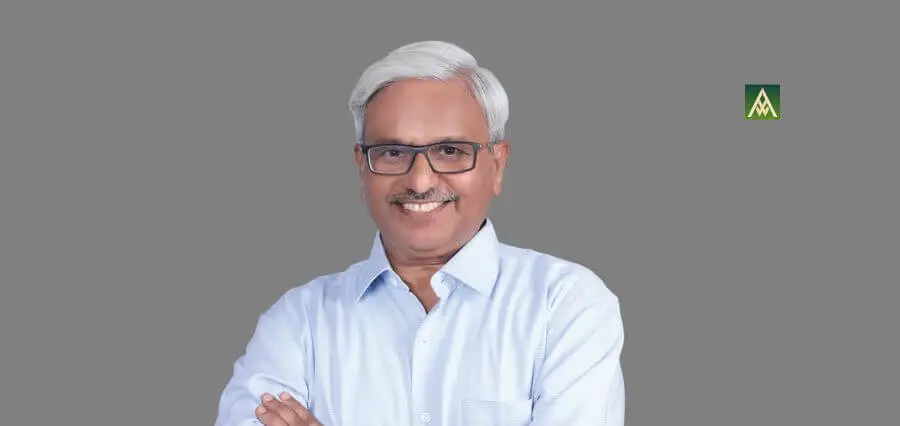
There is a certain kind of courage in beginning, something new at an age, when most people are winding down. Ratnakar Pandey, from Prayagraj (India), an Ex-Group ‘A’ I.E.S. Officer (1983 Exam Batch), having dealt with gigantic work of supply chain and logistics, for one of the biggest Railway networks, of the world, i.e. Indian railway, now in his mid-sixties, has built that courage into a second career, as a singer of Hindi film songs and, most distinctively, of Urdu Ghazals.
His story is not simply about rediscovering a childhood passion for singing. It is about the deliberate, disciplined pursuit of a language, he considers the soul of the Ghazal itself, and it offers a compelling case study in what late-life reinvention can look like, when approached with sincerity and craft.
A Voice Shaped by Decades of Listening
Pandey’s connection to music began long before he ever sang a note in public. Growing up in a household filled with Bhajans, Keertans, and festive Ladies Sangeet, he absorbed melody quietly, while his parents insisted he focus on academics instead of singing lessons. Songs by K.L. Sehgal and Mukesh, heard from his mother and elder brother respectively, embedded themselves in his memory during childhood and stayed there for decades.
Hostel life during his Civil Engineering Degree studies in Prayagraj introduced him to Ghazals through cassette played in his neighboring rooms, while his years in Postgraduate study in IIT Delhi for two consecutive MTech. Degree in soil mechanics and Foundation Engg (technical side) and Behavioral and Social Sciences (Human Side, i.e. Humanities) and later a 36-year career with the Central Service, spanning cities from Mumbai to Kapurthala and Guwahati, kept exposing him to new music, even as demanding professional responsibilities, left no room to perform it himself.
It took nearly five decades of listening, absorbing, and quietly rehearsing in his mind, before Pandey finally stepped onto a stage. Encouraged by the applause culture at his Official Club in Guwahati, he began performing at functions from 2019 onward.
The onboarding of the Starmaker App during the 2020 Pandemic lockdown accelerated his progress considerably, giving him access to instrumental tracks for almost any song, he wished to attempt. His very first upload, a tribute to his late mother’s favorite Sehgal number, drew an enthusiastic response and set him on a path that has not slowed since.
Why Urdu Became the Turning Point
While Pandey’s early repertoire drew heavily from Hindi film classics by Mukesh, Kishore Kumar, Talat Mahmood and Shailendra, it was his growing fascination with the Ghazal that redirected his focus most sharply. He gravitated first toward the work of Pakistan’s Mehdi Hasan, widely regarded as Shahanshah-e-Ghazal, tackling landmark compositions written by poets such as Ahmad Faraz and Faiz Ahmad Faiz.
He went on to explore the repertoires of Jagjeet Singh, Begum Akhtar, Nusrat Fateh Ali Khan, Talat Aziz and Noor Jehan, gradually assembling a collection that today spans twenty-nine Ghazals from seven legendary artists.
What sets Pandey apart from a casual enthusiast, and what forms the true heart of his artistic identity, is the seriousness with which, he approached the language underlying this art form. He recognized that a Ghazal cannot be sung with real feeling, if the singer does not understand the nuances of the words. Urdu, he often points out, is a language of adab, of nafaasat and tahjeeb, carrying the refinement of Mughal courts and the emotional precision that makes Ghazal poetry so enduring.
Last year, he enrolled in online classes specifically to learn to read and write Urdu and completed it, a decision that reflects both artistic discipline and personal sentiment. Neither of his parents received formal lessons in Urdu language despite their own quiet fondness for reading it, and Pandey has described his own study of Urdu as a heartfelt tribute to them, arriving decades after their gentle, affectionate rivalry over reading Urdu text in the family home.
He frequently cites a couplet by the nineteenth-century poet Nawab Mirza Khan, known by his pen name Daag Dehlavi, as capturing the essence of what draws him to the language: a celebration of Urdu’s universal reach and its poetic elegance. For Pandey, learning to read the script is not a peripheral skill, but the foundation that allows him to interpret a Ghazal’s meaning rather than merely mimic its sound, an approach that distinguishes serious Ghazal singers from those who perform by rote.
A Repertoire Built for the Stage
That foundation has since translated into a substantial and varied repertoire suited to a wide range of settings. Pandey’s current catalog includes twenty-nine Ghazals from seven legendary artists, seventy-four classic Hindi songs spanning fourteen different singers, three Bengali songs, and a Punjabi Ghazal, reflecting the linguistic range, he picked up while living in West Bengal and Punjab during his working years. He has performed live at venues including the Railway Club in Guwahati, Kolkata, Kharagpur, Rangia (Assam), and Prayagraj, at a Diwali carnival organized by a leading regional newspaper, and at family celebrations, consistently drawing engaged audiences.
He describes his collection as suited to two-hour programs, private mehfils, corporate functions, and luxury events, with material curated for different moods across an evening, including livelier numbers intended to close a show on a high note. He is equally comfortable offering and comparing services alongside performance, giving event organizers a single point of engagement for structuring an evening’s entertainment from opening welcome to closing crescendo.
Looking Ahead
Pandey now hopes to extend his performances beyond India, with particular interest in the Middle East and Europe, ideally structuring tours around multiple venues in a single trip. His reasoning is rooted in a conviction that music transcends language and borders, connecting listeners emotionally regardless of where they are from, and that Indian musical traditions continue to resonate with audiences worldwide.
For event organizers, cultural societies and private hosts seeking a performer, whose Ghazal repertoire is grounded in genuine linguistic understanding rather than surface imitation, Ratnakar Pandey offers a rare combination: decades of absorbed musical memory, disciplined self-study of Urdu, and a demonstrated ability to move audiences across genres and languages.
He can be reached through his
LinkedIn profile, Instagram handle ratnakar1266,
email at ratnakarpandey011@gmail.com, or
WhatsApp (0091-8017158706) for further engagement details.