
Every memorable hotel stay involves dozens of invisible decisions made before the guest arrives. The financial controls that protect the budget allow the property to be built. The procurement systems that ensured the right suppliers were in place. The HR frameworks that attracted the people who would deliver the welcome. The technology systems that ensured check-in were seamless, and management had the information they needed to run the operation effectively. None of these things appear in the guest experience. All of them determine whether it is possible.
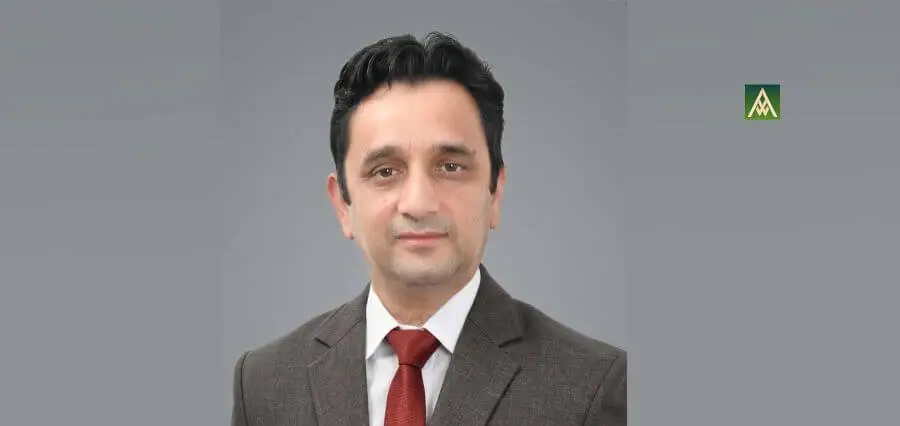
Sanjay Gupta has spent thirty years building and leading the systems that make exceptional hospitality possible without ever appearing on the front stage. As Director of Business Support at The ART Hotel and Resort in Bahrain, he oversees finance, human resources, information technology, procurement, and security. His career has taken him through globally recognized brands including Holiday Inn, Marriott, Ritz-Carlton, Rotana, and Royal Golf Club managed by Troon. The decision to move beyond operational roles and into the infrastructure of hospitality was not accidental. It was the direct result of an early realization that exceptional guest experiences are built on exceptional support systems, and that the leaders who build those systems rarely receive the credit their contribution deserves.
He reflects, “Business support functions are often viewed as behind-the-scenes operations, yet they are fundamental drivers of organizational success. Every initiative must ultimately contribute to business growth, customer satisfaction, and stakeholder value.”
Two Milestones That Defined the Career
Two moments stand out in Sanjay’s career as defining tests of his leadership philosophy. The first was the global financial crisis, which demanded a comprehensive contingency strategy that generated substantial cost savings while protecting the guest’s experience and maintaining business continuity. Leading financial operations through that period required decisions with no comfortable resolution, made transparently and accountably under sustained pressure.
The second was his involvement in the opening and growth of ART Rotana Bahrain, which later transitioned into The ART Hotel and Resort. Property openings require every support system to be built, tested, and operational before the first guest arrives, often against timelines that compress months of careful preparation into weeks of intensive execution. Leading that process across finance, technology, HR, procurement, and security simultaneously is the kind of cross-functional challenge that most specialist careers never demand.
He states, “Strong leadership requires balancing strategic financial discipline with a genuine commitment to people and service excellence. Financial rigor and human commitment are not competing priorities. They are the same leadership obligation expressed in different contexts.”
Integration as the Real Strategy
The most distinctive feature of Sanjay’s approach is his insistence on integration. Finance, HR, IT, procurement, and security are not departments that happen to share a reporting line. They are interconnected systems that either work together to create operational coherence or work in parallel to create operational friction.
His approach ensures every function understands its contribution to the guest experience and its interdependence with every other support function. Procurement decisions affect financial performance. Technology investments affect HR productivity. Security frameworks affect guest confidence. When these connections are actively managed, the support infrastructure becomes a strategic capability rather than a collection of functional silos.
He notes, “Operational excellence requires balancing long-term strategic planning with day-to-day execution. Teams perform at their highest level when they understand the broader business objectives and their individual role in achieving them.”
Technology With Human Purpose
Throughout his career, Sanjay has advocated technology as an enabler of human work rather than a replacement for it. The initiatives he has led include process automation, financial reporting enhancements, payroll system modernization, electronic document management, and integrated management of information systems. Each was designed to free people from repetitive, low-value work so they could invest more of their attention in the high-value work that technology cannot do: building guest relationships, mentoring colleagues, and solving complex problems that require judgement and experience.
Looking ahead, he sees artificial intelligence, predictive analytics, and cloud-based platforms continuing to reshape hospitality operations significantly. But the organizations that will emerge as leaders are those that combine technological capability with genuine human connection, not those that treat automation as a destination rather than a tool.
He affirms, “Technology enhances efficiency and provides valuable insights, but it should complement, not replace, the human element that defines hospitality.”
Transparency as a Leadership Tool
Every leadership career includes moments that test what the philosophy actually amounts to under pressure. For Sanjay, those moments arrived during periods of organizational change and economic uncertainty. The lesson he took from those experiences is one he returns to consistently: transparency and communication are most essential precisely when situations are most uncomfortable.
Leaders who remain visible, provide direction, and maintain honest communication during difficult periods build trust that persists through multiple business cycles. Teams can navigate significant challenges when they understand what is happening and why.
He says, “People can handle difficult news about the market. What they cannot handle is a leader who won’t name it.”
Developing People as Strategic Investment
Among the aspects of his career that Sanjay describes with the most evident engagement is talent development. His approach centers on mentoring, coaching, empowerment, and continuous learning applied consistently. Team members who take ownership and actively seek growth are the mechanism through which an organization develops the adaptive capacity to navigate constant change.
His advice to aspiring professionals reflects the same conviction. Embrace continuous learning. Remain adaptable. Lead with integrity. Technical expertise opens doors, but long-term success is ultimately defined by character, resilience, and the ability to inspire others toward a shared vision.
The Legacy in the Systems
When Sanjay considers the legacy, he hopes to build through thirty years of leadership across hospitality’s most essential invisible functions; he reaches for something more durable than metrics or recognition.
He wants to be remembered for helping individuals reach their full potential, for building organizations that are resilient and prepared for futures no current planning cycle can fully anticipate, and for demonstrating through consistent application that the support infrastructure of a hospitality organization is not a back-office concern but a strategic capability.
He reflects, “Beyond achieving financial and operational results, I want to be remembered for helping individuals reach their full potential and for building organizations that are resilient, innovative, and prepared for the future.”
The systems that nobody sees are the ones that hold everything together. Sanjay Gupta has spent thirty years proving it.