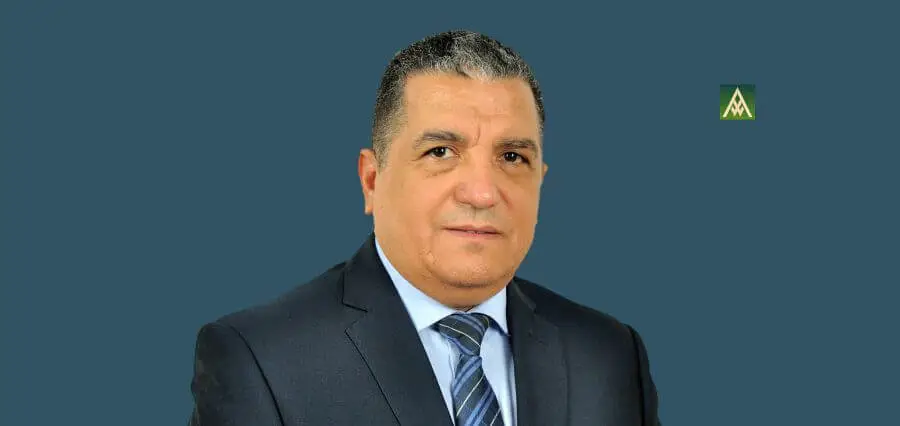
Building a hotel brand from nothing is a different challenge entirely from managing an established one. There are no inherited systems, no brand playbook to follow, and no reputation to lean on. Everything has to be created, tested, and earned from the ground up. The leaders who take on that kind of work bring something that no management programme fully prepares anyone for: the willingness to make every decision themselves and stand behind every outcome. Mohamed El Kashef, General Manager of Velar Inn Hotel, has done exactly that, growing the brand into one of Taif’s most recognized four stars property through people, culture, and a genuine commitment to hospitality done right.
Growing Through Experience, Culture, and Leadership
With a career spanning more than three decades, Mohamed began his hospitality journey in 1991 and has built extensive experience across international hotel groups and leading local hospitality brands. Throughout his career, he has gained expertise across a wide range of departments, including accounting, food and beverage, front office, sales, cost control, credit, and finance.
This diverse operational and financial background eventually led him to his role as General Manager and, most recently, to his position as General Manager of Velar Inn Hotel – Taif – Kingdom of Saudi Arabia, where he embraced one of the most challenging opportunities of his career: building a hotel brand from the ground up. With no established systems, brand legacy, or existing reputation to rely on, Mohamed has played a central role in shaping the hotel’s operations, culture, and identity from the very beginning.
His early career began with Accor in Egypt and Saudi Arabia. He started from the ground up as a bill collector, with little knowledge of the different functions within the hotel business. Step by step, he gained experience across Accounting, Food and Beverage, Front Office, and Sales. This exposure gave him a broad understanding of hotel operations and helped shape his approach to hospitality management.
He later received an opportunity through Accor to participate in an International Hospitality Management Program with ESSEC IMHI (Institute De Management Hôtelier International), associated with Accor Académie. The program was the International Hospitality Management Program (IHMP), held in Paris.
The study focused on international hotel business and prepared professionals to work as expatriates in different countries. One of the important lessons he gained was the need to understand the culture of the people in a new country.
That lesson became particularly valuable when he moved from Egypt to Saudi Arabia. Over the years, he developed experience across Alexandria, Cairo, Hurghada, Sharm El Sheikh, Dahab in Egypt and Riyadh, Jeddah, Al Ula, and Taif in Saudi Arabia, building expertise in Food and Beverage, Cost Control, Credit, and Finance before progressing to Assistant General Manager and eventually General Manager.
Turning Experience into a New Hotel Vision
The opportunity to build Velar Inn Hotel became a defining chapter in Mohamed’s career. Unlike international hotel brands, where specialized teams typically handle areas such as brand identity, policies and procedures, IT, recruitment, and operational setup, this time he was responsible for building everything from the ground up. When he first entered the property, there was essentially only a building structure. There was no furniture, no established hotel operation, and no existing systems in place. The company itself was also new to the hospitality business.
For Mohamed, this was a unique opportunity to combine his international hospitality experience with the responsibility of creating something from the beginning. He was involved in selecting the brand name, developing the brand identity, creating the logo, and ensuring that the identity reflected local Saudi culture. He also oversaw furniture selection, the development of standard operating procedures, recruitment, staffing requirements, and financial forecasting for the owner, including evaluating how the investment could achieve its expected return. Rather than joining an established system, Mohamed had to create the system himself. He describes this as one of the most challenging experiences of his career, but also one of the most valuable. It allowed him to take the knowledge and experience he had gained throughout his international career and apply it to building a local hospitality brand from the ground up.
Changing the Perception of Hospitality in Taif
When Mohamed started in Taif, the market presented another major challenge. Taif was well known, but hotels were not yet the dominant accommodation option. Local apartments were much more familiar to customers. At the time, there was only one major international hotel brand in the city. As a result, many people associated the idea of staying in a hotel in Taif with that established international brand.
One of his most significant challenges was to establish the Velar Inn Hotel as four stars hotel rather than a local apartment property. This required far more than marketing; it also required a disciplined change in mindset. Many people were accustomed to apartment accommodation and therefore needed to adopt the hotel standards, four stars service, and expectations of a genuine hotel. He worked intensively to embed the hotel way of operating, ensuring that the property was understood and delivered in line with four stars hospitality. The objective was to shift the culture from apartment thinking to professional hotel service.
Over time, these efforts produced clear results. The hotel became well known throughout Taif and established itself among the city’s leading properties. After its opening, other operators entered the market, and some even visited the Velar Inn Hotel to observe the approach.
He highlighted that a major international hotel had begun competing with Velar Inn Hotel and closely observing its strategy—an achievement that reflected the hotel’s growing influence in the market. Within just four to five years of opening, Velar Inn Hotel had consistently ranked among the top five hotels in Taif, demonstrating its strong market position and reputation. The hotel had also received its official four stars classification from the Ministry of Tourism from the very beginning. At a time when Taif had no five stars properties, Velar Inn Hotel quickly established itself as one of the city’s largest and most prominent hotels.
People at the Heart of Hospitality
For Mohamed, the strongest foundation of hospitality is not the building, furniture, or technology. It is people. He believes that “People is the core of the hospitality, the core of the success.” He also emphasizes the role of people in creating a meaningful difference within the business.
His approach is especially focused on developing people from within. When a new position becomes available, he prefers to give existing employees the opportunity first.
His philosophy is straightforward: give employees the opportunity, observe their performance, and allow them to demonstrate that they deserve the position.
This creates a sense of development within the team. Employees can see that effort can lead to growth rather than assuming that every senior position will automatically be filled by someone from outside. He views this as a win-win situation. The company develops its own people, while employees understand that their efforts can lead to real opportunities.
Several examples from his team demonstrate this approach. For employees get training and takes over new managerial position within the company.
El Kashef chose not to immediately replace the position externally. developing employees is an important part of building a sustainable hospitality organization.
Creating a Digital Guest Journey
Technology has also become an important part of the hotel’s approach. One of the internal slogans used by the team is “Be Digit.”
The objective is to create a digital journey for guests that begins before they arrive and continues throughout their stay, incorporating guest preferences and loyalty programs. For a local brand, having its own mobile application and loyalty program is particularly significant. It allows the hotel to provide capabilities that guests often associate with international hospitality brands.
The mobile application also gives guests the opportunity to view rooms through videos before they arrive, helping them understand the experience in advance. Data analysis plays another important role. By analyzing guest preferences and comments, the team can understand what guests want and anticipate their needs instead of simply reacting to requests.
Mohamed believes artificial intelligence and technology provide the ability to study guests, understand the market, and become more proactive.
The hotel also works with its property management system provider to connect with various government-related platforms in Saudi Arabia. It was among the early users of the Kwentra PMS system in the country, and its experience helped contribute to the system’s development as it expanded to more properties.
The results can also be seen through guest feedback. The hotel has a 9.3 rating on Booking.com and a 4.7 rating on Google, which he connects with the focus on guest satisfaction.
Understanding Guests, Creating Personal Experiences
For Mohamed, the key to delivering personalized hospitality can be summarized in two words: “Know your guest.” “Understanding guests means knowing their preferences, what they like, and what they do not like.” This becomes especially important in the Arab region, where guest preferences can vary significantly from one country to another.
Saudi Arabia, the United Arab Emirates, Qatar, and other countries may have different expectations and cultural preferences. Taif itself presents a unique challenge because different types of visitors can arrive at the hotel at the same time. The city hosts a diverse range of events, including Horse-Riding Events and the Crown Prince Camel Festival, drawing visitors from across the region and around the world. These events contribute to Taif’s growing appeal as a destination for cultural, sporting, and heritage experiences, attracting people from diverse nationalities and backgrounds.
His challenge is to satisfy these different guests while providing each guest with a personalized experience. The objective is for every guest to feel that the service has been designed specifically for them. Even elements such as the pictures displayed in rooms contribute to creating that feeling.
Combining Culture with Modern Convenience
Mohamed believes that “Hospitality should respect culture while embracing modern convenience.”
For international guests, providing technology and modern hotel services is important, but it is equally important to give them an authentic taste of Arab hospitality.
His approach is to ensure that international guests do not simply experience services that could be found anywhere. Instead, they should experience something connected to the culture of Saudi Arabia and the region. This combination of cultural understanding, personalized service, technology, and people development forms the foundation of his hospitality philosophy.
Advice for the Next Generation of Hospitality Leaders
For young General Managers entering the hospitality industry, Mohamed emphasizes the importance of putting the team at the heart of the business. “The team is the heart, the core of the business.” A leader must develop and support the people around them because their success is closely connected to the team’s development.
At the same time, he encourages leaders to think differently and avoid routine approaches. Technology should be embraced, but leaders should also look toward the future and continuously ask what more can be done to create a different experience.
The goal should be to deliver unique and unexpected service.
He also emphasizes the importance of respecting culture and using it as part of the hospitality experience. For international guests visiting Saudi Arabia, providing a genuine taste of Arab hospitality can become an important part of their overall experience.
Building Success, Expanding the Vision
The strongest indication of Velar Inn Hotel’s success may come directly from its guests. One question Mohamed frequently hears is whether the hotel has another branch elsewhere.
For him, that question represents success. It shows that guests are not only satisfied with the existing experience but also want to find the brand in other locations.
His vision for the future is therefore to use the success of the existing brand as a foundation for new openings. The immediate focus is on expanding into other cities within Saudi Arabia, followed by opportunities outside the country.
The journey that began with a building containing little more than walls has developed into a recognized four-star hotel in Taif, supported by a team-centred culture, digital capabilities, personalized guest experiences, and a clear ambition for growth.
For Mohamed El Kashef, the next chapter is about taking what has been built in Taif and using that experience to create new opportunities. His career continues to demonstrate the value of starting from the ground up, developing people, understanding culture, embracing technology, and creating a hospitality experience that gives guests a reason to ask for the brand again.