
The most effective finance leaders are rarely those who simply manage numbers well. They understand that financial strategy exists to serve a purpose. Numbers tell a story about where an organization stands today and where it is genuinely capable of going. The real work of a CFO is connecting financial discipline to business ambition in ways that actually move the organization forward. That kind of leadership does not come from technical knowledge alone. It develops through years of working across different industries, different ownership structures, and different market conditions, each one adding a layer of understanding that no classroom fully replicates.
In a global business environment where growth opportunities and risks can shift quickly, organizations need finance leaders who bring both rigor and perspective to the table. The ability to close the books accurately matters. So does the ability to read a market, structure an acquisition, manage working capital across jurisdictions, and guide an operational team toward financial objectives they understand and believe in.
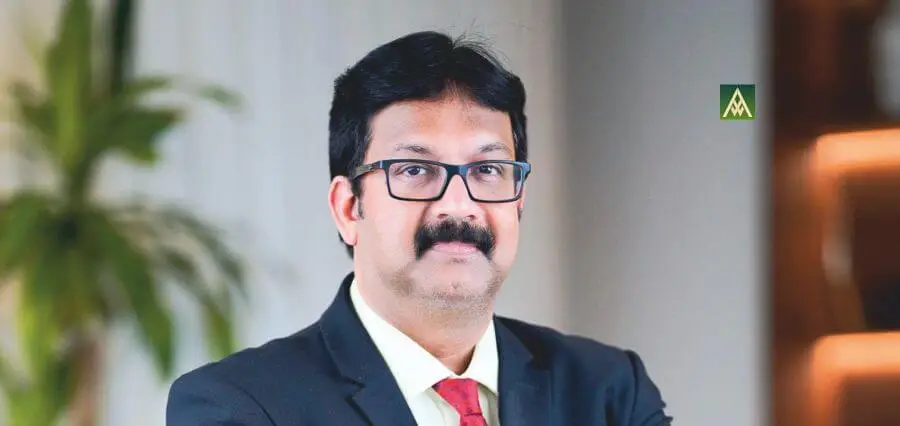
Dr. Krishnamoorthy K., Global CFO of Nooa Holdings Ltd., has spent his career building exactly that depth. He has worked across multiple companies, industries, and international environments. Through every stage, one belief has stayed constant: sound financial decisions are built on knowledge. Experience and qualification together open doors that neither can unlock alone. And arriving at a senior title is never a reason to stop being a student of the work.
Knowledge as the Foundation of Strategic Finance
Dr Krishnamoorthy’s professional approach to corporate finance and strategic leadership has been shaped by diverse industrial experience and various qualifications. Over the course of his career, he has developed a strong belief that knowledge provides the foundation for effective decision-making. For him, decision-making comes naturally when it is supported by knowledge, making continuous learning an important part of professional growth.
His diverse industrial experience and qualifications have contributed to the way he thinks about strategic financial decisions. Rather than viewing finance in isolation, he connects financial decisions with the objectives of ownership and the direction in which an organization wants to move.
The financial books are designed accordingly, with a focus on the approach required to take the company to the next level. For Dr Krishnamoorthy, financial direction and leadership are closely connected. While the financial approach establishes the direction, leadership involves guiding people towards that objective. “Guiding the team towards the objective is leadership. And fulfilling the objective is strategic,” he explains.
This perspective reflects the way his experience and qualifications have shaped his approach to corporate finance. Knowledge supports decision-making, financial objectives provide direction, and leadership brings the team together to achieve those objectives.
Aligning Financial Strategy with Global Ambitions
As Global CFO at Nooa Holdings Ltd, Dr Krishnamoorthy’s responsibilities connect financial strategy, capital planning, risk planning, and business objectives with the organization’s long-term growth ambitions.
The group’s financial strategy is long term and is connected to its ambition of establishing a global presence and becoming a more reliable partner. One of the key areas of the financial strategy is the acquisition of fast-growing businesses related to hospitality.
Capital planning supports this growth direction. The company is already stable with a sound net worth, while his role includes seeking additional avenues to raise funds for expansion. This requires financial planning that can support the organization as it looks towards further growth.
Risk planning is approached through close monitoring of the business. Various internal audit tools are used to control costs, while variance analysis provides another method of understanding financial performance. Watching the competition is also part of the techniques used to assess and manage risk.
At the business level, Dr Krishnamoorthy participates in management meetings with operations. His objective is to guide the operational teams towards achieving business objectives together. This keeps financial planning connected to the organization’s operational direction rather than treating finance as a separate function.
Creating Stronger Financial Processes and Controls
Strong processes and controls are central to Dr Krishnamoorthy’s approach to financial infrastructure. The group has formulated a strong Accounting Policy in line with SOX as part of its accounting process.
The policy provides a structured foundation for financial activities, while monthly closing of the books allows the organization to regularly assess its performance. Analysis of variance brings better control over the business by helping identify differences in expected and actual performance.
Timely financial information is particularly important to this process. With results ready by the fifth of every month, decisions can be made based on business performance.
For Dr Krishnamoorthy, the ability to close the books each month and analyze the variance supports better control and strengthens decision-making capabilities. Financial information becomes more useful when it is available at the right time and can be connected directly to business performance.
This approach creates a disciplined financial process while providing management with the information required to understand the organization’s position and make decisions accordingly.
Strategic Growth Through Mergers and Acquisitions
Dr Krishnamoorthy’s experience in IPOs, mergers and acquisitions, and financial structuring has contributed to his understanding of corporate growth and expansion.
He considers M&A activities an important way to scale a business. A key part of his expertise is identifying the appropriate business for acquisition. The process requires careful consideration before an organization commits to a transaction.
Due diligence is an important stage in this process. After the appropriate business has been identified and due diligence has been completed, final negotiation on valuation becomes crucial.
His approach therefore places importance on selecting the right acquisition opportunity, conducting due diligence, and reaching an appropriate valuation through final negotiation. These elements provide the foundation for using M&A activities as a means of scaling the business.
The experience gained through IPOs, mergers and acquisitions, and financial structuring has strengthened his ability to look at corporate growth from a financial and strategic perspective.
Maintaining Commercial Focus with Strong Governance
Financial strategies must support commercial objectives while remaining within a strong framework of compliance and governance. At Nooa Holdings Ltd, the Group Accounting Policy is aligned with SOX compliance.
A strong internal audit team also monitors the financial processes. This creates an additional level of oversight and supports the organization’s approach to financial control.
For Dr Krishnamoorthy, commercial objectives and compliance therefore work alongside one another. “Financial activities need to contribute to business goals while operating within established accounting and internal audit practices.”
The Accounting Policy and internal audit structure provide the framework through which financial processes can be monitored. This supports stronger control and allows financial strategies to remain connected to business objectives without losing sight of compliance.
Learning from Economic and Business Challenges
Dr Krishnamoorthy’s finance leadership journey has included several demanding challenges. The uncertain economic vibrations across the world can affect the smooth running of any business, requiring organizations to respond to changing circumstances.
Among the challenges he has encountered are managing working capital, generating funds, maintaining good talent, looking for different markets, developing different business partnerships, establishing businesses in new markets, maintaining compliance, and working with different nationalities.
Each of these areas has brought its own requirements. Working capital and fund generation require financial attention, while entering new markets and developing partnerships require an understanding of different business environments. Maintaining talent adds another important dimension to organizational continuity.
Working with different nationalities has also been part of his experience, bringing different perspectives and approaches into the professional environment.
While these situations have been challenging, they have also provided valuable learning experiences. They have contributed to his understanding of how financial leadership must respond not only to financial conditions but also to people, markets, partnerships, compliance, and changing business environments.
Staying Current in a Changing Financial World
Continuous learning remains important to Dr Krishnamoorthy as financial practices continue to develop. He stays current by attending various seminars, interacting with different professionals, and participating in innovative short-term courses.
These activities expose him to new techniques in the market and allow him to continue developing his understanding of changing financial practices.
His approach reflects his view that, “The financial world is changing continuously and requires professionals to remain updated.” Experience alone cannot replace the need to learn new techniques and understand new developments.
Professional interaction also plays an important role. Conversations with different professionals provide opportunities to understand changing practices and gain perspectives beyond one’s immediate work environment.
For Dr Krishnamoorthy, staying current is therefore an ongoing responsibility. Learning does not stop with professional experience or qualifications. It continues through seminars, courses, professional interactions, and exposure to new techniques.
A Career Built Through Every Opportunity
When reflecting on his career, Dr Krishnamoorthy does not identify one particular professional milestone as the event that changed his world. Instead, he sees his development as the result of experiences accumulated over a period of time.
Working in different companies and across different industries has taught him a great deal. He remains grateful to the owners who gave him opportunities to serve their organizations. Every company became a learning experience and contributed something to his career.
His immediate managers and colleagues also played an important role in his development. Their guidance, interaction, and professional experiences helped groom his career towards the position he holds today.
He recognizes that every company and every owner contributed to his professional journey. Rather than attributing his progress to one achievement, he acknowledges the combined impact of the opportunities he received and the people he worked with.
This perspective has also shaped his attitude towards continuous learning. Even after reaching the position of Global CFO, he continues to feel like a student.
Leadership Through Mentorship and Opportunity
The influence of mentors has played an important role in Dr Krishnamoorthy’s understanding of leadership. Some of his mentors were supportive and helpful, particularly during the early stages of his career. Their approach became something he later applied when leading his own teams.
When he began providing similar support to his team, he found that it brought out the best output from them. This experience strengthened his belief that leadership is not about bossing around or throwing one’s weight around.
Instead, he believes “Leadership should provide people with opportunities to learn new things and a definite path for their growth. Giving employees opportunities to develop can also help retain talent.”
For Dr Krishnamoorthy, leadership therefore involves more than authority or position. It involves supporting people and creating conditions in which they can learn and grow.
His understanding of well-being is also closely connected to behaviour. He believes that well-being is mainly about how a person behaves. His own professional foundation was influenced by the training he received from his first job, including lessons on how to talk and conduct himself professionally.
The support of mentors and the lessons received early in his career continue to influence how he approaches people and leadership.
Looking Forward as a Global CFO and Lifelong Student
Becoming a Global CFO once felt like the ultimate professional achievement for Dr Krishnamoorthy. Yet reaching that position has reinforced rather than reduced his belief that learning never stops.
His advice to younger professionals is to take every opportunity to learn something new in their professional lives. He encourages them to continue their education and make the most of every opportunity available to them.
For him, experience and qualifications together can take professionals much further than they may imagine. Qualifications provide knowledge, while experience allows professionals to apply that knowledge in different situations. “Experience and qualification will take you miles beyond your imagination,” he says.
He also encourages professionals to remain on the receiving end and to be supportive. Remaining open to learning allows professionals to continue developing even as their responsibilities and positions grow.
His own career demonstrates this approach. His experience across different companies and industries, opportunities provided by owners, guidance from managers, support from mentors, and learning from colleagues have all contributed to his development.
The journey has not been defined by one particular achievement. Instead, it has been built through continuous experience, learning, responsibility, and opportunities to serve different organizations.
For Dr Krishnamoorthy K., excellence in corporate finance and strategic leadership is closely connected to knowledge, experience, strong financial processes, disciplined decision-making, and continuous learning. His approach brings together financial strategy, capital planning, risk management, compliance, business objectives, and team leadership.
His professional journey also reflects a belief that reaching a senior position does not mark the end of learning. As he continues his leadership journey as a Global CFO, he remains committed to learning new techniques, supporting his teams, and making use of every opportunity to grow.
The position may represent an important achievement, but the mindset remains that of a student. For him, sustained excellence comes from continuing to learn, remaining supportive, gaining experience across different environments, and using knowledge to guide organizations towards their objectives.