
Fertility care combines clinical complexity with deeply personal expectations. Patients often arrive after a difficult and emotional journey, carrying hope, uncertainty, and questions about their future. The professionals supporting them work in an environment that demands technical precision, empathy, resilience, and trust. Hope and a wish. They are seeking a future they have not yet been able to reach on their own. The professionals who deliver that care, the specialists, the embryologists, the nurses, the coordinators and support staff who guide families through some of the most anxious and hopeful experiences of their lives, carry an emotional weight that most workplace wellness frameworks were never designed to acknowledge.
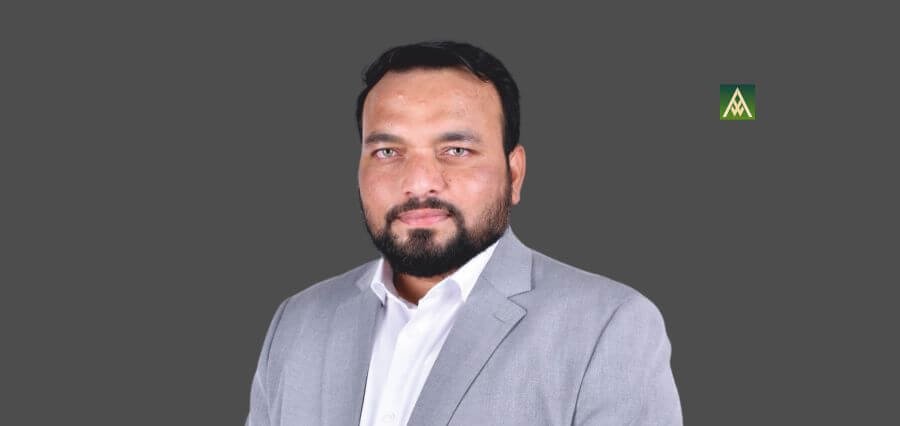
Mohammed Fayazuddin understands this. As Human Capital Officer at Umniya Fertility, a premier center of excellence in reproductive medicine, located in Abu Dhabi. Established in 2009 and guided by its purpose of “Transforming Wishes into Families,”, he has built his professional philosophy around a conviction that is both simple and consequential: caring for the workforce that delivers care is inseparable from caring for the patients they serve. That conviction did not arrive through a management theory. It arrived through nearly fifteen years of people operations experience across multiple industries in the UAE and India, with particular depth in healthcare, watching what happens when the people responsible for clinical and emotional excellence are themselves unsupported, undervalued, or inadequately equipped.
He reflects, “People rarely leave organizations. They leave workplaces where they don’t feel valued or supported. In healthcare, the cost of that departure is not just operational. It is felt by patients.”
The Journey That Shaped the Philosophy
Mohammed Fayazuddin’s path into Human Capital did not follow a straight line, and that non-linearity is now one of his most valuable professional assets. He began in HR operations and recruitment, learning the process-driven foundations that most HR careers are built on. The shift came when he moved into a business partner role, and the neat script of procedural HR gave way to something considerably more demanding: the requirement to hold a fair balance between doing right by the person and doing right by the organization simultaneously, often in circumstances where those two obligations are genuinely in tension.
Healthcare sharpened that capability because workforce decisions can have a direct and visible influence on service delivery and patient experience. Every workforce decision in a clinical environment has a downstream effect on patient care. A vacancy in a specialist role affects patient waiting times. A poorly managed employee relations case affects team morale, which affects clinical performance. A gap in onboarding can affect how a new employee settles into the organization and performs during the first few months. These connections are not abstract in a fertility clinic. They show up in patient outcomes and patient experiences at moments of extraordinary personal significance.
That understanding gradually simplified his view of the profession rather than complicating it. As he puts it, at the centre of Human Capital is the ability to recognize the person behind every policy, process, and workplace decision. Everything else, the policies, the processes, the frameworks, is scaffolding around that central act of recognition.
He states, “My purpose is to help leaders become better managers while creating a workplace where employees can genuinely thrive. In a setting like ours, that work can directly influence patient care.”
The Experience That Redefined HR
The defining professional experience Mohammed Fayazuddin returns to most readily is not a single conversation or a pivotal decision. It is a period of sustained organizational transformation that tested every dimension of what he understood HR to be.
Supporting a healthcare organization through a post-acquisition growth phase during which the workforce expanded from approximately 68 to 144 employees, he was required to build practical HR foundations across workforce planning, documentation, onboarding, payroll, policies, licensing, employee relations, and daily operational support simultaneously. This was not a project with a clear timeline and stable parameters. It was a continuous operational demand against a backdrop of change, compliance pressure, and the non-negotiable requirement to ensure that growth did not damage either the employee experience or the patient experience.
What that period produced was a fundamental reframing of how he understood the profession. HR activities that he had previously seen as separate processes, recruitment, onboarding, performance management, employee relations, revealed themselves as stages in a single connected employee journey. The quality of each stage affected the quality of every subsequent one. A rushed onboarding created orientation gaps that affected performance. Performance gaps that were not addressed early became employee relations cases later. Cases that were not handled with transparency and fairness created cultural damage that affected retention. The system was interconnected and managing it required the ability to see the whole while remaining operationally present to each part.
He notes, “That experience taught me that leadership is demonstrated through ownership, consistency, and vigilance during periods of change, not through authority or imposed control.”
Employee Experience as Clinical Quality
One of the most precise and practically useful distinctions Mohammed Fayazuddin draws in his approach to Human Capital leadership is the treatment of workforce wellbeing not as an HR initiative but as a clinical quality issue. In most organizations, these two categories are managed through entirely separate frameworks with different sponsors, different metrics, and different levels of executive attention. In a healthcare context, he argues that separation is a structural error.
The logic is direct. Clinical quality standards require skilled, motivated, and psychologically safe professionals. When staff feel disrespected, under-resourced, or unsupported, their ability to deliver consistent, empathetic care may be affected. In a fertility care, where patients are often undergo multiple treatment cycles over months or even years, each carrying hope and anxiety in equal measure, the quality of the human interaction surrounding the clinical encounter matters in ways that standard patient satisfaction metrics rarely capture fully.
His practical approach begins onboarding. Clear job definitions, structured orientation, well-defined KPIs, and competency frameworks establish what is expected and what support is available from the very first day. A culture of psychological safety, where staff feel able to raise concerns before those concerns become clinical risks, is treated as a workforce design objective rather than a cultural aspiration. When people feel respected, resourced, and genuinely heard, he argues that respect flows directly into the patient’s experience.
He affirms, “My role is to protect the caregivers so they can protect the patients. In a fertility setting, that responsibility feels particularly significant.”
On Culture, Trust, and the Gap Between Them
Mohammed’s thinking on organizational culture is deliberately unsentimental. He has seen enough well-intentioned culture programs fail to have a clear understanding of why they fail: the gap between what an organization says it values and what its leaders actually practice in daily conduct. That gap, however small it begins, erodes trust faster than almost any other organizational dynamic.
The strategies he has found most effective are not the ones with the highest visibility. They are consistent, daily behaviors: how managers communicate feedback, how performance and achievement are acknowledged, how mistakes are addressed, and whether employee concerns receive a fair hearing regardless of seniority. Annual engagement surveys and periodic recognition events have their place, but they cannot substitute for the accumulated experience of being treated fairly every ordinary day.
Trust and accountability, in his framework, must flow in both directions and require the same precondition: clarity. Employees need to understand what is expected of them, how their work connects to organizational goals, and what support is available to help them meet those expectations. When those conditions exist and when leaders apply them consistently rather than selectively, trust and accountability tend to coexist naturally rather than operating in tension.
He says, “Engagement is not created through annual surveys or occasional gestures. It is built through everyday experiences, especially how leaders communicate and whether employees believe their concerns will receive a fair hearing.”
Technology, AI, and the Human Limit
On the question of AI and automation in Human Capital practice, Mohammed’s position is measured and practically grounded. He welcomes the displacement of repetitive, administrative work. He does not welcome the displacement of professional judgement, empathy, or the capacity to read a human being in a live conversation and respond to what is being said rather than what the process expects.
His reasoning is specific. Candidate screening, workforce analytics, learning recommendations, performance reporting: these are areas where AI can demonstrably improve accuracy, speed, and consistency. But the conversations that determine whether an employee stays or leaves, whether a clinical team functions with trust or manages conflict silently, whether a difficult employee relations case is handled with the dignity that every person deserves. These require human presence. These kinds of sensitive employee decisions should not be delegated solely to technology. They require context, empathy, professional judgement, and clear accountability.”
He has actively invested in his own AI literacy, treating it as professional maintenance rather than optional development. His view is not that HR professionals should resist automation, but that they should reposition themselves toward the work that automation cannot reach. The tools have changed. The human element does not.
He notes, “AI’s real value is not completing HR tasks faster. It is giving HR professionals more time for conversations that genuinely require a human being.”
What Distinguishes Exceptional from Effective
When Mohammed Fayazuddin draws the distinction between an effective HR manager and an exceptional Human Capital leader, the qualities he identifies are not primarily technical. They are courage, empathy, judgement, integrity, and commercial understanding, applied together in a way that neither abandons professional standards to commercial pressure nor treats HR as separate from the business realities it exists to support.
Exceptional leaders, in his experience, are those who challenge decisions respectfully when those decisions carry fairness or compliance risks, who understand that being a trusted business partner sometimes means delivering uncomfortable analysis, and who hold their professional values under pressure without becoming adversarial. They are also those who recognize that the employee in front of them is never simply a case number or a headcount entry. There is a human story behind every person’s decision, and the quality of that recognition is what separates HR that is genuinely valued from HR that is merely tolerated.
His vision for the legacy he hopes to build is stated with the same directness. He wants to help elevate HR in healthcare from an administrative function to a strategic one, to leave behind well-governed, people-first HR frameworks, managers who lead with empathy and courage, and organizations where the people delivering care feel genuinely valued for the weight they carry.
The Place Where Hope Lives
Umniya Fertility, where Mohammed Fayazuddin currently works as Human Capital Officer, is an institution whose stated purpose, Transforming Wishes into Families, carries a weight that few organizational mission statements can match. The professionals who deliver on that purpose do so in the knowledge that the outcome of their work is not simply a clinical result. It is the beginning, or sometimes the end, of someone’s most deeply held wish.
Building a workforce that can sustain that work with clinical excellence, emotional intelligence, and personal resilience requires Human Capital leadership that goes considerably beyond policy management and process compliance. It requires the understanding that the people delivering the care are themselves human beings who need to be cared for, supported, and valued with the same intentionality that the organization extends to its patients.
That understanding is what Mohammed Fayazuddin brings to his role every day.