
Picture a family in the Gulf checking their electricity bill during the peak of summer, when air conditioners run nonstop, and the grid works overtime to keep homes cool. Now picture that same family driving past a new solar farm on the edge of the city, one that did not exist a few years ago. These two moments, one personal and one visible on the horizon, are connected by the same story.
That story is about where the world’s money is going. Today, there is a lot more reliance on solar, wind, and other forms of renewable energy by investors, governments, and businesses than ever before. In fact, this trend has an impact on the lives of ordinary people in terms of the cost of energy and the reliability of the electric power grid.
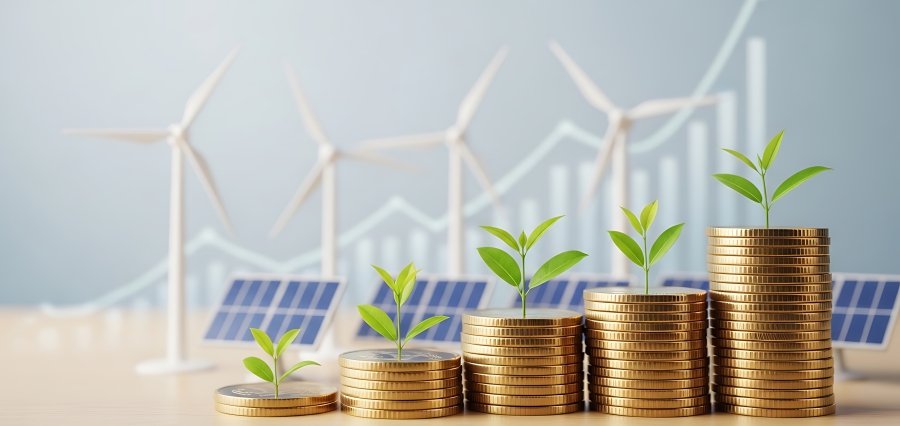
In this blog, I discuss the rise of clean energy investment and its evolution to become one of the biggest financial trends in recent years.
What This Type of Investment Actually Covers
Clean energy investment is a broad term. It includes money that flows into solar farms, wind projects, battery storage, green hydrogen, nuclear power, and electric vehicle infrastructure. It also covers the wires, substations, and software that carry electricity from these sources to homes and businesses.
Solar power is one such example. The price of technology related to solar power has fallen by over 90% during the last decade. This makes solar energy one of the most affordable sources of energy production around the globe. Offshore wind has also drawn massive funding, especially across Europe and increasingly across Asia.
Meanwhile, battery storage plays a quiet but critical role. When the sun sets or the wind slows down, stored power fills the gap and keeps homes running smoothly.
The Numbers Behind the Boom
The scale of clean energy investment has become genuinely historic. Global funding reached a record 2.1 trillion dollars in a single recent year. For the first time, this figure surpassed the amount going into fossil fuels, more than doubling it.
Currently, China holds the top position, contributing around one-third of all clean energy investment. Europe and America are quick to follow suit. Likewise, the role being played by the Middle East cannot be undermined, especially in the areas of solar power and green hydrogen, where countries such as the UAE, Saudi Arabia, and Egypt have made significant investments.
What Is Pushing the Money Forward
Several forces are driving clean energy investment to record levels. Government policy plays a major part. The dedication of nations to achieve their net-zero and renewable energy projects through government efforts across the globe makes it very clear that the path taken by everyone is towards renewable energy.
Economics matters just as much. Renewable power is now the cheapest form of new electricity in most regions, and investors naturally follow strong returns. Large companies add further pressure, since many have made public climate commitments and need clean power to meet them. Energy security plays a role too. Recent disruptions to global energy markets have pushed governments to build power sources closer to home instead of relying on imported fuel.
Why the Grid Upgrade Matters So Much
None of this works without the right infrastructure. Smart grid investment refers to money spent on upgrading the systems that carry electricity, things like smart meters, automated substations, and modern transmission lines built to handle power that flows in more than one direction.
Older grids move electricity in a straight line, from a power plant to a home. Solar and wind do not work that way. Their output changes with the weather and the time of day. Smart grid investment helps make adjustments on the fly in that excess power can be stored during times of excess supply and can be used during times of increased demand. In other words, without smart grids, the most efficient solar and wind energy sources would not be able to provide electricity.
The Challenges Still on the Table
Clean energy investment is indeed growing, but there are some issues to be addressed. The grid infrastructure of many countries is not yet prepared for handling large amounts of renewable energy, making smart grid investment an immediate priority.
Many critical minerals used in battery production and solar panels are available only in select countries. Financing clean energy projects in developing economies also remains difficult. And while investment keeps breaking records, it still falls short of what most climate experts say is needed.
Why This Story Matters Beyond the Numbers
Clean energy investment is not only an environmental story. It is an economic and strategic one. The countries and companies leading in this space today are building the industrial base that will shape energy markets for decades to come. For the Middle East region in particular, this transition also provides an opportunity to diversify their economies, which have traditionally been heavily reliant on oil, as well as improve their own energy security.
This transition away from fossil fuels marks one of the biggest transfers of money in recent history and is well underway. Combined with steady smart grid investment, this shift is quietly reshaping how the world produces and delivers power.
Conclusion: A Shift That Is Here to Stay
Clean energy investment has moved from a niche interest to one of the defining financial stories of our time. The reasons behind it, falling costs, strong policy support, and growing energy security concerns, are not temporary. As smart grid investment expands alongside solar, wind, and battery projects, power delivery will only grow smarter and more reliable. For the Middle East and the rest of the world alike, this trend is worth watching closely, not because it is new, but because it is only getting started.