Morocco’s poultry industry did not build itself overnight. It was constructed, painstakingly and over decades, by organizations willing to invest in the full complexity of vertical integration at a time when most competitors were content to occupy a single segment of the value chain. Zalar Holding, founded in Fès in 1974 by Mohammed Chaouni Benabdallah and his son Fouad through the establishment of El Alf, one of Morocco’s very first animal feed plants near Mount Zalagh, was among the most disciplined and far-sighted of those builders.
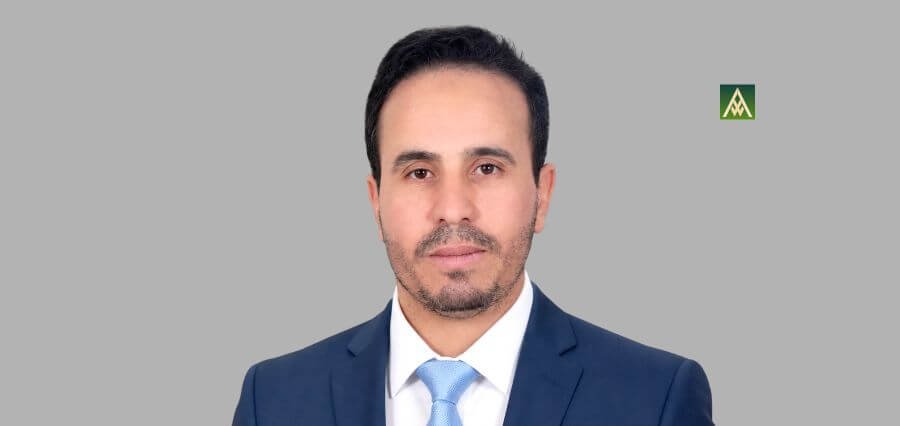
Today, as Morocco’s only fully vertically integrated poultry group, it stands as both an industrial benchmark and a national strategic asset. And at its helm, driving the upstream operations that anchor the entire chain, is Lhoussaine Oubouyahia, Executive Chairman of the Upstream Division and Deputy CEO.
His path to that position is as distinctive as the organization he serves. Graduating as a Doctor of Veterinary Medicine from Institut Agronomique et Vétérinaire Hassan II in Rabat in 2008, Lhoussaine joined Zalar the same year and has since risen through every level of its operational structure: Technical Director from 2012, Deputy General Manager of the Integration Division from 2016, General Manager of Live Production, Processing and Transformation from 2020, Chief Operating Officer from 2023, and Executive Chairman of the Upstream Division since 2025. Alongside this progression, he completed an MBA at Montpellier Business School in France between 2014 and 2016, and a PhD in Veterinary Sciences at IAV Hassan II, completed in 2025.
He mentions, “This combination — field experience across the full value chain, international business training, and doctoral research — defines how I lead today: grounding every strategic decision in operational reality and rigorous analysis.”
A Group Built for Complexity
To understand what Lhoussaine Oubouyahia leads, it helps to understand the scale and structure of what Zalar Holding has become. With 3,500 collaborators across twelve subsidiaries, a turnover of 10 billion dirhams, and operations spanning grain trading, animal feed manufacturing, hatchery, broiler farming, slaughtering, and meat processing, the group controls the entire poultry value chain from raw material to finished product. It is the first and only Moroccan operator to have achieved this level of integration, a position that took five decades of disciplined investment, strategic acquisition, and operational excellence to build.
Managing that complexity is itself a strategic discipline, one that Lhoussaine Oubouyahia has spent seventeen years mastering from the inside out. As COO he directly oversaw the full operational scope of all subsidiaries, an experience that confirmed for him the three conditions without which complexity at this scale becomes unmanageable: rigorous process standardization for consistency across all business units, reliable data infrastructure enabling real-time decision-making, and governance frameworks that enforce clear accountability at every level.
He states, “Complexity is not eliminated — it is mastered through structure, transparency, and a culture of continuous improvement embedded from farm to finished product.”
The group’s shareholder base reflects the confidence that global partners have placed in this model. The European Bank for Reconstruction and Development and Seaboard entered in 2014 and 2015 respectively. In 2022, Japanese conglomerate Mitsui and Co strengthened its position in the group, bringing with it not just capital but the Kaizen methodology of continuous structured improvement that has since been deployed across all levels of Zalar’s value chain, from hatcheries and feed mills to slaughtering lines and meat processing facilities.
Innovation Built into the Structure
Innovation at Zalar Holding is not a department or a program. It is, as Lhoussaine Oubouyahia describes it, a structured discipline applied daily across the entire chain. Three strategic axes define quality, optimization, and controlled growth. The Kaizen methodology introduced through the Mitsui partnership has embedded a culture of continuous improvement that systematically raises standards and eliminates inefficiencies wherever they persist. Digitalization accelerates this further through real-time monitoring, process automation, and integrated data systems that enable better decisions at all levels of the operation.
Lhoussaine’s own scientific background has shaped the technical dimension of innovation significantly. His training in veterinary sciences and animal health management informed the development of rigorous biosecurity protocols and precision livestock management approaches that have strengthened the group’s performance at the production level. Science, in his framework, is not an academic exercise. It is an operational tool applied to real problems in real facilities every day.
He highlights, “The objective is a culture where every collaborator sees improvement as part of their daily contribution.”
The sustainability dimension is equally concrete. Zalar Holding’s strategic intent, producing more with less, is described by Lhoussaine Oubouyahia not as a slogan but as an operational discipline enforced at every stage of the chain. Feed conversion ratios are systematically optimized. Energy and water consumption are reduced across all facilities. Environmental management systems, biosecurity standards, and animal welfare protocols together create a framework for responsible production that Lhoussaine Oubouyahia believes the group, as Morocco’s pioneer in vertical integration, has both the responsibility and the industrial capacity to define for the sector as a whole.
Resilience Built in the Hardest Season
Every leader’s philosophy is ultimately revealed not in how they perform when conditions are favorable but in how they respond when everything converges against them at once. For Lhoussaine, that test arrived in 2023 with his appointment as COO during one of the most challenging periods in Zalar Holding’s modern history.
The group was navigating a severe convergence of pressures simultaneously: significant financial strain, operational underperformance across several entities, and organizational fragility following the successive external shocks of the COVID-19 pandemic, which severely disrupted demand and margins across Morocco’s poultry sector, and the subsequent surge in raw material costs driven by the conflict in Ukraine. Restoring confidence, stabilising performance, and rebuilding internal cohesion while simultaneously designing a new organizational architecture required decisiveness and composure in equal measure.
He asserts, “Adversity, navigated with structure and conviction, becomes a powerful accelerator of organizational transformation.”
The experience confirmed something he has carried into every dimension of his leadership since: that what teams need most during periods of genuine difficulty is not inspiration but clarity. Clarity of diagnosis, of priorities, and of direction. Leaders who provide that clarity under pressure do not just manage crises. They use them to build the organizational resilience that normal operating conditions never demand.
Building People Who Build the Group
With 3,500 collaborators deployed across a complex, multi-site operation spanning Morocco and West Africa, human capital is, as Lhoussaine Oubouyahia puts it plainly, the most critical performance enabler the group has. His approach to developing it reflects the same structural discipline he applies to operational management: invest early in potential, develop structured internal career pathways, and cultivate a culture where accountability and genuine support coexist rather than compete.
His own trajectory within Zalar Holding is the clearest expression of a conviction he holds firmly about how resilient leaders are actually built. Not through executive programmes alone, but through real exposure, growing responsibility, and continuous learning applied to genuine operational challenges across progressively larger scopes. Seventeen years across every level of the organization have given him an understanding of what each role demands that no external appointment could replicate.
He reflects, “The most resilient leaders are built from within, through real exposure, growing responsibility, and continuous learning. An organization where people feel recognized, challenged, and invested in consistently outperforms.”
The Continental Horizon
Zalar Holding’s strategic ambitions extend well beyond Morocco’s borders, and Lhoussaine Oubouyahia is centrally involved in shaping how the group approaches that expansion. The creation of Zalar Africa and Zalar Senegal in 2015 and 2016 established the group’s initial West African presence. The principles governing that expansion reflect the same discipline that has defined Zalar’s domestic growth: controlled growth, grounded in operational readiness and long-term coherence, with each step deliberate and strategically anchored.
West Africa remains the primary international frontier. The region’s demographics, urbanization trajectory, and rising protein consumption create conditions well-suited to Zalar’s integrated model. The ambition is to replicate in West Africa what the group has built in Morocco, adapting to local realities while maintaining the quality standards and operational discipline that define the organization’s identity. In a continent where food security is becoming an increasingly urgent national strategic imperative across multiple governments, the ability to deploy a proven integrated model at scale represents a genuine and substantial opportunity.
He envisions, “My vision is to contribute to a more resilient, efficient, and sustainable agribusiness ecosystem — in Morocco and across Africa, with West Africa as our strategic frontier.”
Shaping the Sector Beyond the Organization
Leadership at Lhoussaine’s level carries obligations that extend beyond the boundaries of any single company. He serves as President of the National Association of Industrial Poultry Slaughterhouses, ANAVI, and Vice-President of FISA, the national federation representing Morocco’s poultry sector. In these roles he works alongside public authorities and private operators to shape regulatory frameworks, coordinate sector transformation initiatives, and contribute to the national development agreements designed to strengthen the long-term competitiveness of Moroccan poultry production.
His contribution to the elaboration of Morocco’s Green Generation 2030 strategy, the country’s national agricultural roadmap, reflects the breadth of influence he is already exercising at a policy level. Competencies in HACCP, ISO 22000, supply chain management, and investment governance complement this engagement, allowing him to contribute with equal credibility at the operational and strategic levels of sector development.
The recognition he has received as Rising Business Leader of the Year, Morocco, at GELA 2026 carries meaning that he connects directly to collective achievement rather than individual accomplishment.
He affirms, “No leadership achievement is individual. It is the expression of what a team accomplishes together, grounded in shared values of integrity, exemplarity, and perseverance.”
Lhoussaine Oubouyahia did not arrive at the Executive Chairman’s role through a single defining moment. He built toward it across seventeen years of sustained commitment, progressive responsibility, and the kind of scientific and operational discipline that turns an academic background into a genuine competitive advantage. Morocco’s most integrated poultry group is in his hands. And the continent beyond Morocco’s borders is very much in his sights.