
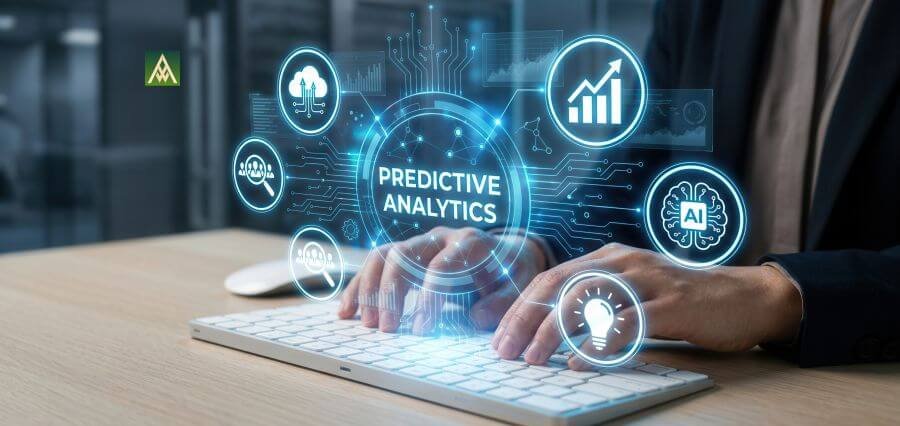
Predictive Business Intelligence
The present-day business environment is characterized by rapid changes, constantly rising customer expectations, and increasing competitiveness. It has become impossible for companies to base their decision-making processes solely on data from the past. What is needed now is a system that can foresee market tendencies, spot opportunities, and eliminate risks. These needs have contributed to the rise of Predictive Business Intelligence, which allows for turning big data into useful knowledge.
Conventional reporting gives a picture of what happened, but today’s businesses require a more profound insight into the future – what is expected to happen. The integration of historical data and sophisticated analysis tools provides enterprises with the possibility to predict the customers’ reactions, changes in the market, and business results. This helps to take proactive measures instead of reactive actions. As the era of digital transformation comes into industries, Business Intelligence becomes a strategic tool for any planning processes.
Applied Artificial Intelligence Driving Intelligent Insights
The emergence of Applied Artificial Intelligence has taken the power of analytics beyond normal data handling techniques. The intelligent algorithms study big data and establish relationships within the data that could hardly be discovered by people on their own. The more information is handled, the better they get at predicting what will happen in the future. Businesses that adopt Applied Artificial Intelligence have a better insight into customer requirements, business efficiency, and future market potential.
Another equally vital component is the Machine Learning Solutions, which enables systems to detect patterns and improve prediction without having to interfere manually all the time. Firms will be able to perform automation of demand forecasting, inventory management, fraud detection, and customer segmentation with much more accuracy. This is because these smart solutions do not rely only on hard and fast rules but learn from interactions and adapt to changing environments.
Creating Competitive Advantage Across Business Functions
Among the main benefits that Predictive Business Intelligence can provide is in the field of strategic planning. It is no longer required for executives to rely solely on their intuitions or past analyses when it comes to assessing future investment opportunities. Predictive models will calculate possible results for each scenario, thus giving an opportunity to analyze various options prior to making any investments.
Intelligent analytics have also been instrumental in creating positive effects for customers as well. Businesses can now use analysis of buying habits, communication trends, and engagement tendencies to offer more tailored services. With BI systems that utilize predictive analytics, organizations can offer suggestions, predict customer needs, and provide better services. Not only do these efforts improve customer satisfaction levels, but they also improve loyalty.
Operational efficiencies continue to be enhanced by the practical deployment of Applied Artificial Intelligence within business processes. Manufacturing companies make use of Applied Artificial Intelligence for scheduling production; logistics firms use Applied Artificial Intelligence for route optimization, and health care organizations predict the demand for patients more accurately. Applied Artificial Intelligence is utilized by financial institutions for detecting any suspicious activity in transactions, and retail firms adjust their inventory according to seasonality of purchases.
The other very important contributor to intelligent decision-making is the advanced development of Machine Learning Solutions. Companies will be able to assess the performance of their equipment, predict future maintenance needs, and minimize losses from unexpected downtime through continuous analysis of the data produced during the operation process. Human Resource departments will be capable of predicting trends in employee retention, and marketing will be able to identify valuable customers.
Building a Future with Smarter Business Intelligence
The implementation of the system is not merely a technical matter. Companies need to have proper data governance in place, ensure high-quality information is available, and promote collaboration between technical experts and company executives. Employees should be provided with learning opportunities constantly to be able to analyze the data properly. With such a supportive culture in place, Predictive Business Intelligence can become a useful tool.
The future of business will see analytics becoming a key contributor to competitive advantage in all industries. Firms that will be committed to good data, scalability, and qualified staff will be well-placed to handle any changes. With increasing innovation, Business Intelligence will become more predictive, automated, and integrated in decisions. Business firms adopting Applied Artificial Intelligence with Machine Learning solutions will have the agility required to take advantage of the new opportunities and succeed in the data-intensive global market environment.