The world does not slow down for investors. On any given morning, a policy shift in Washington, earnings miss in Tokyo, or a rate signal from Frankfurt can unsettle portfolios built over the years. Most professionals react. A rare few anticipates. And fewer still have spent the better part of two decades building the kind of mental architecture that turns market chaos into calculated opportunity.
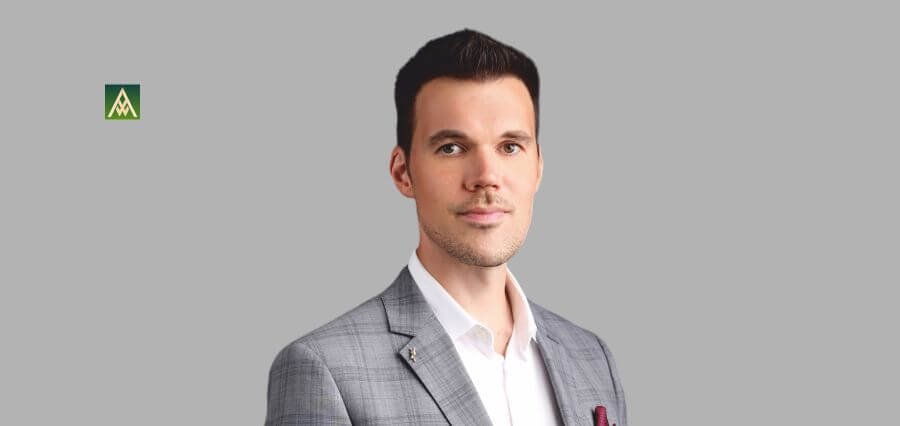
Roman Ermakov has spent his career doing exactly that. Trained first as a scientist and then as a financier, he carries an unusual combination of analytical discipline and market intuition that very few investment professionals can claim. Today, as the Chief Investment Officer of Merlion Single Family Office FZCO, headquartered in Platinum Tower, Jumeirah Lake Towers, Dubai, he brings that same rare combination to bear on one of the most exciting investment environments in the world. But to understand what drives him, and how he thinks, you have to go back to where it all started.
The Unlikely Intersection of Science and Finance
Growing up in Moscow, Ermakov was the kind of young person who could not settle on a single intellectual obsession. On one side sat a deep fascination with computers and chemistry, the kind that pulls a curious mind toward labs, equations, and the satisfaction of problems that have definitive answers. On the other hand, something less structured but equally consuming: financial markets. Newspapers and magazines with market summaries circulated in his household, and even as a teenager, he found himself reading economic commentary with genuine interest, long before he could fully make sense of what any of it meant.
Most people eventually choose one path and leave the other behind. Ermakov was not built that way. When the time came to commit to a university, he followed the scientific pull and enrolled in a chemical engineering institution specializing in cybernetics, a discipline that drew together mathematics, computing, and chemistry into one demanding framework. He gave five years to it, graduated, and took up a position at the Academy of Sciences. By any measure, it was a solid and respectable beginning. But the financial markets were still there, still pulling.
He began trading as a private investor while working in academia, and it did not take long for him to recognize that finance was not just a side of interest. It was where he was meant to be. So, he made a deliberate and considered pivot: he enrolled at one of Moscow’s leading financial institutions, graduated with honors, and stepped into the investment industry with both feet. He joined an investment company, moved into banking, and spent several focused years in treasury operations. In time, he rose to head a division responsible for the bank’s entire trading book, a position that demanded precision, composure, and the ability to make high-stakes decisions under pressure.
Through all of it, one asset class claimed his deepest attention: bonds. Fixed-income investing, he discovered, sat at the exact intersection of his two worlds. “Bond valuation is built on sophisticated models. It requires both a deep understanding of economics and finance, and a strong mathematical foundation.” His first degree gave him mathematical fluency. His second gave him the financial framework. The combination proved to be a genuine advantage, one that would stay with him for the rest of his career.
The Dubai Chapter: Flexibility, Ambition, and a Broader Canvas
By 2023, Ermakov had built a career of real depth and substance in Moscow’s financial world. Then came an offer that reframed everything. A family office in Dubai extended an invitation: relocate, take on the role of Chief Investment Officer, and help shape the investment direction of an entity operating on a genuinely global scale. He said yes, and he did not take long to decide.
The appeal was not simply the city or the geography, though Dubai’s position as a growing international financial center was not lost on him. What drew him most was the nature of the role itself. Banking, for all its strengths, operates within boundaries. Regulatory frameworks, institutional mandates, and compliance structures all shape what an investment professional can and cannot do. A family office operates differently. Thinking can stretch further. The strategy can be more creative, more patient, and more responsive to opportunity as it actually presents itself. “In a family office, the investment approach can be broader, more entrepreneurial, and more adaptive. That really resonated with me.”
Now three years into his Dubai chapter, Ermakov leads Merlion Single Family Office, an entity established in 2020 and based in JLT, with the same methodical discipline he refined over years in Moscow, now directed across a far wider investment universe. The canvas has changed. The standards do not.
A Philosophy Forged in Crisis
Ask Ermakov about the experiences that shaped how he thinks about investing, and he will point you to 2008. He had entered the markets in 2006, just two years before the financial crisis hit full force, and the timing left a mark that no amount of subsequent success has erased. It was not a comfortable period to learn. But in hindsight, it was exactly the kind of education that cannot be replicated in a classroom.
The first thing the crisis taught him was cycling. Markets are not designed to move in one direction forever. Every trend, no matter how convincing or well-supported, eventually runs its course. Investors who forget this tend to be the ones who suffer most when the turn arrives. The second lesson was about fundamentals. Chasing price momentum without understanding the underlying business, the sector dynamics, or the broader economic context is not investing. It is speculation with borrowed confidence. These two lessons, absorbed in real time during one of history’s most dramatic market dislocations, became the twin pillars of his investment thinking.
They also led him to Warren Buffett. Buffett’s writing on stock valuation, on patience, on the discipline of staying grounded in fundamentals when the market around you is doing anything but resonated deeply with what Ermakov had just lived through. The influence was lasting, shaping not just his technical approach but his fundamental orientation toward the craft.
One distinction he draws with particular clarity is the difference between how amateurs and professionals approach the question of money. “A non-professional thinks first about profits, while a professional thinks first about losses.” It sounds counterintuitive until you sit with it. For Ermakov, risk management is not a box to check or a department to delegate to. It is the starting point. Before any position is taken, the questions are already forming where the risk limit is, how much can realistically be lost, and under what conditions does the thesis break down. Without that discipline in place first, he argues, even the most talented investor is building on an unstable foundation.
His process follows a top-down architecture that flows from the macro to the specific. He begins by reading about the global economic cycle, identifying where momentum is building and where it is fading, then narrows his focus toward sectors that sit in the current tailwind. Only then does he move toward individual opportunities within those sectors. “If you identify the right sector, it becomes much easier to find a stock or an asset that can perform well, because you already have a tailwind behind you.” It is a framework built for discipline, not for excitement, and that is precisely the point.
Breakthrough Investing: Beyond the Headlines
Ermakov does not rush when he answers a question, he finds genuinely interesting. Ask him what breakthrough investing means, and he pauses, the kind of pause that signals real thought rather than performance. The easy answer, he acknowledges, is artificial intelligence. It dominates every investment conversation right now, and for good reason. But Ermakov’s attention reaches further than the current headlines.
Demographics, he believes, represent one of the most powerful and underappreciated structural forces at work in the global economy. As populations age across major economies, the demand for solutions that extend healthy life, address serious disease, and improve long-term health outcomes will only intensify. That makes biotechnology, in his view, one of the most compelling long-term investment themes on the horizon, particularly where it begins to intersect with artificial intelligence in areas like drug discovery, diagnostics, and precision medicine.
What sets breakthrough investing apart from ordinary sector rotation, in his telling, is the time horizon and the intellectual courage it demands. “It is not a fixed formula. It is an evolving approach that requires constant reassessment, because the world itself is changing faster than ever.” Spotting what is already working is analysis. Identifying what will matter five or ten years from now, before the consensus catches up, is something closer to vision. Ermakov is drawn to the latter.
The UAE as a Laboratory for the Future
Few people are better positioned to comment on the UAE’s investment landscape than someone who watches it evolve from the inside, every day. Ermakov’s view of the country he now calls home is clear and considered: the UAE is moving fast, and it is moving in the right direction.
Technology and artificial intelligence sit at the top of his list of defining trends. The country is not merely adopting these tools. It is actively positioning itself as a destination for innovation, attracting talent, capital, and institutional commitment at a pace that would have seemed improbable a decade ago. Alongside this, there runs a green energy agenda that carries real strategic weight. For a nation built on oil, the pivot toward renewable energy and sustainability is neither cosmetic nor reluctant. It reflects a genuine long-term reckoning with where the global economy is headed and a deliberate effort to be on the right side of that transition.
What strikes Ermakov most, however, is how these themes reinforce each other rather than running in parallel. Smart city development, digital infrastructure, data centers, AI adoption: in the UAE, these are not separate policy lines. They form a coherent and mutually reinforcing ecosystem. “This synthesis has the potential to place the UAE among the leading countries that will help shape the future global economy.” Coming from someone who has watched markets and economies across multiple continents, that is not a throwaway observation.
Balancing Risk and Innovation in a Diversified Portfolio
Ermakov is under no illusions about what investing in innovation actually involves. The uncertainty is real, the failure rate is high, and the evaluation process demands a different kind of rigor than assessing an established business with a decade of earnings history. He approaches it accordingly.
When he looks at an innovative company, his first question is about people. The founders, the management team, their understanding of their own market and competitive landscape: these carry more weight in his assessment than any financial model at an early stage, because the model is only as reliable as the people building the business behind it. The second question is about the downside. He insists on mapping what can go wrong before he allows himself to think too hard about what can go right. “It is about approaching innovation with the discipline and due diligence that its inherent uncertainty demands.”
Diversification is the structural answer to the inherent unpredictability of innovation-driven investing. In this space, most positions will not perform as hoped. The math of the strategy depends on the few that significantly outperform. Ermakov understands and accepts this and builds his exposure with that reality fully accounted for.
Technology as a Tool, not a Replacement
Ermakov’s relationship with technology in his professional practice is one of genuine enthusiasm bounded by clear principles. He uses Bloomberg, GuruFocus, and AI-powered analytical tools regularly, and he values what they have done to the pace and depth of investment research. Work that once consumed days of analyst time now takes hours. The capacity to model scenarios, process financial statements, and stress-test assumptions has expanded considerably, and he sees that as a real and meaningful improvement.
But there is a line he will not cross. “The final investment decision must remain with the portfolio manager or the investment professional, because responsibility for the outcome cannot be delegated to artificial intelligence.” Technology, in his view, is a powerful instrument in experienced hands. It is not a substitute for judgment, and it cannot carry accountability. In a profession where decisions have real financial consequences for real people, that distinction matters more than it might appear.
Staying Calm When Markets Are Not
Ermakov does not point to a single defining moment of professional difficulty when asked about the challenges of his career. The more honest answer, he suggests, is that difficulty is simply the permanent condition of the job. Markets do not follow schedules. News arrives at inconvenient hours. Sentiment turns without warning. Managing through that reality, rather than being destabilized by it, is the actual work.
The COVID dislocations and the volatility that marked 2025 served as fresh reminders of lessons he first absorbed in 2008. When conditions deteriorate, the instinct to act, to move, to find a solution, can be more dangerous than stillness. “In difficult periods, the first priority is not to chase returns, but to preserve capital.” Capital preservation, flexibility, and a diversified structure that does not depend on any single outcome holding these are the tools he reaches for when markets turn difficult. It is a playbook built on experience, not theory.
A Message to the Next Generation
When Ermakov turns his attention to those entering the investment profession, his advice carries the texture of someone who has thought carefully about what actually sustains a long career in this field.
The first thing he says is this: find a way to love the work itself. Not the rewards, not the status, but the daily practice of understanding businesses, reading economies, and thinking rigorously about how the world is changing. Sustained curiosity, the kind that makes a professional genuinely want to understand a new sector or interrogate an unfamiliar technology, is what separates careers that endure from those that plateau.
The second thing he emphasizes is the discipline of filtering. The volume of information available to any investment professional today is effectively unlimited. Most of it is noisy. “One of the most important skills for any professional today is the ability to separate useful information from noise.” Building that filter, knowing which sources to trust, which signals to act on, and which to set aside, is a skill that takes time to develop and never stops requiring attention. For Ermakov, it is as important as any technical competency a young professional can bring to the table.