
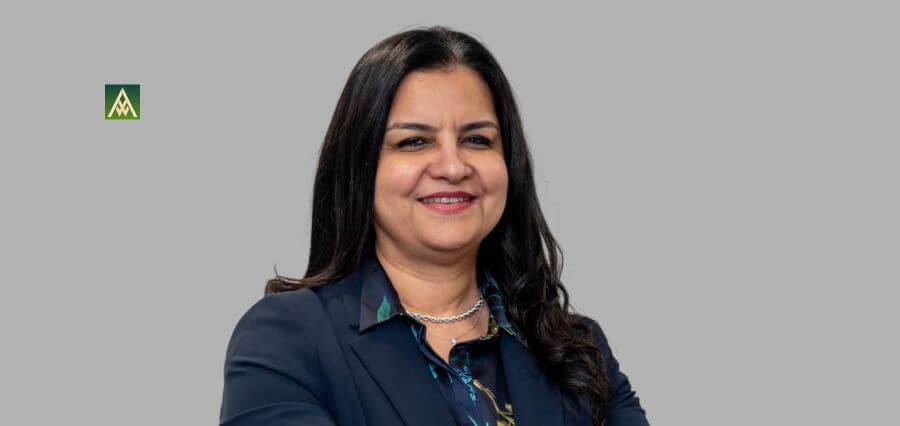
In Egypt’s fast-moving banking world, where legacy structures meet rapid economic evolution, Mennan Awadallah has emerged as a catalyst for systemic change. Her professional journey—spanning the Commercial International Bank (CIB), EFG Hermes, and CI Capital—provided the foundation of cross-functional fluency required to navigate and manage complex systems. As Deputy CEO of the Industrial Development Bank (IDB), her tenure is defined not by the maintenance of the status quo, but by a rigorous, merit-based reconstruction of institutional purpose.
Her transition from the private sector to a public-sector institution was a calculated pivot. It was a purposeful decision to lead meaningful change in an environment where systemic challenges are acute and accountability is paramount. Awadallah’s leadership philosophy balances strategic foresight with operational discipline, fostering a culture designed for sustained, long-term impact rather than short-term gains.
From Precision to Purpose: The IDB Transformation
Mennan Awadallah’s career foundation was built at the Commercial International Bank and other top investment firms in the region. She gained the kind of well-rounded banking experience that usually takes a lifetime to master.
Moving to the Industrial Development Bank marked more than a professional transition. Public-sector banking requires more than just technical mastery; it demands a leadership style that respects the institution’s history while simultaneously driving essential reform.
For Mennan Awadallah, complexity has never been a deterrent; it is a catalyst. Where others might see constraint, she identifies possibility. “I have always believed that every challenge contains an opportunity,” she notes. She arrived at the IDB with a clear plan and the confidence to carry it out.
The Dual-Track Strategy: Closing the Gap
Leadership Forged in Accountability
Ask Mennan Awadallah about her leadership philosophy, and she returns to a single pillar: accountability. She learned early that authority is not derived from a title, but from the willingness to take ownership during systemic failure.
“Leadership isn’t about having all the answers,” she reflects. “It is about creating clarity, trust, and direction.”
Mennan Awadallah manages with a focus on both high performance and team collaboration. She encourages open communication, which helps her avoid the limitations of traditional, top-down management. “A leader’s role is not just to direct,” she notes. “It is to cultivate an environment where expertise is shared, and that starts with active listening.”
Resilience: Leadership through Interruption
Behind her steady leadership is a period where she had to step away from work for a while. That pause required her to restart, adjust, and re-engage in a changing environment.
Coming back meant learning new team dynamics and meeting new expectations. “I pushed through by staying engaged,” she says. “Embracing the new challenges with curiosity and determination put me back on track.”
What came out of that time was a new kind of strength—one based on patience and persistence. She learned that progress is not always a straight line, and true strength is the ability to keep moving forward with a clear head after a setback.
Gender and Power in a Changing Financial Landscape
Mennan Awadallah approaches gender equality with realism and balance. Progress is evident, yet the work remains ongoing.
During her time at CIB, she witnessed women rise into senior leadership roles, including at the executive level. More broadly, Egypt has made visible strides in female representation across both government and the financial sector, not only the private sector, with institutions actively promoting gender inclusion as part of ESG and governance frameworks.
Her own appointment is a sign that skills and opportunities are demonstrating a growing alignment. “Gender equality is no longer just a belief; it is becoming an integral part of how institutions operate,” she notes.
The Mentors Behind Her Rise
Mennan Awadallah credits her growth to the leaders who chose to invest in her potential rather than feel threatened by her ambition. “You can work with very strong leaders, but if no one invests in you, you will not gain much,” she explains.
She learned from a diverse group of mentors who shared their technical expertise and strategic thinking. What they all had in common was generosity; they guided her and created space for her to grow.
She is now paying that investment forward. By mentoring the next generation and refusing to replicate the gatekeeping behaviors she have observed; she is embracing a culture of meritocracy.
The Legacy in Motion
For Mennan Awadallah , legacy is not a distant aspiration; it is a discipline practiced daily. She is building a professional footprint defined by integrity, empowerment, and operational excellence.
“I aim to be seen as a leader who combines strategic foresight with operational excellence,” she says. “For future leaders, I hope my example demonstrates that vision, discipline, and care for people can create lasting impact.”
And in Egypt’s evolving banking landscape, such leadership does more than leave an impression…. It defines direction.