The pharma industry of the Middle East has been transformed in recent years. There are many factors. Across the Gulf Cooperation Council (GCC) nations, a shift happened. Moving beyond a reliance on imported generics, the region is fast emerging as a global hub for biotechnology, local manufacturing, and specialized medicine.
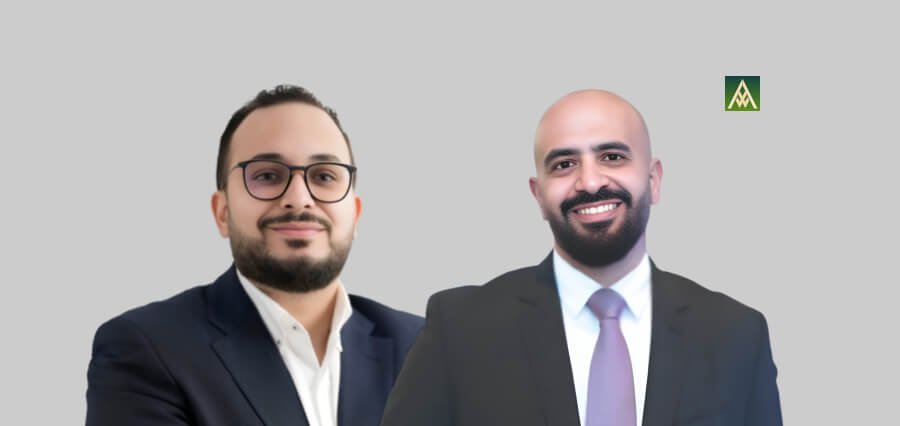
Instead of being a change in the market volume, this strategic pivot is toward a visionary policy of national healthcare security and economic diversification. Powering this transformative wave is dynamic leadership. Leaders like Fayez Awadeh, the Chief Marketing Officer (CMO, and Mohamed Metwally, the Chief Commercial Officer (CCO) at Avalon Pharma, are redefining a stranger, smarter pharma sector spanning the vast Arabian landscape.
With a BSc in Accounting and Finance, an MBA from Murdoch University, and 15 years of experience in various roles in Novartis Consumer Health, GSK Consumer Health, and Johnson & Johnson, Fayez is effectively driving the mantle. He is well-supported by Mohamed, who, too, has 15 years of experience from leading pharma, beauty & OC organizations such as Abbott Laboratories, Novartis, GSK, L’OREALs, and J&J BC. With a Degree in Dentistry from Ain Shams University, Egypt, Mohamed also has an MBA Degree from Edinburgh Business School, Heriot-Watt University, UK.
Sharing about their presently integrated journeys, Fayez and Mohamed spoke exclusively with the Arabian World Magazine team. That candid discussion is given ahead.
Avalon Pharma operates in a highly competitive and rapidly evolving healthcare environment. As CMO and CCO, how do you both jointly shape the company’s strategic direction and market leadership?
Fayez: The healthcare landscape we operate in is one where scientific advancement, consumer expectations, and regulatory frameworks are evolving simultaneously. In such an environment, the clarity of strategic direction becomes paramount. As Marketing and Commercial leaders, our collective responsibility is to anticipate these shifts and ensure Avalon’s strategy is not only resilient but also forward-looking and innovation-led.
From the Marketing side, we define the long-term brand ambition, shape category leadership positions, and articulate a patient- and consumer-oriented vision for the company. But strategic ambition alone is not enough—our plans must translate into market realities, and that is where the Commercial perspective becomes indispensable.
Mohamed: Indeed, our strategic alignment begins with shared ownership of Avalon’s growth agenda. We operate with one overarching principle: joint accountability. We do not treat Marketing and Commercial as separate engines; instead, we see ourselves as co-architects of the company’s competitive advantage.
We jointly build long-term commercial strategies, integrated brand roadmaps, and regional expansion plans. Our decision-making framework ensures every strategic move is validated through both lenses—brand equity and commercial viability. This dual-view approach is what enables Avalon to take bold yet calculated steps, positioning the company as a regional leader with global ambition.
Marketing and Commercial teams often operate on parallel tracks. What steps have you both taken to build a unified, collaborative model that strengthens Avalon Pharma’s brand presence and commercial performance?
Mohamed: Historically, many organizations struggled with misalignment between Marketing and Commercial teams because they measured success differently. One of our early commitments was to create a unified success framework—shared KPIs, shared planning cycles, and shared accountability. This fundamentally changed how our teams behave, collaborate, and problem-solve.
We introduced integrated business planning, where all key functions sit together to evaluate brand and commercial plans. This allowed us to break away from siloed thinking and embrace a model rooted in transparency and mutual ownership.
Fayez: To enhance this model, we also invested deeply in cross-functional exposure. We institutionalized joint field immersions, cross-departmental workshops, and shadowing sessions. When brand managers spend time understanding pharmacy dynamics or physician expectations firsthand, they bring back insights that elevate strategic planning. Similarly, when commercial leaders engage in strategy formulation, they better grasp the rationale behind campaigns, segmentation, and innovation pipelines.
This collaborative culture has strengthened our brand presence across markets, improved our launch excellence, and ensured our commercial performance reflects a consistent Avalon narrative—from awareness to recommendation to purchase.
How would you describe the evolution of your partnership as senior leaders? What defining moments or decisions cemented the alignment between your two functions?
Fayez: Our partnership evolved through a shared recognition that alignment is not an operational necessity—it is a strategic imperative. We discovered early on that our thinking styles complement each other naturally. The turning point was during our brand architecture transformation, when we had to re-evaluate Avalon’s entire portfolio from a long-term equity and competitiveness standpoint. The intensity of that process, the data we dissected, and the depth of discussions we had strengthened our trust and aligned our vision.
Mohamed: I would add that our partnership was further cemented during regional expansion evaluations. These projects involved high strategic sensitivity—market attractiveness modeling, pricing corridors, profitability forecasts, and competitive mapping. The complexity forced us to rely on one another’s expertise, challenge assumptions constructively, and ultimately come to unified decisions. That experience reinforced the foundation of collaboration we operate on today.
In a dynamic pharma landscape, data-driven insights are becoming indispensable. How do the two of you integrate market intelligence, consumer insights, and commercial forecasting to drive cohesive decision-making?
Mohamed: Data is no longer an enabler—it is the backbone of modern pharma decision-making. At Avalon, we built an ecosystem where insights from Marketing, Commercial, and Business Intelligence converge. This gives us a holistic view of market signals: prescriber patterns, pharmacy behavior, competitive intelligence, and consumer sentiment.
Fayez: From a marketing standpoint, we use this data ecosystem to refine brand strategies, optimize messaging, and anticipate category trends. Predictive analytics allow us to model scenarios around switching behavior, price elasticity, and demand forecasting with greater accuracy.
When combined, these insights enable us to make cohesive decisions—on launch readiness, portfolio prioritization, campaign deployment, and channel investment. The result is a more agile, insight-driven Avalon that can move swiftly while still maintaining strategic discipline.
Avalon Pharma’s portfolio spans across therapeutic categories and geographies. How do you jointly prioritize product strategies, lifecycle management, and market entry decisions?
Fayez: Prioritization begins with understanding where Avalon can create the most value in the short, medium, and long term. We categorize brands by their strategic intent—leaders, growers, challengers, and future bets. This ensures we invest the right resources in the right brands with the right ambition.
Mohamed: Once these priorities are set, lifecycle management becomes a shared exercise. We jointly assess reformulation potential, line extensions, and repositioning opportunities. For new market entries, we apply a structured model: market scalability, regulatory feasibility, category competitiveness, cost-to-serve, and pricing corridors.
Because we align early and often, our decisions reflect a balance of strategic aspiration and operational feasibility. This joint approach has been a key driver of Avalon’s ability to expand sustainably across markets while protecting brand equity and commercial profitability.
With customer expectations shifting rapidly, how do you ensure a consistently aligned customer experience that resonates with healthcare professionals, patients, and retail partners?
Mohamed: Customer experience is no longer a touchpoint—it is a full ecosystem. Physicians expect scientific credibility, pharmacists expect operational reliability, and patients expect accessibility and trust. To meet these expectations, our functions co-create unified customer journeys that map every interaction point.
Fayez: Marketing ensures the brand promises are clear, differentiated, and aligned with real patient needs. Commercial ensures those promises are consistently delivered—whether through medical detailing, trade partnerships, or retail activation. We constantly loop field insights back into marketing strategies to ensure messages remain relevant and accurate.
This unified approach strengthens trust and consistency—two qualities that are increasingly critical in healthcare decision-making.
Digital transformation has reshaped how consumers engage with healthcare brands. How are you leveraging digital channels, analytics, and automation to elevate Avalon Pharma’s reach and efficiency?
Fayez: Digital transformation at Avalon is not a project—it is a core part of our evolution. Our digital strategy integrates performance analytics, content intelligence, and omnichannel engagement. Today, both our teams use shared dashboards to optimize content, targeting, and spend.
Mohamed: On the Commercial side, digital tools enhance precision. CRM automation, data-driven segmentation, e-detailing platforms, and predictive targeting help our teams engage healthcare professionals and pharmacies with refined accuracy.
What makes this powerful is the integration between digital marketing and digital commerce. We can connect brand demand generation with channel conversion and field effectiveness in a way that creates an end-to-end digital value chain.
Alignment often extends beyond your two functions. How do the two of you collaborate with R&D, Supply Chain, Regulatory, and Sales to maintain a seamless bridge between brand promise and market delivery?
Mohamed: Cross-functional collaboration is one of Avalon’s biggest strengths. We built a model where major strategic decisions involve all relevant functions from the very beginning. This includes R&D for innovation feasibility, Regulatory for compliance pathways, Supply Chain for operational readiness, and Sales for commercial alignment.
Fayez: This approach eliminates disconnects that many companies face between brand promise and market delivery. When R&D understands market needs, innovation becomes sharper. When the supply chain understands brand ambition, inventory resilience improves. When Regulatory is aligned early, we avoid delays. And when Sales is part of strategy formation, execution becomes seamless.
This end-to-end alignment ensures that the Avalon experience remains consistent, reliable, and customer-centric at every level.
What guiding principles shape your shared approach to balancing long-term brand building with short-term commercial targets?
Fayez: Our guiding principle is sustainability. Long-term brand equity is a strategic asset—it protects pricing power, drives trust, and fuels future innovations. Short-term performance, meanwhile, ensures financial momentum and operational efficiency.
Mohamed: We balance both through a blended scorecard that includes brand strength metrics, market share, innovation milestones, geographical expansion performance, and financial indicators. This multi-dimensional view prevents us from making decisions that solve for today but jeopardize tomorrow.
This philosophy ensures Avalon grows with discipline and ambition.
As individuals with distinct expertise, how do you complement each other’s strengths to deliver unified leadership that cascades across teams?
Mohamed: Our complementarity is one of the reasons our partnership works so effectively. Fayez brings a strategic creativity and a deep intuition for brand positioning and consumer behavior. I naturally bring commercial discipline, market awareness, and operational execution.
Fayez: What creates true synergy, however, is mutual respect. We both recognize the importance of each other’s domains. We challenge each other constructively, align quickly, and communicate transparently. Our teams emulate that culture, resulting in a more unified and empowered organization.
What emerging market opportunities—whether through new therapy areas, regional expansion, or shifting consumer behaviors—are most exciting for Avalon Pharma’s next growth phase?
Fayez: We are entering a phase where healthcare is becoming more personalized, preventive, and digitally enabled. Categories like dermatology, wellness, and consumer health offer immense potential, especially when backed by strong clinical credibility and patient-centric innovation.
Mohamed: On a regional scale, we see compelling opportunities in the GCC market deepening, Africa’s emerging pharma landscape, and selected Southeast Asian markets. The demographic shifts in these regions—especially the rise of health-conscious, digitally active younger populations—align perfectly with Avalon’s direction.
As consumer behaviors evolve toward more informed and purpose-driven purchasing, Avalon is well-positioned to shape these markets rather than simply participate in them.
What leadership philosophies or personal experiences have shaped your ability to work as a cohesive unit while still driving innovation and performance in your own domains?
Mohamed: My leadership philosophy centers on clarity and empowerment. I believe that when teams understand the “why” and are trusted to deliver, they rise beyond expectations. This approach also makes collaboration with senior leaders, including Fayez, seamless—we work in an environment of trust, not micromanagement.
Fayez: My guiding principle has always been empathy and curiosity. I approach leadership with a willingness to listen, understand, and integrate diverse perspectives. Innovation happens when different ideas converge respectfully. Throughout my career, I learned that true leadership is defined not only by vision but also by the ability to bring people together around that vision.
Looking ahead, what is your joint vision for Avalon Pharma’s future? How do you both foresee the Marketing–Commercial alliance strengthening the company’s competitive edge regionally and globally?
Fayez: Our vision is to position Avalon Pharma as one of the most trusted and innovative healthcare companies in the region—recognized for our scientific credibility, our consumer understanding, and our commitment to meaningful innovation. We aspire to build brands that not only perform commercially but also inspire trust and loyalty.
Mohamed: The Marketing–Commercial alliance will be essential in realizing that vision. As global competition intensifies and market dynamics accelerate, companies need leadership teams that operate in sync. Our unity ensures that Avalon enters new markets with confidence, launches with excellence, and sustains growth through strategic clarity and operational precision.
Together, we aim to elevate Avalon from a strong regional player to a company with global potential—one that sets new benchmarks in innovation, customer experience, and commercial performance.