Prime Highlights-
- Saudi Arabia has about 79 gigawatts (GW) of renewable energy projects under development.
- The Kingdom aims to raise its carbon capture and storage capacity to 44 million tonnes a year within a decade.
Key Facts-
- Energy Minister Prince Abdulaziz bin Salman shared the figures at the UN climate conference.
- Saudi Arabia reaffirmed its commitment to the UNFCCC and the Paris Agreement.
Background-
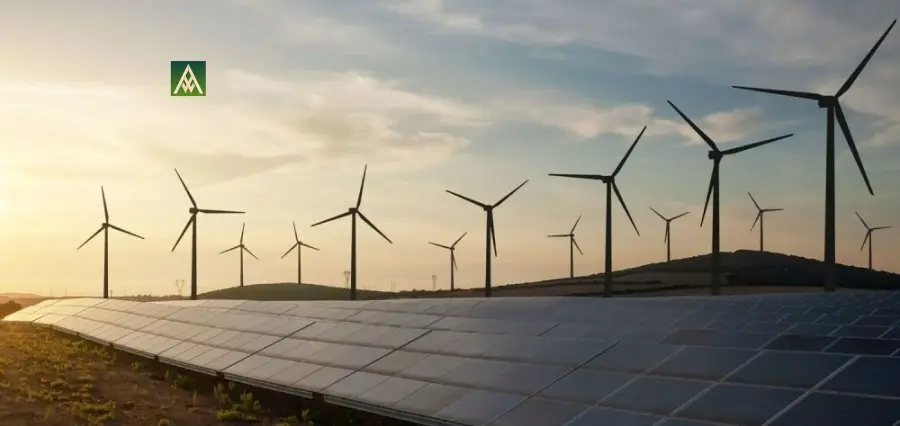
Saudi Arabia has about 79 gigawatts (GW) of renewable energy projects under development, Energy Minister Prince Abdulaziz bin Salman said at the UN climate conference.
The figure shows the large scale of the Kingdom’s clean energy plans. It refers to projects now in development, not capacity that has already started operating.
The minister also said Saudi Arabia aims to raise its carbon capture and storage capacity to 44 million tonnes a year over the next decade. Together, these two tracks form a key part of the Kingdom’s approach to cutting emissions while keeping energy supply secure.
This approach builds on the circular carbon economy concept, which Saudi Arabia introduced during its G20 presidency in 2020. The concept rests on four steps: reducing, reusing, recycling and removing emissions.
Prince Abdulaziz said all countries share the goal of cutting emissions, but each should be free to choose a path that suits its own circumstances. He stressed that secure and affordable energy supply remains central to a smooth transition. He also called for strong multilateral cooperation on climate challenges.
Saudi Arabia reaffirmed its commitment to the UN Framework Convention on Climate Change and the Paris Agreement.
The 79 GW pipeline shows how quickly the Kingdom is growing renewable energy within its energy mix. It also reflects Saudi Arabia’s rising role in the global clean energy transition.


