Prime Highlights-
- UAE and Saudi Arabia sign a new agreement to strengthen rail connectivity, power grid interconnection and electricity exchange between both countries.
- The deal aims to build stronger, more efficient supply chains and boost logistics integration to support economic development across the region.
Key Facts-
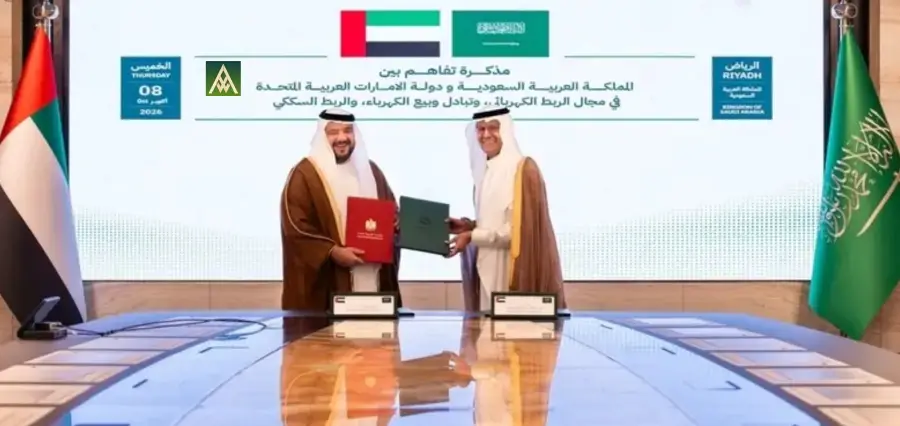
- Saudi Energy Minister and UAE Investment Minister sign the memorandum of understanding in Riyadh.
- Both countries will coordinate with GCC members to expand the GCC Interconnection Grid.
Background-
The UAE and Saudi Arabia have signed a new memorandum of understanding to strengthen rail connectivity, power grid interconnection and electricity trade between the two countries.
Saudi Energy Minister Prince Abdulaziz bin Salman bin Abdulaziz met UAE Minister of Investment Mohamed Hassan Alsuwadi in Riyadh, where the two sides signed the agreement. The deal aims to maximize shared economic benefits and deepen strategic cooperation between the two regional economic powers.
Under the agreement, both countries will set general principles for power grid interconnection and for the exchange and sale of electricity. They will also carry out technical, economic and environmental studies, which will help shape the next steps for the projects.
The two nations will coordinate with Gulf Cooperation Council member states to expand the GCC Interconnection Grid under the GCC General Agreement for Grid Interconnection. The effort seeks to make energy systems run more efficiently and bring the region closer together.
Rail connectivity forms a key part of the deal. The agreement sets general principles for rail links that carry goods and freight in both directions, including transit cargo.
The upgraded rail link will make supply chains stronger and more efficient. It will also deepen logistics integration, speed up the movement of goods and support economic development across the region. The partnership gives both countries a firm base for trade, investment and regional integration.