
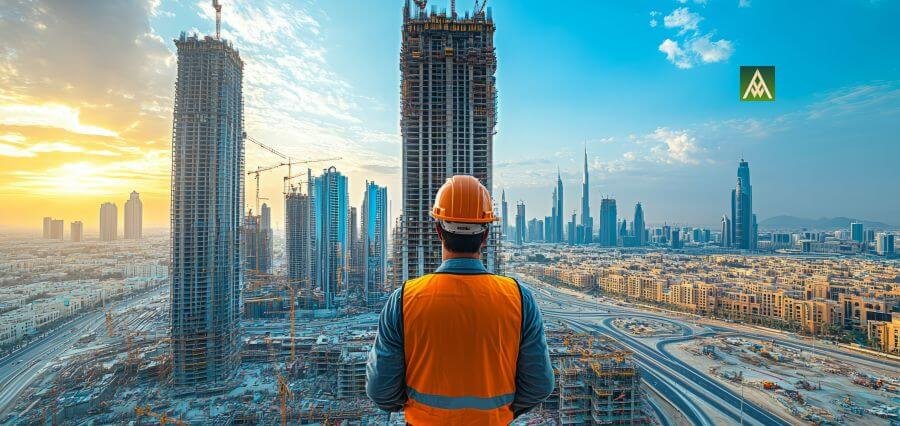
Advancing Regional Infrastructure
The Middle East has emerged as one of the most active construction markets in the world over the past two decades, with infrastructure development, commercial real estate, residential projects, and hospitality and entertainment facilities being built at a pace and scale that few regions have matched. Behind the visible architecture of towers, airports, hospitals and mixed-use developments that define the skylines of major Middle Eastern cities is the less visible but equally critical work of the mechanical, electrical, and plumbing trades that make those buildings functional. MEP contractors in the Middle East are playing an increasingly central role in delivering the infrastructure that regional development ambitions require, and their capacity, capability, and technical sophistication have grown considerably to meet those demands.
Understanding the Role of MEP Contractors
Before understanding their growing role, it helps to be clear about what MEP contractors in the Middle East actually do. These are the specialized construction companies responsible for designing and installing the mechanical systems, primarily HVAC, electrical power and lighting systems, plumbing and drainage, fire protection, and, in increasingly sophisticated projects, building management and control systems that integrate these functions into a unified operational platform.
In the context of large and complex Middle Eastern construction projects, hospitals, airports, high-rise residential and commercial towers, data centers, and major infrastructure facilities, the MEP scope is often among the most technically demanding and cost-significant elements of the entire project. Getting MEP right directly determines whether the finished building performs as intended, whether it meets the energy and sustainability standards increasingly demanded by clients and regulators, and whether it can be maintained effectively across its operational life.
Improving Sustainability and Energy Performance
The sustainability agenda in Middle Eastern construction has strengthened considerably as regional governments have introduced green building standards, energy efficiency requirements, and ambitious targets for reducing the carbon intensity of the built environment. MEP contractors in the Middle East are directly engaged with this agenda because the mechanical and electrical systems they install are the primary determinants of a building’s energy performance.
High-performance HVAC systems, energy-efficient lighting, building management systems that optimize energy use in response to actual conditions, and the integration of renewable energy generation are all areas where MEP contractors contribute directly to the sustainability performance of the buildings they work on. Contractors who have invested in developing genuine expertise in sustainable MEP design and installation are increasingly preferred by clients whose projects need to meet specific green building certifications or energy performance targets.
Managing Large-Scale Construction Complexity
The construction projects that characterize MEP contractors in the Middle East market are often among the most complex and large-scale that the global construction industry produces. Major airport terminals, large hospital campuses, high-density mixed-use developments, and integrated resort facilities all involve MEP scopes that are extensive in their scale, diverse in their technical requirements, and demanding in their coordination needs.
Managing this complexity requires MEP contractors with the organizational capability to plan, resource, and execute large programs, skilled project management teams, the logistics capability to handle major procurement and delivery challenges, robust quality management systems, and the workforce capacity to deploy large installation teams effectively. The MEP contractors in the Middle East that have developed these organizational capabilities are genuinely well-positioned to compete for the largest and most significant projects in the region.
Using Technology to Improve Project Delivery
The adoption of digital technologies in construction has reached the MEP contracting sector in the Middle East in meaningful ways, changing how projects are designed, coordinated, installed, and handed over. Building information modeling, which creates detailed digital representations of MEP systems in three dimensions before installation begins, has become standard practice on major projects and has significantly reduced the coordination conflicts and field rework that characterized earlier project delivery approaches.
MEP contractors in the Middle East that have embraced these digital tools and developed genuine capability in their use are delivering projects with better coordination, fewer clashes, more accurate cost management, and higher quality outcomes than those still operating with more traditional documentation approaches. The investment in digital capability is proving its value consistently across the region’s major projects.
In Summary
The growth in the scale and technical sophistication of MEP contractors in the Middle East has created significant demand for skilled MEP professionals, engineers, project managers, supervisors, and skilled tradespeople, which the regional market has worked to meet through a combination of expatriate expertise and the development of local talent. The most forward-thinking MEP contractors in the region are investing seriously in workforce development, building training programs, apprenticeship pathways, and professional development structures that build local capability over time.
This investment in people is not simply a response to regulatory requirements around local employment; it is a strategic recognition that sustainable business in the region requires a workforce that is rooted in it, understands its specific context and requirements, and develops the depth of regional experience that consistently delivers better outcomes on regional projects.