
Integrated Farming Solutions
The field of agriculture is continually advancing, as farmers look for ways to use efficient, sustainable, and resilient techniques to cope with the increase in the world’s demand for food production. In light of increasing consumer demands, environmental issues, and changing market dynamics, there has been an incentive among farmers to utilize a more integrated approach to ensure high productivity and conserve the environment at the same time. Some of the best practices in achieving this goal are the use of Integrated Farming Solutions, where different agricultural operations are combined into a system, ensuring efficient use of resources.
In Modern Livestock Farming, there should be a balance between productivity and good resource management. It is important for the farmer to ensure that the animals get all the necessary nutrients, housing, water, and medical care without compromising economics. Through integration, various agricultural practices can work together in harmony, thus increasing efficiency and profitability. The residue from crops can be used for feeding the animals, and manure adds soil fertility.
The Importance of Nutrition and Feed Management
Poultry Feed Production is an important factor in successful agricultural activities. The quality of the feed will affect the well-being of the birds, their growth rate, feed efficiency, and even the quality of products. Proper nutrition supplies all necessary elements for healthy growth, such as protein, vitamins, minerals, and energy. Modern producers constantly improve formulas of feeds based on the results of scientific studies and nutritionists’ work.
Good nutrition will also play a role in ensuring responsible Animal Welfare Practices through improved immunity, reduction of stress levels, and reduced diseases. Well-nourished animals work well, need less medication, and help to make the farms sustainable. Those farmers who consider animal welfare and productivity end up creating environments that allow their animals to exhibit natural behavior even when productive.
Technology Supporting Smarter Farming
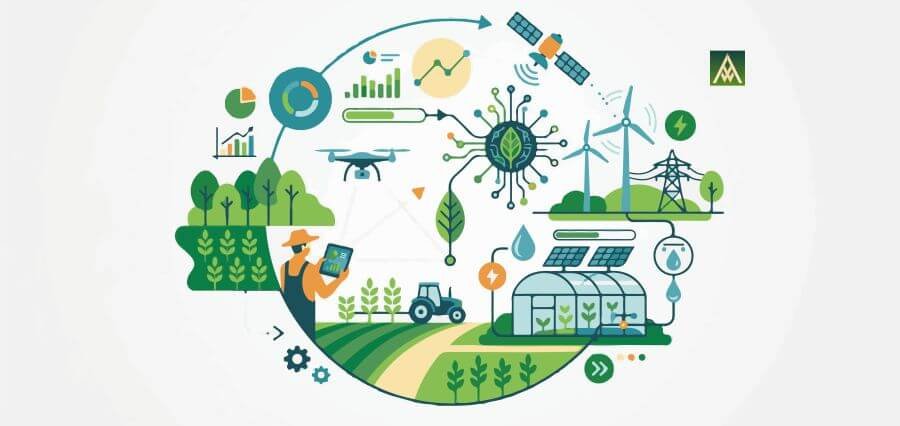
There have been constant improvements in Integrated Farming Solutions through digital innovation. The use of precision farming, automation, and real-time data analysis allows farmers to maximize their feeding schedule, monitor the environment, and generally improve their farm management process. The sensors collect data continuously regarding temperature, humidity, feed usage, and the health of animals on the farm.
The use of technology will help to improve Livestock Production through advanced methods of predicting problems associated with the health of livestock and analyzing their performance. This will help farmers detect any problem before it becomes a big one and hence minimize losses while at the same time enhancing production. Technology will enable farmers to analyze the performance of breeding and growth rates.
Creating Value Through Responsible Agriculture
In addition, technology improves Livestock Production by means of predictive health and performance tracking. By utilizing data to make decisions, one is able to address problems before they escalate into serious problems, cutting down losses, and increasing productivity at the same time. It allows for better assessment of breeding performance, growth rates, and resource management.
It is not just efficiency that constitutes responsibility in farming; rather, it includes Animal Welfare Practices, which emphasize the necessity of having good housing facilities, disease prevention, right handling, and regular veterinary care. Those farms that practice welfare management usually have healthier animals and improved business and reputation in the market. Consumers today are more appreciative of farm products that are sourced from ethical farming practices.
Preparing Agriculture for the Future
Long-term viability in agriculture requires achieving an appropriate balance between productivity, environmentalism, and sustainability. Farmers who adopt Integrated Farming Solutions develop a system which is flexible enough to cope with climatic issues, changes in the markets, and shift consumer demands. Through the use of technology, science, and sound management, farmers develop operations that are both efficient and environmentally friendly.
Additionally, future-proofed farms realize that sustainability in Livestock Production is an ongoing process and not a one-off effort. It is through regular assessment of production systems, training staff members, and embracing innovations that the agriculture industry will continue to be competitive and operate at a high standard. Good collaborations within the agriculture industry will go a long way in ensuring that innovations keep on happening.
Production of High-Quality Poultry Feed will remain an essential part of ensuring the health of birds, effective use of resources, and food supply chains. In the light of scientific progress in this area, feed companies will formulate more specific and efficient feeds that ensure animal productivity and at the same time contribute to sustainability targets.
Looking ahead, responsible Animal Welfare Practices will remain fundamental to successful agriculture. Consumers, regulators, and industry leaders increasingly recognize that ethical animal care contributes directly to food quality, operational resilience, and long-term business success. By combining scientific expertise, sustainable management, and continuous innovation, agricultural organizations can create farming systems that protect animal health, strengthen productivity, and support global food security. Together, these integrated approaches establish a resilient foundation for agriculture that benefits farmers, consumers, communities, and future generations alike.