
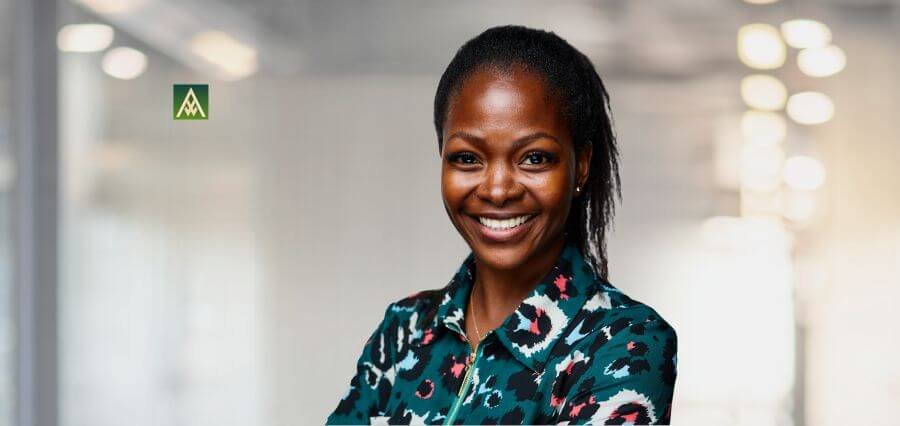
Some managers lead at a distance. They believe in dashboards, rely on reports, and judge their effectiveness by numbers in quarter results. Patience Tucker, the CEO of wi-Q Technologies, is the exact opposite; she leads personally. In the lobby of hotels in Dubai, sitting around the board table in Europe, and in the rooms where the actual discussion takes place, there she is. And the truth is, she will tell you, this personal involvement is an integral part of her approach. This is her strategy.
Patience Tucker supports a hospitality technology company operating in 67 countries, working with many of the bestknown hotels and restaurants, and earning 50% of the revenues from the Middle East. But despite all of that, the core idea guiding wi-Q Technologies seems almost too personal – technology should make guest interaction more enjoyable, not destroy the warmth that makes hospitality so special.
But this idea didn’t fall to her from the top management office, either. Over the course of two decades, she earned it with her hard decisions and choices, going from successful corporate career to a risky change to startups to climbing every business ladder rung one at a time.
A Foundation Built on Rigor
Tucker’s professional story begins at a FTSE 250 insurance company where she rose faster than almost anyone before her. By the time she left, she had become the youngest-ever Account Director in the company’s history, a milestone that, she reflects, gave her something more valuable than a title. “That environment gave me an exceptional grounding, rigorous commercial discipline, an understanding of the importance of account relationships, and the reality that delivering results requires both strategy and genuine human connection.”
It was a formidable training ground. But even as she thrived within its structures, she felt a different kind of pull towards something faster, something she could build rather than simply manage. In 2014 she acted on it.
She left the security of corporate life to join wi-Q Technologies as Head of Partnership Solutions. The company was a fledgling player in the hospitality tech space, full of potential, but with much still to prove. The role was a step back in seniority by any conventional measure. For her, it was a step forward in every way that mattered. “What drew me was the opportunity to shape something, to be in it rather than administering it. That transition fundamentally changed how I lead.”
When the World Caught Up
The startup environment taught Patience Tucker things the corporate world never could. It dismantled the comfortable idea that adaptability is a soft skill and revealed it instead as a survival mechanism. Markets shifted. Customer needs evolved. Technology moved faster than plans could accommodate. She watched, learned, and built her leadership philosophy around that reality. wi-Q was an early champion of mobile ordering and frictionless guest experiences at a time when the broader hospitality industry felt no urgency around either. Then the pandemic arrived, and urgency arrived with it. Years of slow-moving technology adoption compressed into months.
What wi-Q had been quietly building suddenly became operationally essential for hotels and restaurants navigating a transformed world.
“That experience reinforced something I hold firmly. The role of a leader is not just to respond to the market, but to read where it is going and build the capability to meet it there,” she says. wi-Q had read the market correctly. And when the world caught up, the company was ready.
Climbing Through Business
Tucker’s ascent through wi-Q was not a series of external appointments — it was an earned progression through the company’s own ranks. From Head of Partnership Solutions, she moved to Global Sales Director in 2020, before becoming CEO in 2021. At each stage, she remained close to the work. She sat in client conversations, lived through sales cycles, and understood in granular detail how wi-Q’s platform actually landed inside a hotel’s day-to-day operations.
That hands-on experience produced a leadership philosophy she calls “giving away your Lego bricks.” The idea is disarmingly simple: as you grow, you cannot hold onto every function you have mastered. You must pass those areas to people better suited to them so you can focus on where you add the most value. “Recognizing the right moment to do that, and the right person to do it with, is one of the most important judgements a CEO can make,” she says.
Today, Patience Tucker focuses on direction-setting, culture, and client relationships — the domains where she believes she leads best. Everything else, she trusts to the team she has built around her.
The Intelligence That Informs Strategy
Ask Patience Tucker how she balances the intimacy of client relationships with the demands of overseeing a global operation spanning 67 countries, and she pushes back on the premise. She does not experience those two things as competing forces. For her, the client relationship is the intelligence that feeds the strategy.
“When I am sitting across from a General Manager at a luxury hotel in Dubai or a hospitality group in Europe, I am learning in real time what their pressures are, what the guest experience actually looks like on the ground, and where technology is helping or falling short. That is information no report can fully capture,” she says.
Some of wi-Q’s key client relationships have endured for over eight years. Patience Tucker does not treat that longevity as a given — she treats it as proof. Proof that showing up consistently, delivering honestly, and being present when things go wrong as well as when they go right is the only sustainable way to build commercial trust. “That is the kind of a commercial foundation that sustains a business through market cycles far better than any short-term transaction.”
Culture Before Strategy
If there is a phrase Patience Tucker returns to more than any other when discussing how she builds and leads her organization, it is this: culture eats strategy. She does not mean it as a cliché. She means it as an operational instruction. The most elegant strategy in the world, she argues, cannot be well executed if the culture behind it is fractured or misaligned.
For wi-Q, that cultural anchor is a shared and specific purpose: the company exists to improve the guest experience through technology. Not technology for its own sake, but technology that solves a real problem for a real person in a real moment. When every member of the team understands and internalizes that, Patience Tucker argues, innovation stops being an abstract goal and becomes something people feel genuinely accountable for.
“Change is far less threatening when people understand why it is happening and feel that their contribution to it matters,” she says. It is a leadership insight that sounds straightforward, but takes years of practice to execute consistently, especially across a team that spans multiple continents and cultures.
Leading Across Cultures
Tucker’s move from the United Kingdom to Dubai, a relocation she made with her husband and two young children, was as much a statement of intent as a logistical decision. With the Middle East now accounting for 50 percent of wi-Q’s total revenue, she wanted to lead from inside the market rather than across it.
Operating across cultures has deepened her understanding of what leadership requires. She has found that the surface-level variables — communication styles, relationship-building rituals, pace — differ substantially from region to region. But the underlying needs remain remarkably consistent. “People want to be respected, to understand how their work contributes to something meaningful, and to be led by someone who is honest with them. Adapting to that without losing your own authenticity as a leader is the real skill,” she says.
Integrity, she adds, is not something wi-Q lists on a wall. It is something she tries to demonstrate in every decision, every conversation, every commitment she makes — or declines to make. The distinction matters.
Responsibility Beyond Revenue
Tucker’s leadership extends well beyond wi-Q’s operations. She serves on judging panels for the Tech Nation Rising Star Awards, and Founder contributes to thought leadership events and podcasts, including The Start-Up Diaries, and remains an active supporter of the Immersive Event for Black Entrepreneurs led by Ernst & Young — even after her relocation to the UAE.
That external engagement, she says, is not separate from her commercial identity. It is an expression of the same values. “I am conscious of being a visible leader, a woman, a woman of color, in an industry that has not always reflected the diversity of the world it serves. If the next generation of founders sees someone who looks like them operating at this level, that matters. I take that seriously.”
Engaging with founders earlier in their journey also keeps her grounded. It reconnects her to the fundamentals, why you started, what you are trying to build, and the courage it takes to keep going when things are uncertain. That perspective, she says, is something she carries directly back into wi-Q.
The Question That Matters Most
Looking ahead, Patience Tucker is not preoccupied with whether technology will transform hospitality. That question, she says, is settled. The question she finds genuinely interesting is more nuanced: where is the line between technology that enhances a guest’s experience and technology that diminishes it?
wi-Q now operates as part of a broader global technology group, which brings infrastructure, scale, and integration capabilities the company could not have accessed as a standalone business. But Patience Tucker is clear that the mandate has not changed: deliver experiences that guests feel, not just features that operators can list in a brochure. “My job as CEO is to make sure we never lose sight of that, however fast we grow.”
As for her own evolution as a leader, Patience Tucker returns to her Lego bricks philosophy. The more she trusts the exceptional people around her with the areas they do best, the more she can focus on what she believes she does best: leading with purpose, staying close to clients and culture, and building something that lasts.
In the technology industry that too often mistakes speed for strategy and features for value, Patience Patience Tucker offers a different kind of model, one that is built on presence, on trust, on the conviction that the best technology in the world is only as good as the human relationships that surround it. In 67 countries, her clients have found that model compelling.