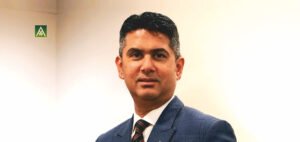
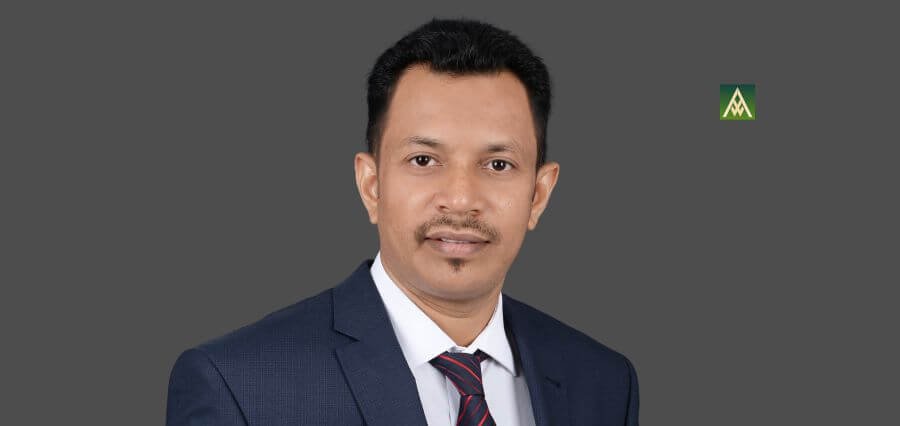
Volatility is not a feature of the contracting industry. It is an industry. Projects are awarded and cancelled; pipelines shift quarterly, and the workforce required to deliver one contract may bear almost no resemblance to what the next one demands. Most organizations in this space manage that volatility reactively, hiring when they win and reducing when they lose. Mohammed Nizam has spent more than a decade building something different at Aqar Landscape LLC and across the organizations he has worked within an HR function that treats the unpredictability of the contracting environment not as a constraint to manage around but as the primary reason strategic workforce planning matters so much more here than anywhere else.
Mohammed Nizam is the Head of Human Resources at Aqar Landscape LLC, the Dubai-based landscaping and contracting company established in May 1994. His career has spanned manufacturing, construction, landscaping, and contracting sectors across India and the UAE, accumulating a depth of operational experience that has shaped a leadership philosophy considerably more strategic than the administrative function many still associate with the HR title. He has managed rapid workforce expansions, large-scale demobilizations, project shutdowns, and the specific human complexity of building cultures across teams drawn from dozens of nationalities, languages, and professional backgrounds. Every one of those experiences has reinforced the same conviction: the most consequential HR failures are rarely failures of process. They are failures of anticipation.
Building Systems That Outlast People
The pattern Mohammed Nizam has observed most persistently across the contracting industry is not a failure of talent or intention. It is the failure to build institutions rather than dependencies. When processes, policies, and decision-making authority are structured around individual personalities rather than systems, organizations become fragile in ways that are invisible during stable periods and catastrophic during disruption.
His response to that vulnerability, carried across every organization he has led HR functions within, is to build structures that function effectively regardless of who is in the room. Succession planning, leadership development, workforce continuity planning, and knowledge management are not activities that organizations in the contracting sector traditionally prioritize. They are precisely what he insists on establishing before the moment when they are urgently needed to arrive.
He reflects, “Sustainable organizations are built on systems and processes, not individual personalities. My objective has always been to build structured systems, policies, and leadership pipelines that create long-term organizational sustainability.”
That orientation toward institutional resilience rather than individual performance defines how he approaches every dimension of his role, from workforce planning and recruitment to culture-building and technology adoption.
The 854-Worker Mobilization
The clearest demonstration of what proactive workforce planning actually looks like in practice came when Mohammed Nizam was mobilized 854 skilled workers within six days to meet a critical project ramp-up requirement. That level of operational agility is not achievable through reactive recruitment. It requires a pre-qualified talent pipeline, established relationships with recruitment partners and manpower suppliers, and candidate databases maintained continuously rather than activated only when a project award has already been received.
The contracting industry’s default approach, recruiting only after securing projects, is the single pattern Mohammed Nizam most consistently argues against. It produces delays in mobilization, increases recruitment costs, and places impossible timelines on HR teams that then get blamed for operational failures that were actually created by planning decisions made months earlier.
His alternative is workforce forecasting aligned to the business pipeline rather than to actual headcount needs at any given moment. By participating in management meetings, project reviews, and business development discussions, HR gains visibility into upcoming opportunities before they become contractual realities, enabling the kind of preparation that makes a six-day mobilization of 854 workers possible rather than exceptional.
He states, “Effective workforce planning is not about filling vacancies. It is about ensuring the organization has the right talent, with the right skills, at the right time, while maintaining cost efficiency and operational effectiveness.”
The People Happiness Center
For all the strategic language that surrounds modern HR practice, some of the most impactful work Mohammed Nizam has done has been deliberately simple. In many contracting organizations, particularly those with large blue-collar workforces, employees feel structurally disconnected from management. The hierarchy is real, the language barriers are real, and the operational pressure leaves little space for the kind of communication that builds trust over time.
To address that gap, he introduced a People Happiness Center concept designed to give employees direct access to support, grievance resolution, welfare assistance, and career guidance. Not as a periodic initiative but as a permanent infrastructure for the kind of human contact that most organizations assume happens naturally and rarely does.
The initiative included regular employee interaction sessions, welfare assessments, grievance management systems, feedback mechanisms, and engagement activities that address both professional and personal concerns. The results were measurable: engagement levels improved, workplace grievances reduced, trust between management and employees increased, and retention improved in critical operational roles where turnover had previously disrupted project continuity.
He notes, “Employee engagement is not about organizing occasional events. It is about creating a culture where employees genuinely feel valued. When organizations invest in employee well-being and communication, the positive impact extends beyond morale and directly contributes to business performance.”
What Multicultural Management Actually Requires
The UAE contracting industry is one of the most diverse working environments in the world. Mohammed Nizam has managed workforces drawn from dozens of nationalities, languages, and professional backgrounds, and his experience of that diversity is grounded in a specific operational reality: communication failures in multicultural environments are rarely about language alone. They are about the absence of shared trust, and trust is built through behavior, not through multilingual announcements.
His approach to fostering collaboration begins with establishing a culture based on mutual respect and shared organizational values, then reinforcing that culture through consistent communication, transparent people practices, and an open-door approach that allows employees to raise concerns without hesitation. Inclusion, in his definition, means equal access to opportunities, recognition, training, and career growth, applied consistently regardless of nationality, job title, or professional background.
He also believes strongly that belonging cannot be manufactured through events. It is produced through the accumulated experience of being treated fairly over time, and that experience either exists in an organization, or it does not. No annual team-building day compensates for management behavior that signals the opposite on ordinary working days.
He affirms, “A unified culture is achieved when people from different backgrounds work toward common goals while respecting each other’s differences. Organizations that successfully embrace diversity achieve stronger teamwork, higher innovation, and better business outcomes.”
Leadership When It Is Hardest
The challenge that tested Mohammed Nizam most directly came during a period when the organization faced a severe shortage of projects. As work declined, demobilization became unavoidable. Difficult decisions about workforce restructuring had to be made and communicated to employees whose livelihoods depended on the outcome.
The pressure in those circumstances is not simply administrative. It is personal. Employees are not numbers in a headcount model. They are people with families, financial obligations, and futures that are being directly shaped by decisions made in a boardroom they will never enter. His responsibility extended beyond managing the process. It required maintaining transparent communication, providing genuine clarity rather than managing optimism, and ensuring that every legal obligation was fulfilled with the care that the situation demanded.
The experience reinforced his conviction that leadership is revealed most clearly not during periods of growth but during periods of adversity. Employees may not agree with difficult outcomes, but they can sense honesty, and they respond to it differently than to carefully constructed messaging designed to reduce visible distress without actually addressing it.
He says, “Leadership requires courage, empathy, and transparency. Employees may not always agree with difficult decisions, but they respect honesty and fairness. I also learned the importance of workforce contingency planning.” Organizations that rely solely on current project revenues without developing long-term workforce strategies are vulnerable to sudden market fluctuations.
Technology That Serves People
Mohammed’s engagement with HR technology is driven by a view that the value of automation lies not in what it replaces but in what it frees. HRMS platforms that automate payroll processing, attendance management, employee records, accommodation management, leave administration, grievance management, and workforce reporting create operational accuracy and compliance discipline. Equally important, they give HR professionals the capacity to focus on work that technology cannot do developing talent, building culture, planning workforce strategy, and being present for human conversations that no system can substitute.
His contribution to Expo 2020 Dubai demonstrated this integration in a high-stakes context. He implemented welfare audits, established direct grievance mechanisms for site-based employees, and integrated HSE training and compliance tracking into the HRMS, producing measurable improvements in workforce engagement and compliance standards across what was one of the most logistically complex workforce environments in the region.
Looking ahead, he identifies Agentic AI and predictive workforce analytics as the developments most likely to reshape the contracting industry’s HR practice over the coming decade. But the qualification he applies is consistent and important: technology should enhance human decision-making, not replace it. Future HR leaders will need to balance digital capability with the emotional intelligence that allows them to read what data cannot tell them and respond to what algorithms cannot anticipate.
The Legacy Being Built
Mohammed Nizam does not describe his legacy in terms of the positions he has held or the policies he has implemented. He describes it in terms of the organizational cultures and systems that will continue to function effectively after any individual, including himself, has moved on.
His advice to emerging HR professionals in the contracting sector is direct and grounded in operational experience rather than theoretical frameworks. Involve HR in business planning from the beginning, not after strategic decisions have already been made. Build workforce planning around the actual project pipeline. Treat compliance as a continuous discipline rather than periodic exercise. And invest in retention not only through compensation but through the demonstrated fairness and transparency during difficult periods that builds the employer’s reputation capable of attracting and keeping the talent the next project will depend on.
The contracting industry operates without a steady production line or a predictable demand curve. Its most durable organizations are not those that avoid volatility. They are those that have built the human infrastructure to absorb it.