
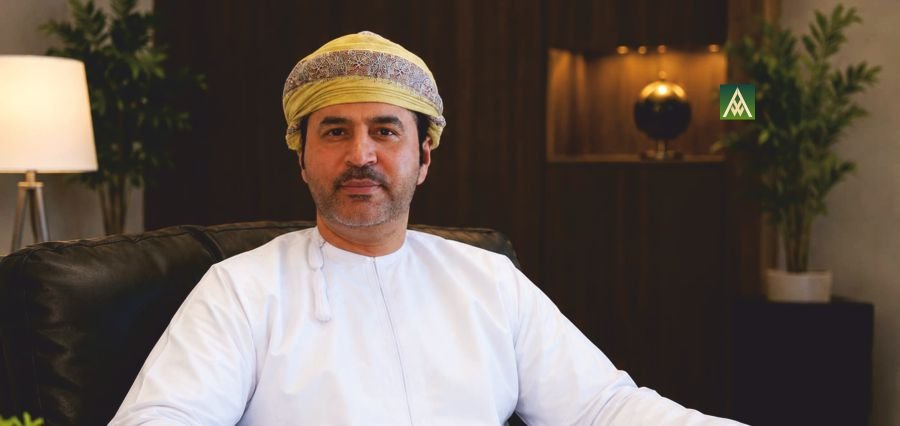
There is a version of the CEO role that most organizations settle for. It manages operations, delivers quarterly results, reports to the board, and moves carefully within the boundaries that shareholders have established. It is competent, reliable, and largely transactional. Then there is the version that Dr. Ibrahim Albalushi has spent his career building towards a leadership model that treats commercial performance not as the destination but as the instrument through which something considerably more lasting is created. That distinction, subtle on the surface and fundamental in practice, has shaped every strategic decision, every partnership, and every institutional choice he has made across a career defined by complex transformation in demanding environments.
Dr. Ibrahim Albalushi is a Chief Executive Officer whose professional journey has taken him across industrial, manufacturing, and strategic sectors that sit at the intersection of commercial ambition and national priority. The industries he has led are not peripheral to economic life. They are central to it, contributing directly to diversification objectives, local capability development, and the kind of long-term industrial foundation that determines whether a country’s economic story belongs to its own people or to imported expertise.
His leadership philosophy is built on three principles that he returns with consistent clarity: integrity, accountability, and empowerment. Not as values on a wall but as operational commitments that shape how he builds teams, makes decisions under uncertainty, and measures success when the pressure is highest.
What Leadership Actually Requires
Ask Dr. Ibrahim Albalushi what defines an effective CEO, and he answers in a way that immediately separates vision from execution rather than conflating them. Vision without execution, as he puts it, creates ambition without results. Execution without vision limits long-term growth. The most effective chief executives hold both simultaneously, and the tension between them is not a problem to be solved but a productive pressure to be maintained deliberately.
Adaptability sits alongside that combination as a non-negotiable quality. Markets are changing faster than any fixed strategic plan that can fully accommodate, driven by technological advancement, geopolitical developments, and evolving customer expectations. Leaders who cannot challenge their own assumptions when those assumptions are no longer serving the organization tend to discover their limitations at exactly the wrong moment, when the cost of inflexibility has already been paid.
He reflects, “Leadership is a responsibility rather than a position. Impactful CEOs focus on creating value for stakeholders, developing future leaders, and leaving organizations stronger than they found them.”
The third quality he emphasizes is emotional intelligence, a term that carries more operational weight in his usage than in its more common motivational applications. Modern organizations are functionally complex and culturally diverse. Leaders who can build genuine trust, inspire teams across different disciplines and backgrounds, and foster collaboration without imposing uniformity are creating conditions that more technically sophisticated counterparts frequently cannot replicate.
Growth and Sustainability as a Single Equation
One of the most consequential convictions driving Dr. Albalushi’s strategic approach is his refusal to treat growth and sustainability as competing priorities requiring careful balance. In his view, framing itself is a problem. Sustainable organizations are not built by choosing between expansion and resilience. They are built by pursuing growth in a manner that strengthens the foundations supporting it.
His practice has been to invest in governance frameworks, risk management systems, talent development, and operational excellence before pursuing aggressive expansion rather than afterward. The sequence matters enormously. Organizations that chase market opportunity before establishing those foundations tend to discover, under pressure, that the infrastructure required to absorb growth was never actually built.
When evaluating strategic opportunities, he applies three questions with consistent discipline: Does it create strategic value? Is it financially sustainable? Does it strengthen the organization’s long-term competitive position? The framework is intentionally rigorous. Opportunities that cannot answer all three questions affirmatively do not pass, regardless of their short-term attractiveness or the competitive pressure to respond quickly.
He states, “Organizations that can answer all three questions positively are better positioned to withstand economic cycles and market disruptions while continuing to grow.”
The Innovation That Builds Institutions
Dr. Albalushi’s approach to innovation is shaped by a conviction that many organizations claim to share but fewer actually practice innovation must be embedded in organizational culture rather than confined to specific departments, functions, or periodic initiatives. When innovation lives in a dedicated team or a special project structure, it remains peripheral to how the organization actually operates. When it becomes a continuous organizational mindset, it reshapes how every function approaches its work.
Creating that culture requires two things that sit in deliberate tension. The first is genuine freedom for employees to challenge conventional thinking and propose ideas that the organization has not previously considered. The second is an equally genuine accountability for connecting those ideas to measurable business outcomes. Freedom without accountability produces creative activity without commercial consequence. Accountability without freedom produces compliance without creativity.
In the industrial sectors where he has operated, innovation extends well beyond product development into manufacturing processes, operational efficiencies, supply chain optimisation, customer experience, and business model transformation. That breadth reflects a leadership understanding that competitive advantage rarely lives in a single innovation but in the accumulated effect of a culture that applies innovative thinking across every dimension of the operation simultaneously.
He notes, “Innovation becomes sustainable when it is viewed not as a one-time project but as a continuous organizational mindset.”
Resilience Learned Under Genuine Pressure
The defining challenge that most directly tested Dr. Albalushi’s leadership did not arrive in a predictable form or with adequate warning. It required navigating substantial uncertainty while simultaneously maintaining business continuity, protecting stakeholder interests, and preserving the organizational momentum that complex enterprises can lose very quickly once confidence begins to erode.
The practical demands of that period were formidable: balancing competing priorities, managing financial pressure, addressing operational risks, and sustaining confidence among employees, partners, and shareholders whose trust was being tested by circumstances none of them had fully anticipated. Each of those demands was difficult in isolation. Managing all of them simultaneously, without the luxury of complete information or unlimited time, tested every aspect of his leadership preparation.
The lesson he draws from that experience is one of the most important in his entire professional formation: resilience is not about avoiding difficulties. It is about maintaining clarity of purpose and quality of judgment despite them. Leaders who need ideal conditions to perform well are not resilient. Leaders who maintain the discipline of making informed decisions even when information is incomplete and the environment is actively hostile are.
He affirms, “Organizations often emerge stronger from adversity when challenges are viewed as opportunities to improve systems, strengthen governance, and build institutional capability.”
Strategy as a Living Process
Dr. Ibrahim Albalushi approaches strategic planning as a continuous process rather than an annual calendar event, a distinction that sounds minor and proves, in practice, to be fundamental to how organizations respond when markets shift faster than their planning cycles anticipated.
The starting point of any serious strategy, in its framework, is a clear understanding of where the organization wants to be in five to ten years. Everything else, the initiatives, the priorities, the resource allocations, the short-term objectives, is evaluated against that destination. Short-term priorities that do not serve in the long-term direction are not simply deprioritized. They are explicitly declining, because the cost of allowing short-term urgency to accumulate at the expense of long-term trajectory is one of the most reliable sources of strategic drift that complex organizations experience.
To ensure that alignment remains active rather than theoretical, he establishes clear performance indicators and reviews of progress regularly at both operational and executive levels. The discipline of that review process is what prevents strategy from existing only on paper while the organization operates according to a different and unofficial set of priorities.
He reflects, “Effective strategy execution requires discipline, accountability, and the willingness to adjust tactics while maintaining strategic consistency.”
Talent as the True Driver
In Dr. Albalushi’s framework, people are not a resource to be managed alongside capital, technology, and market position. They are the true drivers of organizational success, and the quality of leadership applied to their development determines more about long-term outcomes than any other single strategic variable.
His approach to attracting talent begins with character rather than credentials. Skills can be developed in people who have the foundation to support that development. Integrity, commitment, and a genuine growth mindset cannot be installed afterward. They must be present at the point of selection, and his experience has reinforced consistently that the cost of hiring around a character deficit tends to be considerably higher than the cost of finding someone with the right foundation even when that process takes longer.
Development follows selection as an equally serious investment. Organizations that attract strong people but fail to invest in their continuous growth produce talent pipelines that drain steadily toward competitors who do. Knowledge of transfer, leadership development, and exposure to progressively demanding responsibilities are not peripheral benefits extended to valued employees. They are the operating conditions under which potential actually becomes performance.
He states, “A successful organization is one where leadership capability exists at every level, ensuring continuity and sustainable growth.”
The Trends Reshaping What Leadership Demands
Looking at the forces that will most significantly define the business environment of the next decade, Dr. Ibrahim Albalushi identifies artificial intelligence as the most transformative, with the clearest implications for how competitive advantage is built and sustained. Organizations that successfully integrate AI into their business models will gain advantages that compound over time. Those that engage with it superficially will find that engagement insufficient as the capabilities of their competitors continue to advance.
Digital transformation will continue accelerating across every sector, requiring leaders to develop genuinely data-driven approaches while preserving the human leadership qualities that data and algorithms cannot supply. Sustainability will move steadily from a values conversation into a strategic and regulatory reality, influencing investment decisions, customer preferences, and the frameworks within which organizations are permitted to operate.
Supply chain resilience and geopolitical diversification will become increasingly critical strategic considerations as the vulnerabilities exposed by recent global disruptions continue to shape how serious organizations build their operating models. The leaders who navigate those conditions most effectively will be those who combine technological understanding with the kind of human leadership capability that no technology can replicate.
A Legacy Defined by What Continues
When Dr. Ibrahim Albalushi considers the legacy, he is building through his leadership, he reaches not for financial metrics but for something more enduring and more difficult to manufacture institutions that continue generating value long after any individual leader has moved on.
Great leaders, as he frames it, are remembered not for the positions they held but for the organizations they strengthened, the people they developed, and the positive impact they created across the communities and sectors they served. His aspiration is to contribute to organisations that become genuine engines of growth, innovation, and opportunity for future generations rather than structures that depend on the continued presence of any single person to function at their best.
His advice to aspiring CEOs and future business leaders carries the same quality of earned directness that runs through everything else he says. Lead with integrity. Remain curious. Embrace challenges rather than managing them. Never stop learning, because the environment in which leaders operate will continue changing at a pace that makes static knowledge a form of professional decline.
He says, “The future belongs to leaders who combine vision with execution, ambition with humility, and innovation with responsibility. Those are the leaders who will create meaningful and lasting impact.”
As Oman continues its journey toward Vision 2040, manufacturing, innovation, and industrial development will play an increasingly critical role in shaping the nation’s economic future. Dr. Ibrahim Albalushi has positioned himself, and the organizations he leads, at the center of that transformation. It is not, in his own words, simply a business mission. It is a national responsibility and a commitment to future generations.