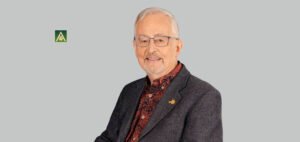

It is a certain silence that descends on a township at dusk, not serene, but oppressive. The quiet of streets that just stop on the outskirts of a community, like somebody in an office somewhere ruled this area does not merit the tarmac. That silence was where Thoko Tshabalala-Shandu was raised. She saw it denying people who were so much more deserving. And she chose, quietly, with extraordinary resolve, to spend her career answering it.
Today, as the Managing Director of VEA Roads Maintenance and Civils, widely known as VEA Roads, Thoko does not simply build roads. She builds connections between people and the futures they were always meant to access. Every contract she signs, every subcontractor she mentors, every young woman she pushes through the doors of the construction industry carries the weight of everything she witnessed growing up. That is not a tagline. It is the engine behind an entire organization.
Recognized this year as a recipient of both the Visionary Woman Industrialist of the Year 2026 and the Global Women Leadership Award 2026, Tshabalala arrives at this moment not as a sudden success story, but as the product of decades of deliberate, values-driven leadership. What makes her remarkable is not just what she has built; it is the clarity with which she has always known why she is building it.
From Township to Boardroom: Where Leadership Begins
Long before Thoko held the title of Managing Director, leadership was already quietly shaping her. Growing up in a township in South Africa, she witnessed firsthand what a genuine lack of infrastructure meant, not just absent roads or crumbling buildings, but the slow, steady erosion of opportunity and hope. She watched women around her lead without recognition: mothers, teachers, and community matriarchs who organized and built without ever receiving a formal title or public acknowledgement for their efforts.
“They showed me that leadership is service and that influence is earned through action, and that resilience often speaks louder than words,” Tshabalala reflects.
Early roles in customer service and marketing sharpened her ability to truly listen to people, to hear not just what they say, but what they genuinely need. Managing high-pressure situations during those formative years gave her a practical foundation that no MBA could have provided. She carried those hard-earned instincts into every leadership decision she makes today, building what she describes as a grounded, people-first approach to running a company in one of South Africa’s most demanding industries.
Infrastructure as Dignity: A Philosophy That Drives Everything
Ask Thoko how she defines leadership, and she will not reach for corporate jargon or rehearsed answers. At VEA Roads, she holds a firm belief that infrastructure is not just about building roads; it is about delivering dignity to the communities those roads connect. That single idea reshapes everything: how she approaches tenders, how she treats subcontractors, and how she ultimately measures what success looks like.
“People don’t follow titles; they follow the truth. Leadership today is about adaptability, emotional intelligence, and purpose,” she states.
In a complex and fast-evolving business environment, Thoko views leadership as the ability to mobilize a shared vision into collective movement. She does not chase control; she creates clarity. In the construction sector, where project timelines, supply chains, regulatory demands, and client expectations collide daily, that steady clarity becomes her most valuable professional asset.
Values That Do Not Bend Under Pressure
When the stakes rise and margins tighten, many leaders find ways to compromise. Thoko refuses. She anchors every critical decision in five non-negotiable values: integrity, impact, inclusion, excellence, and accountability. At VEA Roads, these are not motivational words displayed on a boardroom wall. They function as active, daily operational filters.
She never allows urgency to override ethics. The company does not subcontract transformation. It builds it directly into team structures, supply chains, and measurable project outcomes. Whether she is navigating a difficult client relationship, managing underperformance on-site, or making a call that costs the business short-term revenue, Tshabalala turns to these five values to ensure every decision still reflects the organization’s core identity.
“Those values ensure that when I am faced with pressure, my choices still reflect who we are and who we serve,” she says, a statement that functions simultaneously as a management principle and a deeply personal creed.
Vision on the Ground: The Dual Leadership Model
At VEA Roads, Thoko constructed a dual leadership model: vision-led from the executive level and operationally anchored from the project site upward. She spends as much time reviewing future contract pipelines and risk assessments as she does walk on active project sites and speaks directly with the teams who build the roads.
The company invested in real-time systems that track supplier performance, staff training progress, and project delivery timelines simultaneously. More significantly, Thoko measures success far beyond financial returns. The indicators she monitors include SMME growth rates, community employment numbers, and safety benchmarks, figures that reflect the company’s broader mission to serve communities, not merely complete contracts.
“Vision without delivery is just hope,” she says plainly. “We believe in both.”
This philosophy keeps VEA Roads honest. It forces every layer of leadership to connect long-term strategic thinking with the daily realities of people working on the ground, ensuring that the company’s ambitions remain grounded in tangible, human outcomes.
Trust Built by Proximity, Not Policy
Leading diverse teams across multiple functions, backgrounds, and perspectives requires more than inclusive language or progressive policy. It demands a physical presence. Thoko moves deliberately between site offices, subcontractor meetings, and executive boardrooms, making it a personal practice to be present wherever real decisions are made, and real work gets done.
At VEA Roads, the culture operates on radical transparency. Monthly open debriefs, collaborative project planning sessions, and accessible communication channels ensure that every team member, from site foreman to finance officer, understands precisely how their individual role connects to the organization’s larger purpose. Thoko holds people accountable, but never without first properly equipping them with the tools, information, and support they need to succeed.
“Trust is not built by perfection,” she says. “It is built by consistent, human-centered leadership.”
Choosing Sustainability Over Speed
Some of Thoko’s most defining leadership moments at VEA Roads have not come from what she agreed to, but from what she chose to walk away from. She has declined lucrative tenders that did not align with the company’s operational capacity or core values. She has made difficult, urgent site interventions when safety demanded it. She has navigated extended periods where trust between stakeholders eroded, and then rebuilt it deliberately, brick by deliberate brick.
Her approach to these challenging moments follows a clear and consistent pattern: she prepares thoroughly, listens deeply, and then acts with both decisiveness and compassion. Difficult conversations do not unsettle her. They sharpen her thinking and push her toward better, more informed decisions.
“Resilience isn’t about pretending things are fine,” Thoko explains. “It’s about navigating the storm without losing your direction or damaging your team’s trust.”
That philosophy has shaped a company culture where hard truths are spoken early, course corrections happen quickly, and no one mistakes silence for stability.
Innovation with Discipline: Asking Better Questions
For Thoko, innovation is not a luxury reserved for technology companies. It is an internal mandate embedded in how VEA Roads operates every single day. But at VEA Roads, innovation does not always arrive as new software or advanced machinery. It frequently arrives as a sharper, more honest question: How can the team build faster without compromising safety standards? How can the company help SMMEs become genuinely sustainable industry contributors rather than temporary subcontractors dependent on a single contract?
The company tests new ideas at a controlled micro level, tracks the results rigorously, and scales only what the data supports. Mentorship programs, site-level task force initiatives, and a soon-to-launch digital monitoring dashboard for live project tracking represent the most visible outcomes of this embedded culture of innovation. But none of it operates without the discipline of rigorous procedure, strict compliance, and the preservation of hard-won client trust. Thoko insists that innovation and discipline must always coexist. One without the other creates either chaos or stagnation.
Building People: The Investment That Multiplies
Thoko Tshabalala’s proudest achievements at VEA Roads are not the contracts secured or the kilometers of road completed. They are the people who grew within the organization itself. Site agents who advanced to become project managers. Administrative staff who developed into respected community liaison officers. Young women who entered the construction industry without a clear pathway and found both a career and a calling.
She built structured mentorship paths specifically for young women entering construction, launched dedicated skills transfer programs for subcontractors at every level, and created leadership readiness training embedded throughout the entire organizational structure. The Women in Construction Incubator remains one of her most deliberate and far-reaching investments in the leaders VEA Roads will rely on tomorrow.
The leadership qualities she actively cultivates are consistent: accountability, honest self-awareness, a solutions-driven mindset, and genuine inclusivity. Technical skill, she maintains, can always be taught through proper training and experience. But empathy, resilience, and a sense of purpose are foundations that no standard program can manufacture. They must be drawn out, nurtured, and given space to grow.
“When we invest in others, we multiply our impact. That is the only mathematics that truly matters in this business,” she says.
The Evolution of a Leader: Learning to Let Go
Early in her career, Thoko operated under the belief that effective leadership meant personally carrying every burden. Experience reshaped that assumption entirely. She now understands that real leadership lives in thoughtful delegation, in creating clarity for others, and in building teams capable of operating with genuine, confident autonomy, teams that do not need to be constantly managed because they deeply believe in the shared mission.
The year 2025 delivered five national awards to VEA Roads, a milestone Thoko describes as simultaneously a celebration and a moment of sober reflection. Those recognitions pushed her to examine how dramatically the organization had evolved: from a company building roads to one actively shaping the future of infrastructure development across the African continent.
“That’s bigger than me,” she says with characteristic directness. “My job now is to sustain this vision and scale it.”
She now describes vulnerability openly as a leadership strength and frames asking for help as a strategic, intelligent decision, a significant evolution from earlier instincts that pushed her to project certainty regardless of circumstances. That honest, ongoing evolution represents some of the most meaningful growth of her entire leadership career.
A Legacy Worth Paving
When Thoko speaks about the legacy she intends to leave, she does not only reach for revenue milestones or project completion statistics. She reaches, without hesitation, for people.
She wants VEA Roads to carry a name permanently synonymous with quality, genuine empowerment, and meaningful nation-building. She wants every engineer, contractor, and community changemaker who has passed through the organization to look back not only at what they built with their hands, but at who they became through the work, the mentorship, and the culture VEA Roads gave them.
“I want them to look back and say: ‘We didn’t just work here. We were built here.”
For a leader who grew up watching communities suffer without basic roads or real resources, who carried the quiet lessons of unrecognized women leaders from her township into every major corporate decision, and who now leads a company that measures its own success by the lives it genuinely improves, that legacy already runs far deeper than any road her company will ever build.
Thoko Tshabalala is not simply paving roads. She is paving the way.