
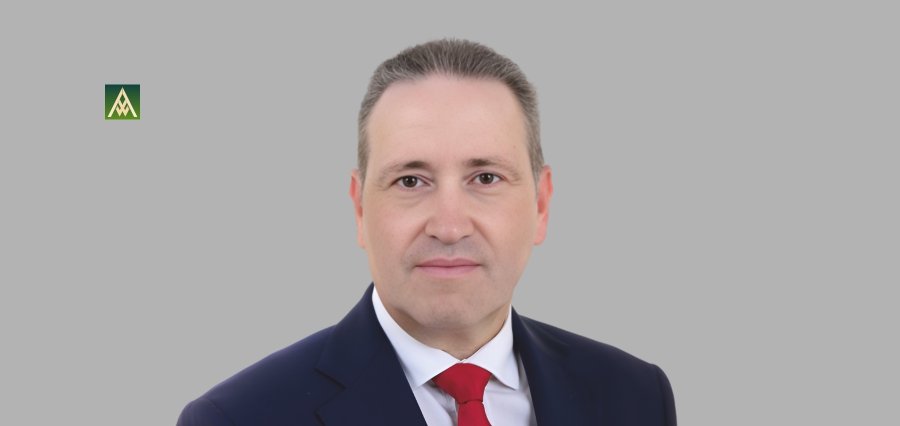
Everything grows and keeps growing; it is the universal rule. The direction a thing grows is decided by the leader leading that growth. It’s the fundamental truth when it comes to every human endeavour—enterprising or non-enterprising. Thus, growth and leadership are tightly bonded. Especially in the dynamically enterprising land of the Middle East, this relationship has been redefined by a visionary Managing Director, Yannis Petrakis. His transition from global hotel management to leading BSM Catering Services was shaped by several very personal experiences.
In his words, “Luxury hospitality taught me the discipline of consistency, the importance of standards, and the ability to deliver quality at scale without losing the human element.” It also taught him early on that people remember how you make them feel long after they forget the details. Yannis carried that lesson throughout his career. Managing large hotels across different countries gave him a deep respect for cultural diversity and the way food brings people together in any setting. In five-star environments, you learn quickly that excellence is not an act but a system.
Later, when he moved into large-scale food and beverage operations, Yannis realized how much he enjoyed the operational side—building systems, creating consistency, and ensuring that quality holds even under pressure. It exposed him to the realities of complex supply chains, cost control, and the need for robust processes that perform reliably in demanding conditions. It also reinforced the principle that food is not only a service but a critical contributor to wellbeing, morale, and safety.
These two worlds came together naturally at BSM. The maritime sector requires the precision and structure of large-scale food and beverage operations, combined with the care, attention, and service mindset of hospitality. Yannis’s background allowed him to bridge those expectations and build a service that is both operationally sound and genuinely people-centred—one that truly improves life on board. That blend of service, structure, and purpose made the transition feel entirely natural, he states.
The Operational Innovation Equilibrium
As the MD of BSM Catering Services, balancing operational excellence with innovation is crucial. For Yannis, it starts with a simple principle: you cannot innovate sustainably unless your foundations are solid. “In our industry, consistency, safety, and cost discipline are nonnegotiable. They form the operating system of the business.” Once that system is stable, you have the freedom to innovate with purpose rather than for show.
At BSM Catering Services, Yannis ensures they focus on practical innovation—solutions that genuinely improve life on board, strengthen compliance, or enhance efficiency. That might mean digital tools that give vessels better visibility of their consumption, new training methods that raise culinary standards, or menu concepts that reflect the cultural diversity of their crews. “Innovation must serve the operation, not distract from it.”
The competitive advantage comes from keeping both sides in balance. Operational excellence ensures reliability; innovation ensures relevance. Yannis’s role is to protect the discipline of the first while creating the space and mindset for the second. When those two elements work together, you build a service that is both dependable and forward-looking, he insists.
Unique Leadership Principles
Having spent nearly a decade with Marriott International across multiple geographies, Yannis developed some unique leadership principles. In fact, in his own words, those years shaped much of how he leads today. Working across different geographies taught him that leadership must be both consistent and adaptable. “You set clear standards, but you also respect cultural nuance and the way people work in different environments. That balance has stayed with me.”
Another principle that influenced him deeply is the idea that service starts with the team. In global hospitality, you learn quickly that you cannot deliver exceptional guest experiences unless your people feel supported, trusted, and equipped to perform. Yannis has carried that forward into BSM Catering Services—investing in people, giving clarity, and removing obstacles so they can do their best work.
Marriott also instilled a strong operational discipline. Fivestar service looks effortless, Yannis says, but it is built on systems, training, and accountability, and that mindset translates directly into the maritime sector, where consistency, safety, and reliability are essentials.
“Finally, I learned the value of leading by example. In hospitality, your behaviour sets the tone for the entire operation.” He applies the same principle today: be clear, be fair, and be present. “When leaders show discipline and respect, teams follow.”
An Ecosystem of Excellence
Catering services require precision, scalability, and consistency. So, according to Yannis, ensuring quality control while meeting diverse client expectations starts with having a disciplined operational backbone. Precision, scalability, and consistency do not happen by accident; they come from clear standards, structured processes, and teams who understand exactly what ‘good’ looks like. “We invest heavily in training, documentation, and routine audits so that our baseline performance is stable and predictable.”
From that foundation, he says, they build flexibility. Different clients have different expectations, and the only way to meet them reliably is to listen carefully, define requirements early, and translate those needs into operational instructions that the teams can execute without ambiguity. “Whether it is a corporate engagement, a vessel, or a large-scale event, the brief must be crystal clear.”
They also use data to keep themselves honest. Consumption patterns, feedback scores, and operational KPIs give them a real-time view of performance. When something drifts, they correct it quickly. When something works, they scale it.
Ultimately, the balance comes from discipline on one side and adaptability on the other. Quality control gives them the consistency clients expect; a service mindset allows them to tailor the experience. “When both are aligned, you deliver reliably while still feeling personal,” shares Yannis.
Creating Conditions for People to Succeed
Talent development remains a challenge across hospitality and food services. Yannis’s philosophy on building and retaining high-performing teams is quite straightforward: you create the conditions for people to succeed, and then you hold them to a high standard. In hospitality and food services, talent development is not a one-off initiative; it is a continuous discipline. People need clarity, structure, and the right tools, but they also need trust and room to grow.
He focuses first on alignment. Everyone must understand the purpose of the organisation, “the expectations of their role, and the standards we operate by. When people know what ‘good’ looks like, performance becomes measurable and fair.”
The second element is investment. Training, coaching, and exposure to new responsibilities are essential. You cannot expect excellence if you do not equip people properly. “I also believe in promoting from within whenever possible; it builds loyalty and shows that effort is recognized.”
The third is accountability. High-performing teams thrive when expectations are consistent, and feedback is honest. It is not about pressure; it is about respect. People want to know where they stand and how they can improve.
Finally, motivation comes from culture. When leaders are present, transparent, and supportive, teams feel valued. When they see that their work has an impact—on clients, on vessels, on colleagues—they stay engaged. “In our industry, where the environment can be demanding, that sense of purpose is what keeps people committed.”
The Importance of Sustainability and Responsible Sourcing
At BSM, Yannis says sustainability is not a separate initiative, but a part of how they operate and make decisions. In catering, every choice—from procurement to waste management—has an environmental impact, so we approach it with discipline and transparency.
BSM Catering Services focuses first on responsible sourcing. It works with suppliers who meet clear standards on quality, traceability, and ethical practices. The team also prioritizes products with lower environmental impact and encourages vessels to use ingredients that are seasonal, efficient to store, and culturally relevant to their crews.
The second area is waste reduction. Food waste is both a cost and a sustainability issue. “So we use data, menu engineering, and consumption monitoring to plan more accurately.” Better planning means less waste, fewer unnecessary deliveries, and a smaller footprint.
They also invest in training. Sustainability only works when people understand why it matters and how their daily actions contribute, insists Yannis. “Our teams are trained on portion control, storage practices, and safe handling—all of which reduce waste and improve efficiency.”
Finally, they take a long-term view. “Sustainability is not about quick wins; it is about building systems that support responsible behaviour every day.” By combining disciplined operations with thoughtful sourcing and continuous education, BSM Catering Services ensures that sustainability is embedded in the way it serves its clients and supports life on board.
A Test of Resilience
Leadership is also a test of your resilience amidst adversities. One of the biggest challenges for Yannis in recent years has been navigating volatility—both operational and market-driven. ‘Supply chain disruptions, fluctuating prices, and shifting client expectations have all tested our resilience.” In catering, these pressures are felt immediately on board, so the response must be fast, structured, and calm.
His approach has been to focus on stability first. When the environment becomes unpredictable, you tighten your processes, strengthen communication, and ensure that teams have absolute clarity on priorities. “We improved forecasting, reinforced supplier relationships, and built contingency plans that allowed us to maintain service standards even when the market was moving against us.”
Another challenge has been managing growth while protecting quality. As demand increased, the risk was to stretch the organisation too thin. Yannis addressed this by being disciplined about capacity—scaling only when the operational backbone was ready, and investing in people and systems before expanding further.
Ultimately, these challenges reinforced a simple leadership principle: stay steady, stay transparent, and make decisions based on facts, not noise. “When teams see consistency from the top, they stay focused, and the organisation moves through difficult periods with confidence.”
An Evolving Definition of Success
Earlier in Yannis’s career, success was measured in very tangible terms—performance metrics, project delivery, financial results, and the visible outcomes of hard work. “I was focused on proving capability, building momentum, and demonstrating that I could lead teams and deliver consistently in demanding environments.” It was a necessary phase, and it shaped his discipline.
Today, his definition of success is broader and more grounded. As a business leader, success is about creating the conditions for others to perform at their best. “It is less about what I achieve personally and more about what the organisation accomplishes through its people.” It means building systems that are stable, teams that are confident, and an organisation that can grow without compromising its standards. Yannis takes far greater pride in seeing teams develop, systems strengthen, and individuals step into responsibilities they once thought were beyond them. “When people feel supported, when clients trust us, and when the operation runs with clarity and purpose, that is success.”
Yannis also sees success now as the ability to make decisions that stand the test of time. Short-term wins matter, but long-term impact matters more. “If the choices we make today strengthen the business, improve life on board, and leave the organisation healthier than we found it, then we are moving in the right direction.” In simple terms, earlier success was about personal achievement; today it is about collective progress and sustainable performance.
Yannis’s Advice to Emerging Hospitality Professionals
Build a strong operational foundation before reaching for senior roles. In this industry, credibility comes from understanding the work at ground level—how teams operate, what guests value, and how standards are maintained day after day. If you can run a shift well, you can run a department; if you can run a department well, you can lead a business.
The second point is to stay curious. Hospitality is changing quickly—technology, guest expectations, sustainability, and cost pressures. The leaders who progress are the ones who keep learning, ask good questions, and adapt without losing their discipline.
Third, develop your people skills early. Senior roles are less about doing the work yourself and more about creating the conditions for others to succeed. Learn to communicate clearly, give honest feedback, and build trust. These skills matter far more at the executive level than any technical expertise.
Finally, be patient and consistent. General management is not a title; it is a responsibility. Take roles that stretch you, seek out environments that challenge your thinking, and focus on long-term growth rather than quick promotions. When you combine operational competence, curiosity, and strong leadership behaviour, the opportunities will come.
Looking Ahead
Yannis sees significant opportunities for innovation and differentiation in his sector, “Provided we stay disciplined about what truly adds value.” The first area is digitalization. Data-driven planning, smarter forecasting, and real-time visibility of consumption will allow them to operate with far greater precision. Technology should simplify work, not complicate it, and the companies that achieve that balance will stand out, he believes.
The second opportunity lies in personalization at scale. Whether on board a vessel or in a corporate environment, people expect food that reflects their culture, preferences, and dietary needs. With better menu engineering, stronger training, and more flexible supply chains, “We can deliver tailored experiences without losing operational efficiency.”
Sustainability is another major differentiator. Clients increasingly expect responsible sourcing, reduced waste, and transparent reporting. Organisations that embed sustainability into their daily operations—not as a marketing message but as a working practice—will gain long-term trust.
Finally, there is a clear opportunity in elevating the human element. In a service-driven industry, technology can support excellence, but it cannot replace the impact of well-trained, motivated teams. Investing in people will remain one of the strongest forms of differentiation.
In short, the future belongs to those who combine operational discipline with thoughtful innovation—solutions that are practical, scalable, and genuinely improve the experience for the end user.