
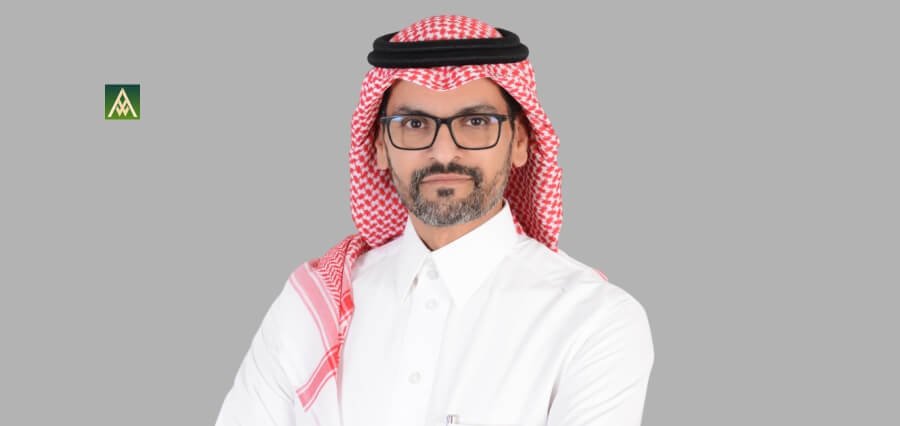
The leadership in the northern Saudi Arabia conservation areas, which support national development, requires assessment through both strategic planning and actual results. Sultan ALjabaan in his role as Human Resources Expert, operates as the main driving force behind this transformation.
His journey demonstrates how human resources evolved because he shifted from executing policies to building purpose-driven organizations. He identified the need for different workforce assessment methods because he had to establish the manpower requirements of the Kingdom’s biggest natural reserve. The organization underwent a complete transformation of its people management approach, which created a direct connection between environmental sustainability and national development through its talent management strategies, cultural practices, and analytic methods.
He used human capability to create conservation benefits, which transformed HR into a strategic driving force that operates through human resources management. The development of organizational structure through ALjabaan’s work created a new leadership model that drives national development through strategic workforce management.
The Defining Moment: From Executor to Strategist
ALjabaan traces his transformation to assuming his KSRNR role. Faced with establishing Saudi Arabia’s largest natural reserve, he recognized traditional HR metrics would prove inadequate. Success could no longer be measured by hiring numbers alone.
“The turning point was a fundamental shift in mindset,” he reflects. He spent his initial months visiting remote sites like Khunfah and Tubaiq, engaging with rangers and technical experts. This operational understanding enabled his transition from “executor of policies” to strategic partner, designing organizational operating models while connecting human capability directly to sustainable national impact.
Repositioning HR as a Business Driver
In many organizations, HR remains perceived as a support function that is considered as a necessary administrative overhead rather than a value creator. ALjabaan deliberately challenged this perception by fundamentally changing the conversation with senior leadership. He stopped bringing “HR problems” and started presenting “business solutions.”
At KSRNR, this shift manifested in initiatives like the Volunteering Program. Initially, it was seen as a peripheral activity. He presented a compelling business case demonstrating how volunteers could serve as an operational force for conservation. He successfully mobilized over 1,000 volunteers to work alongside permanent staff, creating a hybrid workforce model that maximizes impact while maintaining budget discipline.
When the board observed tangible improvements in vegetation cover and community engagement metrics, their perception of HR transformed. The initiative proved that HR could lead strategic programs directly advancing the authority’s core conservation mission. This repositioning elevated HR from a cost center to a recognized business driver within the organization.
Building Strategic Architecture
ALjabaan relies heavily on competency-based management as the central framework connecting all HR practices to business objectives. He led the design of a comprehensive competency framework tailored to KSRNR, benchmarked against the best global practices from entities like the International Union for Conservation of Nature (IUCN).
This framework extends beyond recruitment, anchoring training, performance management, and succession planning. His team designed a hybrid organizational structure balancing centralized governance with geography- based operational agility, ensuring workforce strategy responds to each protected area’s unique needs within the vast reserve.
Competing for Talent: Beyond Salary
Competing against Saudi Arabia’s giga-projects like NEOM. ALjabaan broadened compensation beyond salary. He developed an Employee Value Proposition (EVP) centered on “National Pride” and “Impact,” aligning salaries with market standards while emphasizing the intangible value of preserving Saudi Arabia’s natural heritage. By integrating professional development and clear career pathways, this holistic approach attracts top talent sustainably proving purpose-driven propositions compete effectively with purely financial incentives.
The Retention Formula: Belonging and Empowerment
ALjabaan’s retention strategy centers on fostering belonging and empowerment. The results were outstating KSRNR maintains 8% attrition, which is significantly below industry averages, with 88% employee engagement. He attributes success to transparency, ensuring every employee understands their role and career progression. By bridging gaps between rangers, technical experts, and management, he creates a “Shared Purpose.” When employees feel they partner in a national success story, retention becomes a natural engagement outcome.
Harnessing Analytics for Strategic Decisions
Managing a landmass the size of Greece, data represents an operational necessity. ALjabaan established integrated dashboards enabling real-time workforce and volunteer tracking. “These analytics correlate workforce deployment with environmental impact, empowering strategic decisions like positioning rangers based on biodiversity heatmaps,” he says. The framework also identifies skill gaps precisely, ensuring training budgets deliver maximum ROI by transforming HR from reactive administration to predictive strategy.
Adapting Across Industries: The Art of Contextual Strategy
ALjabaan’s career spans diverse sectors, from dairy production at Al Safi Danone to service delivery at Tatweer, and now conservation at KSRNR. Each transition required fundamental adaptation of people strategy to align with sector-specific realities.
He attributes successful transitions to avoiding “cookie- cutter” approaches. “Each sector possesses its own organizational DNA. In dairy, the focus centered on supply chain efficiency, whereas at Tatweer, service quality drove priorities. At KSRNR, sustainability and impact define success,” he expresses.
Transitioning to the government and non-profit sector, he resisted blindly imposing private sector practices. Instead, he invested time in understanding the sector’s unique psychology. He hybridized private sector strengths like agility and performance focus with public sector values of governance and national duty. This tailored approach respects organizational context while driving operational excellence, demonstrating that effective people strategy requires deep contextual intelligence rather than universal formulas.
Cultural Evolution Without Disruption
Organizational development often demands cultural shifts extending beyond structural changes. ALjabaan’s philosophy embraces the theory of Evolution, not Revolution. “Imposed change almost always breeds resistance, undermining transformation efforts before they ever gain true traction,” he says.
At KSRNR, he adopted a participatory approach to cultural transformation. He formed steering committees including representatives from all organizational levels, from executive leadership to field rangers. The process began with building a “Shared Vision” before implementing structural changes.
He utilizes a championship model, empowering employees to become change agents within their teams. By communicating the “Why” behind every change and involving staff in the transformation process, he minimizes resistance while maintaining operational stability throughout restructuring. This inclusive approach transforms potential adversaries into advocates, accelerating change adoption while preserving organizational continuity.
Building Leadership Pipelines for National Impact
Leadership pipeline development represents a critical concern globally, particularly in rapidly evolving markets like Saudi Arabia. ALjabaan’s philosophy centers on “Building from Within,” recognizing that exclusive reliance on external hiring for leadership positions proves unsustainable.
He utilizes the competency framework to identify High- Potential (HiPo) employees early, evaluating not just current performance but “Learning Agility” the capacity to adapt and grow. “At KSRNR, I design leadership development programs, facilitating knowledge transfer from international experts to local talent,” he says.
His goal extends beyond organizational needs. He envisions the organization as a “School of Leaders” for the Kingdom’s environmental and tourism sectors. This ambitious vision ensures robust pipelines of Saudi nationals prepared to assume leadership roles, contributing to broader national development objectives while building organizational sustainability.
Transforming Compliance into Competitive Advantage
In the Middle Eastern business landscape, workforce nationalization and regulatory frameworks significantly influence HR strategy. ALjabaan approaches Saudization not as a compliance metric but as a sustainability strategy rooted in practical logic.
For a conservation project deeply connected to land and heritage, he recognizes that local communities serve as the reserve’s most effective protectors. “KSRNR transforms Saudization into competitive advantage by focusing recruitment and training on locals from specific operational regions like Hail, Tabuk, and Al-Jouf,” he expresses.
The organization addresses initial skill gaps through intensive development programs, ensuring they build genuine national capability rather than merely achieving numerical targets. This approach creates sustainable workforce foundations while fulfillingregulatory requirements, demonstrating that compliance and strategic advantage need not conflict when properly aligned.
Digital HR: Scaling Through Automation
Digital HR transformation accelerates globally, and ALjabaan positions automation as the cornerstone of KSRNR’s ability to scale operations. The most impactful initiative involved digitizing core HR processes and implementing a comprehensive volunteer management system.
The organization deployed platforms streamlining the entire volunteer lifecycle, from recruitment through deployment and performance tracking. Managing 1,000+ volunteers would prove impossible manually with KSRNR’s lean HR team. Automation made this scale achievable without proportional staff increases.
Additionally, automating administrative workflows through Enterprise Resource Planning (ERP) systems liberated the HR team from paperwork, enabling strategic pivots towards employee experience enhancement and strategic initiatives. This transformation illustrates how technology amplifies human capability rather than replacing it, freeing professionals to focus on high-value activities requiring judgment and creativity.
Defining Next-Generation HR Leadership
As a recognized innovator in people leadership, ALjabaan offers compelling insights into the future of the profession. He believes next-generation HR leadership will be defined by the symbiotic relationship between Artificial Intelligence and human centricity.
“Tomorrow’s leaders must evolve beyond traditional management to become Tech-Savvy Humanists. The profession needs to leverage AI and Generative AI not merely for automation, but as strategic co-pilots providing predictive insights for talent matching, personalized learning paths, and proactive retention strategies,” he says.
However, as AI handles the data-driven “science” of HR, the leader’s role must pivot intensely toward the art, empathy, ethics, and culture building. “Success lies in ethically integrating AI to eliminate bias and administrative burdens, freeing HR professionals to focus on what technology can never replace inspiring people, nurturing mental well-being, and building value-driven organizations,” he emphasizes.
This vision acknowledges technology’s transformative potential while asserting the enduring primacy of human connection, judgment, and leadership in organizational success.
A Legacy in Progress
Sultan ALjabaan’s journey from HR practitioner to strategic people leader mirrors the broader evolution of the HR profession itself. In an era where human capital increasingly determines organizational success, his work at KSRNR demonstrates how people’s strategy can drive national transformation.
Managing the human infrastructure for Saudi Arabia’s largest natural reserve, he proves that strategic HR leadership extends far beyond administrative efficiency. It encompasses vision, adaptability, cultural intelligence, and the capacity to connect individual capability with collective purpose.
As KSRNR continues its mission to preserve 130,000 square kilometers of natural heritage while engaging in communities and building national capacity. His strategic people leadership provides the human foundation upon which environmental sustainability rests. His approach also offers valuable lessons for HR leaders navigating complexity across sectors where true strategic leadership lies not in executing predetermined plans, but in architecting human systems capable of achieving extraordinary collective impact.
In Sultan ALjabaan’s vision of HR as a strategic driver of national development, we glimpse the future of people leadership, one where technology amplifies human potential, purpose transcends compensation, and organizational success measures itself by sustainable impact on communities and the environment alike.