
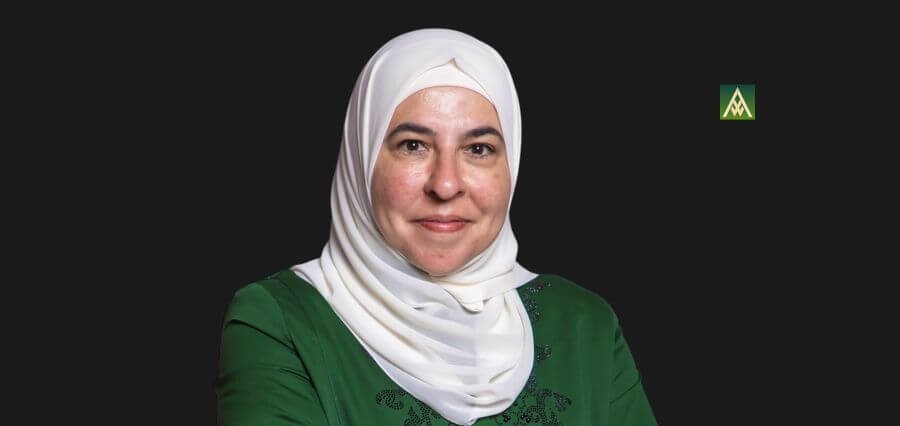
What does it take to build an institution that truly endures, one that does not merely survive disruption but rises through it? In a region where stability is hard-won and international standards can feel impossibly distant, the answer lies less in technology or capital, and more in the clarity of a single person’s purpose. Shereen AlSayyed, Founder and General Director of GCL Palestine, is precisely that kind of person. Over a career spanning more than twenty-five years across sustainability, governance, risk management, and organisational transformation, she has moved from quality inspector on a factory floor to the head of a nationally respected organisation operating within GCL International’s global network of more than fifty countries.
Her story is not a straight line to success. It is a story shaped by a year of quiet searching after university, by the rigours of auditing and assessment across industrial and commercial sectors, by an MBA completed while raising children, and by a foundational belief that has never wavered: that work is a sacred trust, and excellence is a moral obligation, not merely a professional target. Today, through GCL Palestine, Shereen AlSayyed is raising the standard of Palestinian and regional institutions to world-class levels, one organisation at a time.
The Journey That Shaped a Leader
Shereen AlSayyed’s career began not with a grand entry but with a year of patient, often difficult searching after completing her bachelor’s degree in chemical engineering from the University of Jordan. That period, she recalls, became the unlikely foundation of the resilience that has defined everything since. When her first role as a quality inspector in a Palestinian industrial company finally arrived, she did not treat it as a stepping stone to something more impressive. She treated it as a step in a learning journey.
She mentions that “My journey began with one quiet certainty that has shaped everything since: that work is a sacred trust, and that the pursuit of excellence is, at its heart, an act of devotion.” That conviction carried her from quality inspection into consulting across industrial, service, and commercial sectors, where she deepened her grasp of institutional systems and international standards, rising from researcher to operations manager, leading teams, overseeing complex implementations, and designing training programmes that strengthened organisational capability.
She completed her MBA while raising her children, a chapter that taught her, as she reflects, what it means to balance demanding professional roles with discipline and intention. Through every stage of this journey, a single belief remained unchanged. According to her, “Sincerity of intention, paired with excellence of execution, is what gives a career its meaning and allows what we build to stand the test of time.” It is a belief that did not soften with success. It hardened into a leadership philosophy that GCL Palestine, founded in 2011, has been built upon entirely.
The Mission of GCL Palestine
GCL Palestine operates as a branch of GCL International, a global network delivering internationally recognised assessment, auditing, certification, and training services across more than fifty countries. Within this framework, Shereen AlSayyed has created something distinctive: an organisation that brings together local insight and international rigour, helping Palestinian and regional businesses meet global benchmarks without surrendering the character of their own context.
But the mission of GCL Palestine, as she defines it, reaches beyond certification. She states that “Our mission is not merely to issue certificates, but to build systems that endure.” Organisations, in her view, do not grow through systems alone. They grow through capable leadership, empowered teams, and a culture grounded in professionalism and genuine respect. GCL Palestine measures its success not by the volume of contracts signed, but by the depth of impact left with every organisation it serves.
This philosophy shapes every engagement. When GCL Palestine works with an organisation on governance, risk, or sustainability, the goal is not compliance for its own sake but the cultivation of a culture where sound principles become daily conduct. She is emphatic that true resilience is never built reactively. As she explains, it is “Founded on firm values and a clarity of purpose woven into the fabric of institutional culture, rather than displayed on the wall as a slogan.” The difference between institutions that merely survive and those that genuinely thrive, she maintains, lies precisely in that distinction.
Bridging Technical Precision with Leadership Wisdom
Shereen AlSayyed’s background in chemical engineering has done more than provide technical credibility; it has fundamentally shaped the way she thinks about organisations. Engineering, she explains, taught her to see an organisation not as a collection of separate departments but as one interconnected system of processes, and to look past visible symptoms to their root causes. Auditing, layered on top, taught her to anchor every judgment in evidence rather than impression. Together, these disciplines formed a governing conviction: sound decisions must be free of bias and grounded in fact.
Yet she is equally clear that technical expertise alone does not make a leader. Numbers reveal what is happening; wisdom reveals why it matters and where the organisation must move. She therefore works to balance analytical precision with depth of insight, and decisiveness with genuine openness to counsel. According to her, “Consultation is a source of strength, not hesitation; decisions mature in the meeting of minds.” At the same time, she recognises that chronic indecision carries its own cost. What reconciles these competing demands is what she calls rushd, a matured soundness of judgment that discerns when to deliberate and when to act. She regards it as “The truest measure of a leader: not how much one knows, but how soundly one decides.”
What It Means to Lead with Intention
Ask Shereen AlSayyed what purpose-driven leadership means to her, and she does not reach for corporate language. She reaches for something deeper. True leadership, she believes, is defined not by position or title but by the trust a leader inspires and the lasting impact they create. Purpose, in her framework, is not a value statement displayed in a company lobby; it is an inner compass that steadies every decision, large or small.
She has stood, across her career, at crossroads where the easier path asked her to bend a principle. Each time, she states, it was purpose that held her to her values, even when holding firm cost greater effort or more time. She mentions that “Genuine leadership is measured not only by what it achieves, but by how.” The integrity of the process matters as much as the outcome, a principle she applies consistently, whether conducting independent ESG assessment for multinational organisations or assessing Palestinian enterprises against internationally recognized management system standards with impartiality, rigour, and evidence-based judgment.
This conviction extends to what she considers the most important dimension of purpose: its collective power. When purpose becomes woven into an organisation’s culture rather than remaining the private possession of its leader, institutions advance with a clarity that no single individual could supply. It is the difference between a leader who drives results and one who builds an institution capable of generating them long after her direct involvement ends.
Sustainability as Stewardship
In a business landscape where sustainability is still too often treated as a regulatory obligation to be managed rather than a strategic asset to be leveraged, Shereen AlSayyed takes a sharply different position. She views sustainability not as a box to be ticked but as a conviction rooted in a principle of stewardship: that organisations hold the earth in trust and are accountable for the state in which they leave it to the communities and generations that follow.
Her practical approach to embedding sustainability in organisations moves through clear stages. It begins with a shift in awareness bringing senior leadership to recognise that responsible use of resources, environmental stewardship, and fairness toward people and community are not costs that erode profit, but forces that generate it, strengthening reputation, lowering risk, and unlocking markets that increasingly demand such standards. From awareness, the work moves to architecture: embedding sustainability into governance frameworks, anchoring it in measurable key performance indicators, assigning clear ownership, and building team capability.
She is unambiguous about how sustainability must ultimately be measured. It must answer tangible indicators: energy conserved, waste reduced, engagement deepened, communities better served. On that foundation, she argues, “Sustainability ceases to be a cost and becomes a long-term investment; it ceases to be an obligation imposed from without and becomes a commitment held from within.” For Shereen AlSayyed, sustainability at its deepest is not a department or a report, it is the discharge of a trust that every institution carries on behalf of the society around it.
A Leadership Act in Its Own Right
Few aspects of Shereen AlSayyed’s professional thinking are more distinctive than her understanding of risk. Where many organisations treat risk management as a defensive discipline, a system for containing damage, she approaches it as a leadership act: an opportunity, when exercised with foresight, to move first and move well.
Her philosophy draws on a principle she holds deeply: take every diligent measure, then proceed with confidence and conviction. The capable leader, she argues, neither flees from risk nor rushes recklessly into it. They study it, prepare for it, and make prudent decisions, and in doing so, gain a competitive advantage over organisations that simply react when danger materialises. According to her, “The organisation that anticipates its risks early reaches the solution first, shifting from belated reaction to deliberate initiative.”
Artificial intelligence is increasingly shaping this field, enabling intelligent data analysis that detects risk patterns in large datasets and predictive auditing that surfaces problems before they arise. Shereen AlSayyed embraces these capabilities while maintaining a clear boundary: the tool, however sophisticated, cannot substitute for wisdom. The decision, in the end, is a human one, grounded in values and judgment. In this way, enterprise risk management becomes, in her hands, not merely a protective mechanism but a means of building distinction, seizing opportunity, and safeguarding the long-term trust of every stakeholder an organisation serves.
Governance Failures and the Path to Accountability
Across years of auditing organisations in Palestine, Jordan, and across diverse sectors, Shereen AlSayyed has developed a clear-eyed picture of where governance most commonly breaks down. Four gaps recur with striking consistency. The first is the chasm between strategy and execution, a vision articulated at the top but never translated into daily behaviour or operational decisions on the ground. The second is a weak culture of accountability, where responsibilities are distributed without clear roles or consistent follow-up, so that achievement belongs to everyone and failure belongs to no one.
The third is formal compliance: organisations that satisfy requirements on paper without internalising their spirit, so that certificates become decoration rather than evidence of genuine capability. The fourth is poor risk management and the absence of contingency planning, leaving organisations exposed to shocks they could, with foresight, have anticipated and absorbed.
Her prescription begins not with procedures but with values. Sound governance, she argues, is at its depth an extension of trust of self-accountability before demanding accountability from others, and of transparency in stewarding resources. She recommends three integrated paths: clarity of roles, so each person understands exactly what is theirs; accountability embedded as a culture rather than administered as a punishment; and an ethic of excellence that makes commitment flow from inner conviction rather than external oversight. Built on this foundation, governance is transformed from a constraint into a safeguard, one that protects the organisation’s sustainability and the trust of everyone it serves.
The Culture of Learning and Responsible Leadership
If there is one conviction that runs through every dimension of Shereen AlSayyed’s work, it is this: organisations grow not through systems but through people. The finest system, in the hands of those who do not understand or believe in it, remains ink on paper. She therefore treats the development of people not as a means to an end but as an end in itself.
She cultivates accountability by beginning with herself. She states that “Responsible leadership is practiced before it is demanded, and a leader who holds themselves to account before others earns the credibility that makes accountability acceptable and fruitful.” From that foundation, she builds environments that join justice, consultation, and accountability where individuals feel valued, heard, and genuinely responsible. Continuous learning, in her view, is a professional duty, not an optional enhancement. The world changes at a pace that those who stop learning cannot match, and their teams and organisations cannot either.
Her work with the voluntary initiative “Mishkah,” devoted to empowering women and creating broader societal change, reflects the same philosophy extended beyond the walls of any single organisation. When she sees a woman who has regained her confidence and gone on to build her family and future, or a young person trained by her team who has become a leader in their own right, she recognises what she calls “The truest achievement: the one whose impact endures in people after us.” Success, for Shereen AlSayyed, is not measured by individual accomplishments alone, but by the value created for others and the legacy left in the people, cultures, and systems that continue long after.
Trends Reshaping Sustainability, Governance, and Risk
Looking at the forces shaping the next ten years, Shereen AlSayyed identifies four converging trends that will redefine the fields of sustainability, governance, and risk management. First is the rise of artificial intelligence as a transformative force, no longer a concept on the horizon but a present reality that makes auditing faster, smarter, and more predictive, capable of detecting risk patterns in complex datasets and anticipating problems before they crystallise into crises.
Second is the entrenchment of ESG standards as a fundamental measure of an organisation’s value and its worthiness of investment and partnership, not a cosmetic layer added to satisfy stakeholders, but a core requirement for long-term credibility. Third is the rising importance of institutional resilience in a world defined by volatility, where the capacity to absorb shocks and adapt rapidly becomes a genuine competitive advantage. Fourth is the integration of governance, risk, and sustainability into a single coherent framework rather than isolated disciplines that rarely speak to one another.
The greatest challenge before the next generation of leaders, she argues, will be to balance technological acceleration with steadfastness on values. However sophisticated the tools, they remain means. It is human wisdom and the ethical compass that ensure technology serves people, community, and environment. Those who unite mastery of the tool with firmness of value, she believes, will be the leaders who define the coming decade.
A Legacy Measured Beyond the Organisation
Shereen AlSayyed’s message to the next generation of leaders distils a career’s worth of hard-won conviction. Build yourselves, she urges, before you build your institutions. Make your values a foundation on which you never compromise. Order your priorities wisely. Do not fear seeking counsel, for to ask for help is not weakness but a form of strength and maturity. And be patient; the road to leadership is not a single moment of arrival but a continuous process shaped by challenge, growth, and purpose.
She reminds emerging leaders that business success, ethical governance, and sustainability are not competing goals where one must be sacrificed for another. They are, she states, “Facets of a single truth: that work is a trust, and that the finest leaders unite excellence in performance, genuine care for others, and uprightness on values.” It is a truth she has lived across twenty-five years, through roles that ranged from quality inspector to international certification director, through challenges that tested her values and opportunities that rewarded her discipline.
GCL Palestine today stands as the clearest expression of what she has built: an organisation linked to a global network, serving institutions across Palestine and the region, raising their standards and strengthening their capacity to endure. But the achievement she holds most closely is the human one: the women who found their confidence, the organisations that found their governance, the young professionals who found their direction. In each of them, something of Shereen AlSayyed’s purpose lives on. And that, by her own measure, is what leadership is ultimately for.