In today’s world filled with volatility, uncertainty, complexity, and ambiguity, everyone must always be ready to tackle unprecedented challenges and be capable of overcoming unforeseen hurdles. More than life experiences, education gives one that resilient character, helping them in facing reality unafraid. A life built on the educational foundation of learning prepares an individual for anything and every situation coming their way.
In the case of children, only exceptional schooling provides such a foundation. Grounded in this belief, Kaumeya Language Schools (KLS) presents a strong mission of empowering students. It was founded with a clear belief that strong academics must serve something bigger: building capable human beings. Even in the school’s earlier identity—as one of Alexandria’s long-standing private education institutions (with roots going back to 1959 and a major institutional milestone in 2000)—KLS positioned education as a pathway to leadership, character, and contribution, not only grades.
That founding spirit is explicit in the school’s vision: empowering students to become life-long learners and confident leaders who aspire to their full potential; and its Mission: delivering excellent-quality education in a safe, supportive environment that promotes character-building, inspiration, and motivation to excel, while preparing responsible and productive members of local and global communities.
From Excellent Schooling to Future Readiness
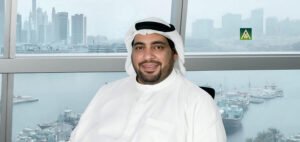
Chairman Ahmed Tarek Khalil shares that over time, that vision matured in two important ways. First, it became more structured and measurable through a codified culture: KLS’s core values—Compassion, Diversity, Honor, Respect, and Wisdom—are not presented as slogans; they are embedded into the code of conduct, student rights and responsibilities, discipline systems, and expectations for behavior in and outside school events. Second, the vision expanded from ‘excellent schooling’ into ‘future readiness.’
With Edge taking over the management of KLS (September 2024), the school’s purpose has been sharpened toward closing the gap between learning and life, recognizing that traditional education can be rigid and that the future labor market will require adaptability, critical thinking, and leadership. In short, the founding vision focused on empowering learners; the evolved vision now explicitly focuses on empowering learners for a changing world—through a broader ecosystem, experiential pathways, educator capacity-building, and technology-enabled learning journeys.
An Ecosystem Inculcating Brilliance
According to Ahmed, a ‘school’ delivers curriculum; an academic hub builds an ecosystem. A true academic hub typically embodies deep academic standards, a cohesive culture, talent development, external connectivity, and a future-facing model that prepares students for future careers and challenges.
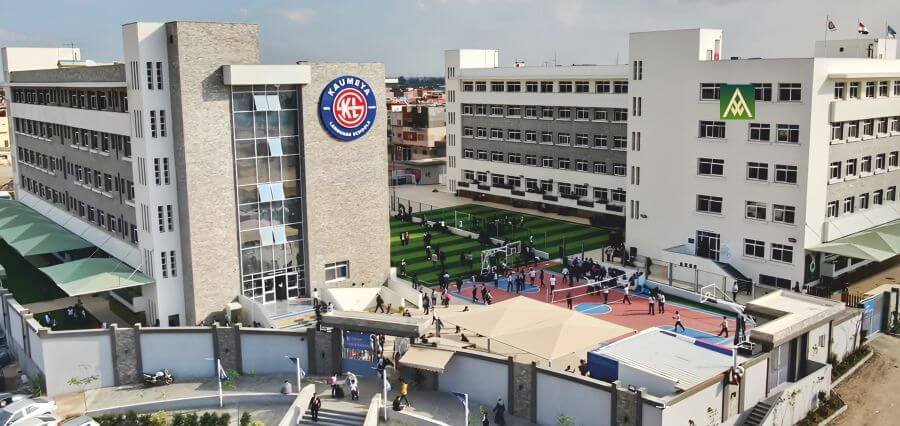
KLS embodies that hub concept in Alexandria by operating as a multi-campus institution with scale, continuity, and influence. Under Edge’s broader footprint, KLS sits within a growing education platform with multiple campuses in Alexandria (including a main campus, international campus, Sultan Hussein campus, King Mariout campus, and the Sawari campus under construction). The ‘hub’ nature is also seen in the way KLS is now connected to Edge verticals: teacher development through Edge Educate, student skills and career pathways through Edge Pathways and Edge Careers, and added learning experiences through Edge School Plus Programs (clubs, debate/MUN, competitions, and internship programs). This turns KLS from a place students attend into a platform students grow through—academically, personally, and professionally.
The Wholesome Distinction
Ahmed further says that KLS’s differentiation is not only academic; it is structural and operational:
- A values-driven operating system: KLS articulates values and enforces them through clear student conduct policies emphasizing self-respect, respect for others, and respect for property.
- Multi-campus footprint and institutional continuity: Many schools remain single-campus, founder-dependent models. KLS is an established institution that has scaled across Alexandria.
- Edge management model (post-2024): Edge brings “full-spectrum school and nursery management” combining academic leadership, operational excellence, and holistic development—plus an explicit future-ready agenda.
- Educator capacity-building at scale: Edge Educate already piloted a professional development program with teachers at KLS, and is preparing to launch the model across national and international schools in Egypt. That is significant because teacher quality, not facilities, is the long-term differentiator.
- Ecosystem partnerships and experiential design: Edge’s partnerships with a wider ecosystem of organizations and educational services providers not only prepare the students for universities but also for sustainable and long-term success in their future.
Language Learning Shaping Future-Ready Students
Language education is often treated as a subject, but global schools treat it as a life skill. Similarly, KLS positions language learning as a long-term capability that shapes future-ready students. Ahmed adds that KLS is a language school in name. Still, its strongest opportunity is to treat language as the ‘operating system’ of thinking, identity, and access—not a subject on a timetable. In future-ready education, language becomes a tool for communication and leadership, a gateway to research and global knowledge, a foundation for critical thinking, and a practical skill connected to higher education and employability.
KLS frames language mastery as something that leads to credentials, confidence, and real-world readiness. When language is linked to debate, MUN, internships, capstones, entrepreneurship, and financial literacy, it stops being ‘English class’ and becomes ‘how students navigate the world.’
A Holistic Philosophy
Walking us through the learning philosophy of KLS, Ahmed says it is anchored in two complementary commitments: A safe, supportive environment that builds character and motivation to excel, and a values-based growth model that expects students to act with respect, compassion, wisdom, honor, and acceptance of diversity.
Under Edge, that philosophy is strengthened by personalized learning, innovation, holistic development, and experiential learning within real life. Together, these imply a shift from one-size-fits-all schooling toward personalized pathways, modern pedagogy, and stronger partnerships with parents and global institutions, he informs.
Methodologically, the direction is toward blended learning journeys: foundational academics paired with applied learning, workshops, and experiential programs. Edge’s platform ambition—integrating pathways (skills matching and counseling), courses (LMS-based career-ready content), and ‘student Ikigai Passports’ that document progress—signals an instructional framework built around progression, evidence of learning, and real-world application rather than only exam performance.
KLS sustains academic depth through structured outcomes and progression, while creating space for curiosity through graded skills-based subjects such as Entrepreneurship and Financial Literacy, project-based extensions such as future-readiness workshops and capstone projects co-designed with ecosystem partners, debate/MUN, and clubs that operationalize research, persuasion, collaboration, and creativity, and opportunities like competitions, hackathons, and tech camps that reward experimentation.
The key is integration: creativity should not be a once-a-week’ activity,’ but a way of demonstrating mastery—through presentations, debates, prototypes, business models, scientific simulations, or community initiatives—while maintaining clear academic expectations.
Progressive Educators Creating Progressive Students
A progressive school is built on progressive educators. Keeping this in mind, Ahmed says that at KLS, recruitment focuses on the alignment of competence with the KLS value system. Training is a key element that drives innovative pedagogy. Evaluation of staff performance is systemic. Continuous development ensures that we are scaling best practices through coaching, observations, and continuous feedback. KLS prioritizes capacity building as the cornerstone of teaching excellence.
Ahmed also believes that it is very necessary to ensure emotional wellbeing, inclusion, and psychological safety in the learning environment—especially during adolescence and high-pressure academic years. In this regard, KLS’s handbook shows a strong foundation for psychological safety: students have the right to respect and fair treatment, clarity of rules, and avenues to appeal decisions. The discipline system is progressive with an emphasis on positive behavior and restorative actions.
For adolescence and high-pressure years, wellbeing is protected. When students can succeed in multiple modes—leadership, debate, internships, clubs, capstones—confidence rises, and identity becomes broader than grades alone. This is especially important for students who struggle in traditional systems and find support through learning by doing and real-world application.
Digitally Powered Education
Digital learning systems, innovation labs, and blended learning models revamp today’s education. Similarly, technology at KLS is moving from tools to systems, whereby the students are learning through tech-enabled layers, such as gamification of content, virtual science labs, digital platforms, and personalization of pathways and career exploration.
Ahmed explains that rather than using technology merely for homework uploads, the intent is to create a student profile over time, as we like to name it the ‘Student Passport,’ where learning experiences, skills, and readiness indicators accumulate into a coherent pathway. “Technology enables our students to transition from Mind to Market.”
Building Parent Confidence
In school ecosystems, parent confidence is as critical as student success. KLS builds parent confidence through clarity, structure, and alignment. Ahmed says, “Our culture reflects transparency and trust. We have clear channels of communication with the core belief that parents are collaborative partners in paving the way to their children’s future.” Parents play a pivotal role in the School Improvement Plan every year, driving progress in a collaborative manner.
Success Evaluation Metrics
There are metrics that KLS is using to track and evaluate success, academically and holistically. KLS credibly tracks success across:
~Academic metrics: attainment, growth/progress over time, graduation requirements, attendance, and academic integrity indicators.
~Holistic metrics: behavior and culture data, student participation in clubs/MUN/internships, wellbeing indicators, and skill acquisition.
Also, to define ‘student achievement’ in today’s evolving learning environment, Ahmed adds that they are now crafting more measurable future-ready indicators, such as completion of career-ready modules, internship participation, capstone quality, and competency badges or certifications. “We believe that when achievement includes both grades and verified skills, the school becomes more aligned with the future labor market and higher education expectations.”
Navigating Turbulences
Every institution experiences defining moments. Sharing their instances of major challenges, Ahmed says that KLS has navigated a period of rapid change and consolidation. A major transformation occurred in September 2024, when Edge took over the management of KLS schools. This kind of transition is often challenging: aligning culture, operations, teacher expectations, and parent communication across multiple campuses requires strong leadership and consistency.
At the same time, the institution expanded and reorganized: opening the new Main Campus and consolidating students from other locations, acquiring and rebranding a leading IB institution as the international campus, and acquiring King Mariout School. Managing expansion while maintaining quality is a classic challenge—and it typically triggers transformation toward standardized operational procedures, professional development, data systems, and quality assurance metrics.
Becoming a Benchmark of Future Reference
Over the next three to five years, the roadmap for KLS, under Edge’s management, is best described as ‘scale with systemization, then influence.’ Ahmed says that their priorities include:
- Campus expansion and portfolio growth.
- Platform-based growth and digitalization.
- Expansion in the Vocational Schools direction.
- National-level impact of the current and future verticals.
- Stronger career readiness and experiential pipelines.
- Deeper partnerships and credentials.
- Broader impact models by exploring social enterprise models for lower-tier schools and families, extending proven practices beyond premium segments—an ambition that could elevate KLS’s influence on education standards in Egypt and potentially the region.
Ahmed says that KLS’s next chapter is not only about being a top school in Alexandria; it is about becoming a reference model for how a values-driven institution can pair academic excellence with future-ready systems—teacher capacity-building, experiential learning, and technology-enabled personalization—at scale.