
Prime Highlights:
- Gulf Cooperation Council economies are expected to grow 4.4% in 2026, supported by rising non-oil activity and investments.
- Saudi Arabia leads the momentum with strong non-oil sector growth, job creation, and increasing business activity.
Key Facts:
- Non-oil sectors now make up over 60% of GCC GDP, with major investments in Saudi Arabia and Kuwait boosting growth.
- Across the Middle East, North Africa, Afghanistan, and Pakistan, economic growth is projected to rise from 3.1% in 2025 to 3.9% in 2027, led by oil-exporting countries.
Background:
Economic growth in the Gulf Cooperation Council is expected to improve in 2026, supported by stronger non-oil sectors and higher investment, according to the World Bank.
The World Bank said GCC economies are forecast to grow 4.4 percent in 2026 and 4.6 percent in 2027, helped by steady non-oil growth and a gradual increase in oil production.
Saudi Arabia’s economy is expected to grow 4.3 percent in 2026 and 4.4 percent in 2027, up from 3.8 percent in 2025, driven mainly by growth outside the oil sector under Vision 2030.
These projections match forecasts from other global institutions. Earlier this month, Standard Chartered forecast Saudi Arabia’s economy to grow 4.5 percent in 2026, exceeding the expected global average. The International Monetary Fund has also projected Saudi growth of around 4 percent over 2025 and 2026.
Indicators of private sector strength remain positive. S&P Global reported that Saudi Arabia had the region’s strongest purchasing managers’ index in December, showing more new orders, growth in non-oil businesses, and ongoing job growth.
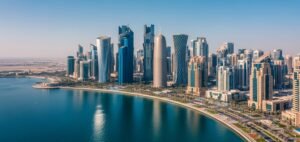
At the country level, the UAE’s economy is expected to expand by 5 percent in 2026, increasing to 5.1 percent in 2027. Qatar is forecast to grow 5.3 percent next year, with growth accelerating sharply to 6.8 percent in 2027. Oman’s GDP is projected to rise by 3.6 percent in 2026 and 4 percent in 2027, while Kuwait and Bahrain are expected to grow 2.6 percent and 3.5 percent, respectively, in 2026.
Economic growth in the Middle East, North Africa, Afghanistan, and Pakistan is expected to rise from 3.1% in 2025 to 3.6% in 2026 and 3.9% in 2027, mostly due to oil-exporting countries.
The World Bank said growth could be affected by conflicts, tighter global finances, trade problems, and changing oil prices.
Worldwide, growth is expected to slow slightly to 2.6% in 2026, down from 2.7% in 2025, with high inflation and rising debt still a concern.