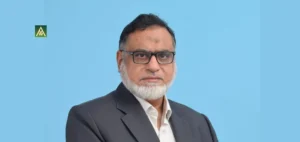

Being a good leader does not happen immediately in one job or industry. It takes a couple of years to become an excellent leader because it is necessary to go through different transformations, understand people, and convert difficulties into advantages. This is the way Dalia Tawfeek’s career path was built. As an engineer with education at Cairo University and an Executive MBA from Hult International Business School, she began her career as a presales professional at ESRI North Africa and understood the value of technology in terms of its results.
Through her career spanning more than two decades, she has built on that early curiosity and forged a notable career as a leader in Egypt, the GCC, and the broader MEA region. As a result of her experiences through Schlumberger, MDS, IBM Consulting, Core42 and Kyndryl, she has gained extensive experience from working in different industries and navigating different transformations and commercial settings. In her current role as Chief Business Officer at Data Dynamics, she is applying this experience in helping organizations to make sense of data and AI complexity.
Discover how Dalia Tawfeek is shaping the next chapter of data-driven leadership across the MEA region.
A Journey Built on Curiosity
Tawfeek’s path into business leadership began far from the boardroom. Armed with an engineering degree from Cairo University and an Executive MBA from Hult International Business School, she entered the technology industry through a technical presales role at ESRI North Africa. It was there, she recalls, that she discovered the thread that would define her career. “The most powerful conversations were not about features; they were about helping leaders unlock outcomes their organizations had not yet imagined,” she says.
Over the following 24-plus years, Tawfeek built commercial agendas across Egypt, the Gulf Cooperation Council, and the wider MEA region, moving through leadership roles at Schlumberger, MDS, IBM Consulting, Core42, and Kyndryl before joining Data Dynamics. Each stop added a new industry lens: energy, government, BFSI, telecom, healthcare, and enterprise mobility, and, in her words, a new layer of leadership maturity. She has generated more than $100 million in new revenue and delivered 125 percent year-on-year growth with 90 percent customer satisfaction at different business assignments, orchestrating some of the region’s most complex sovereign cloud and data programs.
Today, she channels that experience into helping enterprises govern, secure, and monetize data in the AI era. “Making it more trustworthy, sovereign, and sustainable is what gets me out of bed every morning,” she explains.
Aligning Strategy with Customer Reality
For Tawfeek, aligning business objectives with customer needs is a continuous discipline. She begins with deep customer intimacy, understanding a client’s board-level mandates, regulatory obligations, an approach that matters as agendas such as the UAE National AI Strategy 2031, sovereign cloud mandates, and data-residency requirements reshape roadmaps.
Her teams translate that insight into go-to-market plays anchored in verified intelligence. At Data Dynamics, specializing in data management, governance, and AI-readiness, her role is to pre-position the company where customer urgency meets market momentum, sovereign cloud migrations, generative AI enablement, and data trust frameworks. Execution depends on ecosystem orchestration; she has built alliances with Microsoft, AWS, Google, Oracle, ServiceNow, and leading systems integrators, since no single vendor can deliver transformation alone here. Combining Data Dynamics’ intellectual property with hyperscalers’ reach and local trust is how her teams convert strategy into measurable value.
The Daylight Migration and Convergence: A Defining Chapter
One milestone stands out with clarity. As Commercial Board Lead for the Daylight Migration as part of the convergence program at Core42, Tawfeek oversaw the transition of Abu Dhabi’s sovereign cloud estate from Huawei Sovereign Cloud to Microsoft Sovereign Cloud. “This was far more than a technology migration; it was a cornerstone of a national convergence agenda,” she says, describing an initiative to unify Abu Dhabi’s public-sector digital backbone onto a single, sovereign platform.
The program sits at the heart of Abu Dhabi’s AED 13 billion ($3.54 billion) Government Digital Strategy 2025–2027, announced by the Abu Dhabi Executive Council and delivered on Core42’s Sovereign Public Cloud powered by Microsoft Azure, enhanced by G42’s Insight platform. The ambition is unprecedented: making Abu Dhabi the world’s first fully AI-native government by 2027, with all services digitized, over 200 AI-driven solutions deployed, and a platform processing more than 11 million daily digital interactions among government entities, citizens, and businesses, all within UAE sovereign controls.
The partnership was signed between H.E. Ahmed Tamim Al Kuttab, Chairman of the Department of Government Enablement Abu Dhabi; Satya Nadella, Chairman and CEO of Microsoft; and Peng Xiao, Group CEO of G42, before H.H. Sheikh Tahnoon bin Zayed Al Nahyan, Deputy Ruler of Abu Dhabi.
Her role sat at the intersection of national policy, hyperscaler economics, and enterprise reality. She helped shape pricing frameworks, consumption models, and risk-sharing between Core42, Microsoft, and onboarding government entities, reconciling sovereignty, innovation velocity, and sustainability while orchestrating alignment across government, G42, and Microsoft.
Following Daylight, and as part of her role in IBM as the Data & AI Lead for MEA, she led the AI@Scale initiative for Africa’s largest telecom company at IBM Consulting, and in earlier assignments she led the RTA Data Lake and Enterprise AI Platform for the Roads and Transport Authority, and data governance frameworks for Dubai Municipality, Abu Dhabi Housing Authority, Abu Dhabi Ports, and Abu Dhabi Police. These engagements reinforced her leadership philosophy. “The most impactful leaders bridge the technical and the strategic, the local and the global, the possible and the pragmatic. Great leadership is not about having all the answers, but about creating the conditions in which the right answers can emerge,” she says.
Structured Curiosity, Disciplined Execution
Breakthroughs, in Tawfeek’s view, rarely happen by chance. Her approach rests on three pillars: market foresight, customer co-creation, and commercial rigor, staying ahead of regulatory shifts and technology inflection points, positioning her at the frontier of trends from cloud and data at IBM, to sovereign cloud and generative AI at Core42, to data management and AI-readiness at Data Dynamics.
Customer co-creation means designing solutions with clients rather than for them, elevating career wins from transactions into partnerships. Commercial rigor keeps growth sustainable rather than headline-worthy; she weighs every opportunity against revenue, strategic value, margin, and precedent, discipline that helped her contribute over $100 million in new revenue, deliver $2 million in cost savings, and grow accounts by 18 percent.
Building Cross-Functional Alignment
Cross-functional alignment is among the hardest responsibilities a leader must get right, Tawfeek believes, resting on shared purpose, transparent communication, and structural design. She ensures every function understands the customer’s strategic outcome, not just the immediate request; when teams share one picture of success, internal friction dissolves.
She invests in deliberate mechanisms for collaboration: joint account planning, shared KPIs, weekly pipeline reviews, and executive sponsorship. “Silos form not because people are unwilling to collaborate, but because they lack the rhythm and structure to do so,” she says. She leads by principle, drawing on what she calls Trust-by-Design, Ownership and Results, and People-Centered Change, refined across roles at Kyndryl, IBM, MDS, and Schlumberger. At Data Dynamics, building the MEA business from the ground up, embedding this model early has been central to scaling, since culture and cadence are strategic assets.
Leading Through Uncertainty
For Tawfeek, one lesson stands above the rest. “Clarity of purpose is the most powerful navigational tool in times of uncertainty,” she says. She has navigated transitions across industries spanning energy, telecom, government, and healthcare; across geographies including Egypt, the GCC, and sub-Saharan Africa, Kuwait, Qatar, Libya, Sudan, Chad, and Eritrea; and across technology waves, from on-premises systems to cloud to sovereign AI. Leaders who thrive amid volatility, she notes, stay anchored to clear values.
That principle shapes her decisions under pressure. She distinguishes between reversible and irreversible decisions, applying greater deliberation to the latter, and treats uncertainty as opportunity rather than threat; some of her biggest wins came because she moved when others hesitated. Her Executive MBA at Hult sharpened this instinct, giving her framework and a network to navigate complexity confidently.
The Next Decade of Business Leadership
Tawfeek identifies three interconnected trends that will define leadership over the next decade. The first is AI governance and data trust: organizations that lead and survive regulatory scrutiny will build AI on clean, governed data, a discipline she believes will become as fundamental as cybersecurity. “Leaders who understand that AI readiness starts with data readiness will hold a decisive advantage,” she says.
The second is agentic AI and autonomous enterprise operations. As businesses shift from AI that assists humans to AI that acts on their behalf, leaders must become architects of human-AI collaboration, not simply consumers of tools. The third is sovereign digital infrastructure across the UAE, MEA, and beyond; nations and enterprises are racing to control their own data and technology stacks, creating constraints and opportunities leaders must design for today.
Redefining Data as a Strategic Asset
If Tawfeek could redefine one thing about how organizations approach growth, it would be how they think about data. “It should be treated as a strategic asset, not as a byproduct of operations,” she says. Most organizations generate enormous data volumes, yet much remains ungoverned or under-utilized, a pattern she has observed across governments, enterprises, and financial institutions region-wide.
The necessary shift, she believes, happens at board and C-suite level, treating data governance as a strategic priority owned by business leaders, not merely a compliance checkbox owned by IT. In the UAE, this is regulatory reality, sitting at the intersection of the Abu Dhabi Government Digital Strategy 2025–2027, the National AI Strategy 2031, and the National Cyber Security Strategy 2025–2031, which formally moved the country in January 2026 from voluntary compliance to mandatory resilience. “You cannot build an AI-native government, an AI-leading economy, or a trusted digital nation on ungoverned data,” she says.
The UAE Cybersecurity Council, alongside aligned federal and free-zone regulations, has translated that message into board-level accountability, introducing approvals, supply-chain checks, and sector obligations. CBUAE Federal Decree-Law No. 6 of 2025 creates strict liability, including criminal exposure for management negligence involving consumer funds, while the DIFC Data Protection Amendment Law No. 1 of 2025 opens the door to class-action litigation. Federal Decree-Law No. 26 of 2025, enacted in January 2026, extends accountability into AI-driven content moderation. Regulators including TDRA/aeCERT, DESC, the UAE Data Office, the Central Bank, DIFC, and ADGM agree: governance now sits at board level.
In her case, the shift changed the calculus overnight. Data governance has moved from a cost line to a license-to-operate imperative, a prerequisite for AI deployment under the National AI Strategy 2031 and compliance under the Cyber Security Strategy. Organizations treating data as a governed, monetizable asset will thrive; those treating it as IT hygiene will spend 2026 catching up a gap Data Dynamics can help close.
What Sets Lasting Leaders Apart
Asked what distinguishes leaders who deliver lasting impact, Tawfeek points beyond technical competence or commercial acumen. The first quality is strategic courage — making bold decisions with incomplete information and championing ideas that prove right over time. The second is authentic empathy. Working across Arabic, English, and French, and across the Gulf, the Levant, North Africa, and sub-Saharan Africa, she considers connecting across contexts a commercial capability, not a soft skill.
The third is learning agility, as the half-life of business knowledge shrinks; curious leaders build cultures that are adaptive and resilient. Lasting impact also requires commitment to purpose. “The most influential leaders I have encountered do not merely manage businesses; they build legacies, develop future leaders, and contribute to something larger than their own success,” she says.
A Vision for the Region’s Future
Tawfeek’s vision is simple yet ambitious: helping organizations across the UAE and MEA become truly AI-ready, not only in technology stacks but also in culture and governance. She views the National AI Strategy 2031, sovereign AI infrastructure investment, and the rise of world-class technology firms on Emirati soil as evidence the UAE is a co-architect of the AI revolution.
At Data Dynamics, she is building the MEA business on a clear conviction: the next wave of enterprise value will come from organizations that manage and act on their data intelligently. Her goal is to be a catalyst, helping clients move from data complexity to clarity, and from AI aspiration to execution, across government, BFSI, telecom, energy, and healthcare.
Beyond commercial outcomes, Tawfeek remains committed to developing the next generation of business leaders, particularly women in technology and business across the Arab world. “Inclusive leadership is not only morally right; it is a measurable competitive advantage,” she says, referring to a legacy she builds one team, one mentor relationship, one breakthrough at a time, fitting for an executive whose career has turned complexity into clarity across one of the world’s fastest-moving markets.