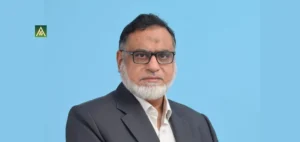

A working strategy must remain ever-evolving, all-encompassing, all-accessible, and open-ended―in short, it must work in the present as well as in the future. Hisham Ghulam, Senior Manager of Strategy and Transformation at PwC Middle East, knew from the beginning of his professional career that one day he was going to create that successful strategy. And then his journey into strategy began with the announcement of Saudi Vision 2030 while he was working at King Abdullah bin Abdulaziz University Hospital. Witnessing the entire nation rally behind a bold, transformative vision under the leadership of His Royal Highness Mohammed bin Salman was deeply inspiring, he recalls. “It marked a turning point for me — I realized that strategy was not just about plans and documents, but about enabling national progress and organizational purpose.” This realization motivated Hisham Ghulam to move beyond project execution into the world of strategic transformation, where he could help institutions translate vision into measurable results. Since then, every career choice he’s made has been guided by that same passion — to contribute meaningfully to Saudi Arabia’s transformation journey and empower organizations to achieve sustainable impact.
The Philosophy of Purpose-Driven Leadership
Hisham Ghulam’s realization that strategy was about enabling national progress and organizational purpose led him to craft a leadership philosophy built on intentional influence. His vision is not simply about directing tasks, but about igniting commitment across complex ecosystems. He sees his role as that of a compass-setter and an empowerer.
He summarizes his ethos with decisive clarity: “My leadership philosophy is to inspire purpose, empower people, and deliver excellence through clarity, trust, and shared vision — blending strategic foresight with the discipline of execution.”
For Hisham Ghulam, a leader must first create the conviction, ensuring that every individual understands the value of the journey. This approach, built on trust, transforms a hierarchy of command into a collective drive for sustainable excellence.
From Vision to Velocity: The Discipline of Execution
In the realm of transformation, Hisham Ghulam understands that the grandest vision is rendered useless without meticulous execution. His core approach to turning visionary goals into tangible outcomes is a rigorous two-pronged strategy: Strategic Alignment and Execution Enablement.
It begins with ensuring Strategic Alignment—a non-negotiable step where he ensures that every initiative, Key Performance Indicator (KPI), and resource allocation directly and unequivocally support the organization’s overarching vision. No effort is wasted on misaligned priorities.
This is immediately followed by Execution Enablement, which Hisham Ghulam describes as the process of translation. He constructs clear operating models, robust governance frameworks, and precise delivery mechanisms designed to sustain momentum. Crucially, he embeds the human element, believing transformation truly succeeds when “people at every level understand how their daily work contributes to strategic outcomes.”
To maintain control without sacrificing speed, Hisham Ghulam empowers executive teams with data, combining structured frameworks with real-time performance insights and executive dashboards. This data-driven approach allows for informed decision-making and ensures projects maintain traction.
The ultimate measure of his success lies in maintaining a powerful equilibrium. He notes, “This balance between clarity of direction and agility in execution is what consistently turns visionary goals into measurable, lasting results.”
This strategic balance allows Hisham Ghulam to not only conceive the future but to meticulously engineer its arrival.
Bridging the Chasm: Vision Meets Operational Reality
The most significant challenge for any strategist is ensuring that a bold, forward-thinking strategy does not collapse under the weight of complex, daily implementation. Hisham Ghulam addresses this dichotomy not through idealism, but through discipline.
He holds a core conviction: “I believe true transformation begins with understanding the current operational reality.” For Hisham Ghulam, a visionary plan only succeeds when it is “built on a solid foundation of capacity, governance, and readiness.” His approach is deliberately incremental, designed to build trust before demanding change.
He starts by establishing stability—clarifying structures, optimizing current performance, and ensuring alignment across stakeholders. “This creates credibility and confidence early in the journey, allowing teams to embrace new ideas without resistance.”
By rigorously combining strategic ambition with disciplined execution, Hisham Ghulam ensures that transformation is not merely visionary on paper but is also practical, scalable, and sustainable in the real world. He treats the foundation as sacred, knowing that only a stable ground can support revolutionary change.
The Definition of Transformative Leadership
For Hisham Ghulam, leadership is not a title; it is a catalytic force. When asked to define “transformative leadership” personally, his answer pivots away from charisma and toward tangible proof. It means “inspiring people by driving real results.”
Hisham Ghulam believes that motivation is a direct result of visible success. It’s about creating an environment where others see what’s possible—not through speeches or slogans, but “through tangible progress and consistent delivery.” He firmly states that people are most inspired when “they witness outcomes that reflect vision in action.”
In his daily work, this philosophy is embodied through active example. He leads by setting high standards, empowering teams to make critical decisions, and ensuring accountability without stifling the essential element of creativity.
Hisham Ghulam views transformation as both a mindset and a discipline: it is about motivating others to think strategically while, simultaneously, equipping them with the necessary tools, data, and structure to make change happen. This powerful balance of inspiration and execution is the defining characteristic of Hisham Ghulam’s saga—a journey dedicated to making the future a measurable, inevitable reality.
The Culture of Guided Innovation
The story of Hisham Ghulam, the architect of strategic transformation, is fundamentally about managing two powerful, often conflicting, forces: the necessity of innovation and the demand for stability. His approach to leadership proves that these two forces can be harnessed together to achieve superior, sustainable results.
For Hisham Ghulam, innovation is not a chaotic burst of energy, but a disciplined process designed to deliver organizational value. He insists that creativity is most effective when it is both “guided from the top and encouraged from the ground up.”
He actively champions progress, often initiating new approaches and digital enablement solutions designed to streamline delivery and enhance visibility. Yet, he remains grounded in the wisdom of experience, believing that “great ideas often come from those closest to the work.”
To cultivate this synergy, Hisham Ghulam creates safe spaces where team members are empowered to share, test, and refine their ideas, ensuring that creativity thrives “within clear strategic boundaries.” The mandate is non-negotiable: “Every innovation must ultimately serve a purpose: advancing efficiency, transparency, or impact in line with the organization’s goals.” By melding structured innovation frameworks with a culture of openness, he transforms creative thinking into practical, value-driven improvements.
Transforming Resistance into Collaboration
Transformation, by its nature, generates uncertainty, which often manifests as resistance. Hisham Ghulam, however, views this resistance not as a threat but as an indispensable tool. “Resistance is a natural part of transformation, and I’ve learned to see it as a signal to engage, not a barrier to overcome.”
His strategy for navigating these challenges is a powerful synthesis of empathy and structure. He starts with early alignment, transparent communication, and data-driven clarity. This involves actively listening to key stakeholders from the outset, understanding their concerns, and strategically connecting the proposed change to shared, meaningful objectives.
To shift mindsets, Hisham Ghulam relies on transparent performance data and quick wins to demonstrate tangible progress, a tactic essential for building confidence and disarming skepticism. Most importantly, his leadership provides the critical emotional anchor during turbulent times. He notes, “I stay consistent and calm during periods of uncertainty, because people take their cues from leadership behavior.”
Sustaining the Mission: The Fuel of Motivation
Hisham understands that the long-term, complex nature of transformation can easily deplete a team’s energy. For him, sustaining motivation is a strategic function that requires a careful blend of purpose, recognition, and unwavering clarity.
He ensures that teams remain deeply connected to the why—constantly reminding them that their daily work contributes to a “bigger national and organizational vision.” This sense of purpose is the primary engine. Simultaneously, he emphasizes transparency and progress tracking, ensuring people “can see the tangible impact of their efforts.”
Success, in Hisham’s view, must be acknowledged and distributed. He actively celebrates milestones, both big and small, and, critically, empowers team members to take ownership of their results. He asserts that true motivation “comes from feeling trusted, valued, and part of something meaningful.” By combining this strategic purpose with continuous feedback and recognition, Hisham Ghulam helps teams maintain momentum even through the most challenging phases.
The Next Decade: Execution Maturity
Looking forward, Hisham Ghulam’s foresight provides a powerful outlook on the future of his specialization. He sees Strategic Transformation in the Middle East as “entering a new era — shifting from vision design to execution maturity.”
Over the next decade, the focus will evolve from crafting plans to embedding resilience. Organizations will prioritize integrating governance, performance, and agility directly into their operating models. Technology, he notes, will be the central nervous system, with AI, data analytics, and digital ecosystems driving smarter decisions and faster outcomes.
Furthermore, transformation will broaden its scope, increasingly integrating sustainability, human capital, and cultural change as central pillars. Hisham Ghulam believes the region’s ultimate success will depend on a specific kind of leader: one who “can connect bold national ambitions with disciplined execution, turning long-term visions into living, adaptive systems that deliver real impact.”
This deliberate, persistent blend of empathy, structure, and consistency ultimately serves to turn resistance into genuine collaboration, driving the sustainable transformation that defines Hisham’s awe-inspiring journey.
The Convergence: Shaping the Next Wave of Transformation
Hisham Ghulam is not merely observing the technological horizon; he is predicting the convergence that will define the next decade of organizational transformation.
He asserts that the seamless integration of AI, data, and digital ecosystems will drive this new wave. Generative AI and automation will radically redefine decision-making processes, while data integration and real-time analytics will power organizations that are both smarter and faster.
Beyond the core digital stack, Hisham points to crucial operational technologies: digital twins, IoT, and edge computing, which he sees as enhancing operational intelligence and agility. Importantly, his vision for the future remains tethered to his strategic conscience. He notes that transformation will increasingly integrate sustainability tech and ethical AI governance, ensuring innovation remains responsible and resilient.
Hisham’s final verdict on the technological revolution is one of purpose: “Ultimately, the future belongs to organizations that can harness technology not just for efficiency, but for purpose-driven impact and long-term value creation.”
The Catalyst’s Core: Purpose and Lasting Legacy
When asked what personal vision sustains his demanding role, Hisham’s answer distills his career into a mandate of service and sustainable impact. His deep belief is that meaningful transformation begins with purpose—serving people, organizations, and the nation.
He remains profoundly inspired by the opportunity to contribute, even in a small way, to the “realization of Saudi Vision 2030 and the broader evolution of the Middle East.”
His personal vision transcends immediate project delivery: he aims to help organizations move “from strategy to sustained impact — where ambition becomes achievement and people grow through the process.” His motivation is rooted in the tangible evidence of success: seeing teams evolve, systems mature, and results materialize.
The ultimate measure of his career lies in the legacy he leaves behind. Hisham adds that his goal is to be a trusted enabler of change who leaves behind “stronger institutions, empowered people, and measurable progress that continues long after the project ends.” This unwavering commitment to building durable change and leadership capacity ensures that the impact of Hisham’s saga will resonate for generations.
The Leader’s Code: Purpose, Humility, and Integrity
When asked for the single most crucial piece of advice for aspiring leaders in strategy and transformation, Hisham offered a credo rooted in lasting impact, not fleeting trends.
“My advice is to lead with purpose, learn with humility, and execute with integrity,” he states.
For Hisham, the essence of the job transcends impressive titles or abstract frameworks; it’s about “creating value that lasts.” He urges future strategists to invest in mastering the fundamentals, building credibility through consistent delivery, and learning from every encounter.
He also stresses the vital human qualities required for the non-linear path of change: leaders must “stay courageous and adaptable, because transformation rarely follows a straight path.” Ultimately, the greatest success demands an elevated perspective: “Most importantly, never lose sight of why you lead—real impact comes when your work uplifts people, strengthens institutions, and contributes to a greater purpose.”
The Anchor: Sustaining Performance and Purpose
In a dynamic role demanding constant focus, Hisham reveals that balance is achieved not accidentally, but through deliberate commitment.
He views balance as the result of “discipline, reflection, and connection.” He treats personal growth with the same commitment as professional excellence, continuously learning, reading, and reflecting. Crucially, he intentionally protects time for his family and faith, which he credits with keeping him grounded and providing the “real meaning to what I do.”
He has learned that growth isn’t confined to the office; it happens in quiet moments and connections with loved ones. By setting clear priorities and staying anchored to what truly matters, he successfully sustains both performance and purpose in the long run.
The Calling: A Legacy of Impact
Hisham’s journey, from the moment he was inspired by Saudi Vision 2030 to his current role as a Senior Manager driving change at PwC, has always been more than a career—it is “a calling.”
“Every project, every challenge, and every success has been part of a journey to serve something bigger than myself,” he reflects.
He expresses deep pride in his contribution to Saudi Arabia’s transformation, witnessing how the national vision is inspiring an entire generation to dream bigger. What fulfills him most is seeing the growth in others— “watching people grow—seeing a team member gain confidence, or an organization find its rhythm and purpose.”
His closing reflection is the final, powerful measure of his legacy: “At the end of the day, real success isn’t measured in titles or outcomes—it’s in the impact you leave behind and the lives you help shape along the way.” Hisham Ghulam remains a constant force, a trusted enabler whose saga proves that the greatest strategy is the one that uplifts people and endures through time.